


Economic development should no longer be measured solely by how much finance is mobilized or how much fiscal space is created. It must also be judged by whether countries emerge more capable of setting their own priorities, responding to challenges, and seizing new opportunities to shape their own future.
BRIDGETOWN—We tend to think of a country’s assets in terms of natural resources, technology, and capital. But equally important is its ability to shape its own future, as opposed to having its development determined mainly by external factors.
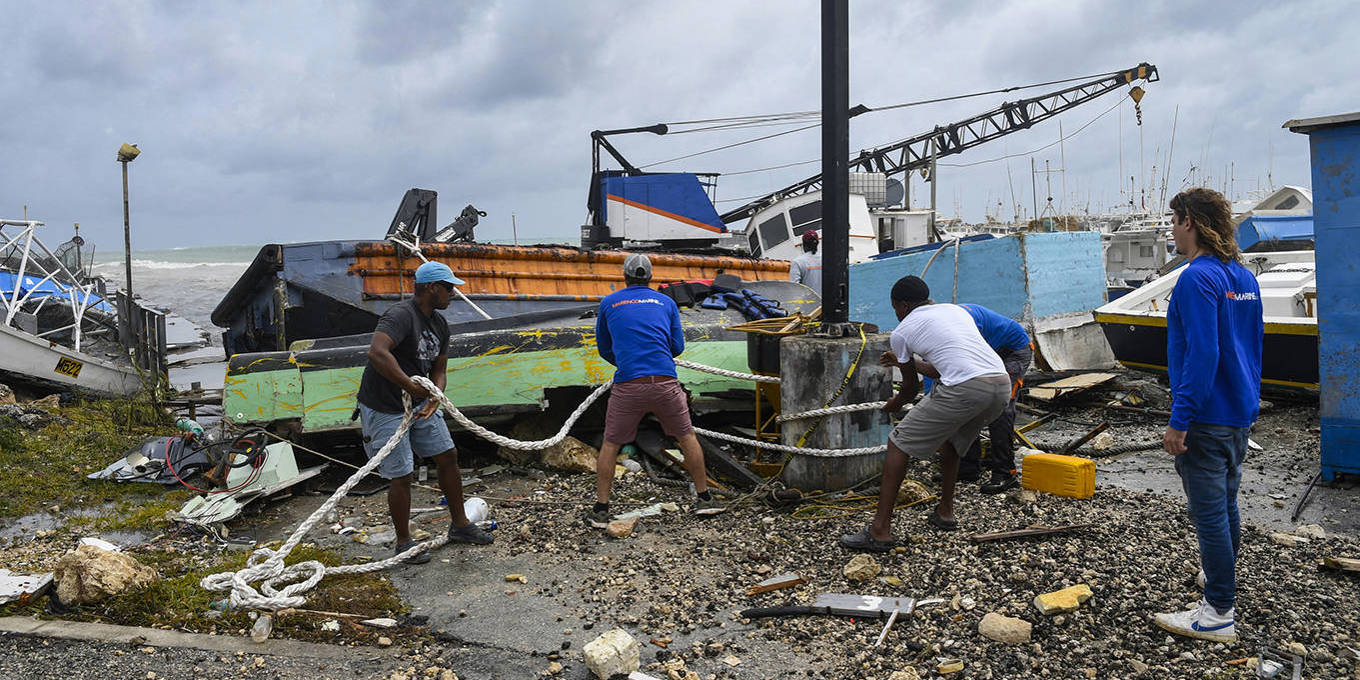
Major global stressors in recent years have brought this reality into sharper focus. COVID-19, rising interest rates, energy-price spikes, and an intensifying climate crisis have forced many small states into perpetual firefighting mode. For the most indebted and least diversified economies, each new upheaval has pushed aside years of planning, leading to calls for higher investment in resilience. And yet resilience alone is not enough, because a country can do everything right and still end up worse off if it lacks genuine agency.
The true test of development is whether it expands a country’s choices and capabilities. It is this insight that lies behind the Barbados-led Bridgetown Initiative, which seeks to create a more responsive financial system, unlock affordable long-term finance, and develop better tools for managing shocks. That is what countries need to maintain their national goals when crises erupt.
Small states understand this all too well. For them, uncertainty is not an occasional problem, but a persistent condition. They were thinking about disaster preparedness and strategic autonomy long before these topics became regular items on the international agenda. The challenge was never to eliminate vulnerability entirely, but to preserve freedom of action despite it. In a world of rising geopolitical tensions and climate risk, agency proved to be one of the most valuable assets a country could possess.
The current era of development reform proposals understandably focuses on expanding the fiscal and policy space needed to help countries weather crises. However, what ultimately matters is whether investments leave behind stronger institutions, deeper expertise, more competitive firms, and a greater capacity to solve complex problems.
Though the international system has become more effective at financing projects—from roads and energy systems to hospitals and digital infrastructure—development cannot be reduced to a series of investments or line items on a balance sheet. The harder task is building up the means to design, deliver, maintain, and expand those investments.
Such know-how is not limited to infrastructure. Consider Barbados’s experience with sovereign-debt restructuring, debt-pause clauses, and debt-for-resilience transactions. None of these innovations emerged by accident. They required discipline in economic management over an extended period, political leaders who were willing to back negotiating teams through years of difficult, unglamorous work, and policymakers who developed their expertise by tackling problems for which there were no clear precedents.
The same lesson applies across the wider economy. Barbados is now seeking to build on a decade of climate-finance leadership while advancing ambitious food-security, social-protection, and energy-independence initiatives at home. We understand that scaling up battery-storage capacity and pursuing the country’s first utility-scale wind project require far more than technical plans. These investments demand coordination among ministries, regulators, the private sector, financiers, and neighboring communities. Success depends on bringing all these players together to work through disputes, structure viable deals, and keep projects moving when obstacles arise.
Barbados’s own recent experiences point to a broader truth about how expertise is built. People learn by doing, and institutions, by extension, learn through the people who build and sustain them. Capacity is forged through negotiating difficult deals, delivering projects, managing crises, learning from mistakes, and taking on progressively more complex responsibilities. Technical skills matter, but so do incentives, trust, continuity, the authority to act, and the time to think and experiment.
Likewise, developing countries need firms capable of competing internationally, adopting new technologies, and responding to changing markets. Development succeeds when the public and private sectors strengthen each other.
No country develops these capabilities overnight. They are acquired through repeated exposure to difficult situations. Barbados recently lost its Chief Fisheries Officer, and her passing is still felt across the sector she helped transform. She knew almost every fisher by name, introduced technologies that modernized the fleet, and earned the trust of a community that was struggling to attract younger talent. Her contributions were not just technical. She also brought decades of accumulated knowledge, relationships, judgment, and credibility.
That is often how institutional memory works in small states. Expertise resides in people before it becomes embedded in systems, and if key individuals depart or pass away, a country’s entire development agenda can be set back. In addition to cultivating talent, developing countries also must ensure that knowledge, relationships, and experience become institutional assets rather than individual ones.
The same principle applies to external support. Development partnerships are most effective when they strengthen a country’s ability to deliver results for itself. Governments cannot treat institutional strength merely as a by-product of reform. They must make it a strategic objective, embedded in organizations capable of maintaining continuity through political cycles and personnel changes.
Of course, emphasizing capabilities does not diminish the importance of affordable finance, access to technology, or a trading system that enables resource-rich countries not only to export raw materials, but also to process, manufacture, and innovate, thereby creating jobs, developing skills, and retaining more value domestically. Agency cannot be separated from the broader system in which it is exercised, and significant structural constraints remain.
But at a time when the global agenda is increasingly defined by a steady cycle of conferences, summits, communiqués, and new initiatives, it is worth stepping back to ask a harder question: Are countries actually becoming better able to make decisions, deliver results, and determine their own path?
The next generation of development reform should not be measured solely by how much finance is mobilized or how much fiscal space is created. It must also be judged by the extent to which countries emerge better able to set their own priorities, respond to challenges, and seize opportunities. The true measure of success is whether countries are gaining the capacity and confidence to shape events, rather than be shaped by them.
