


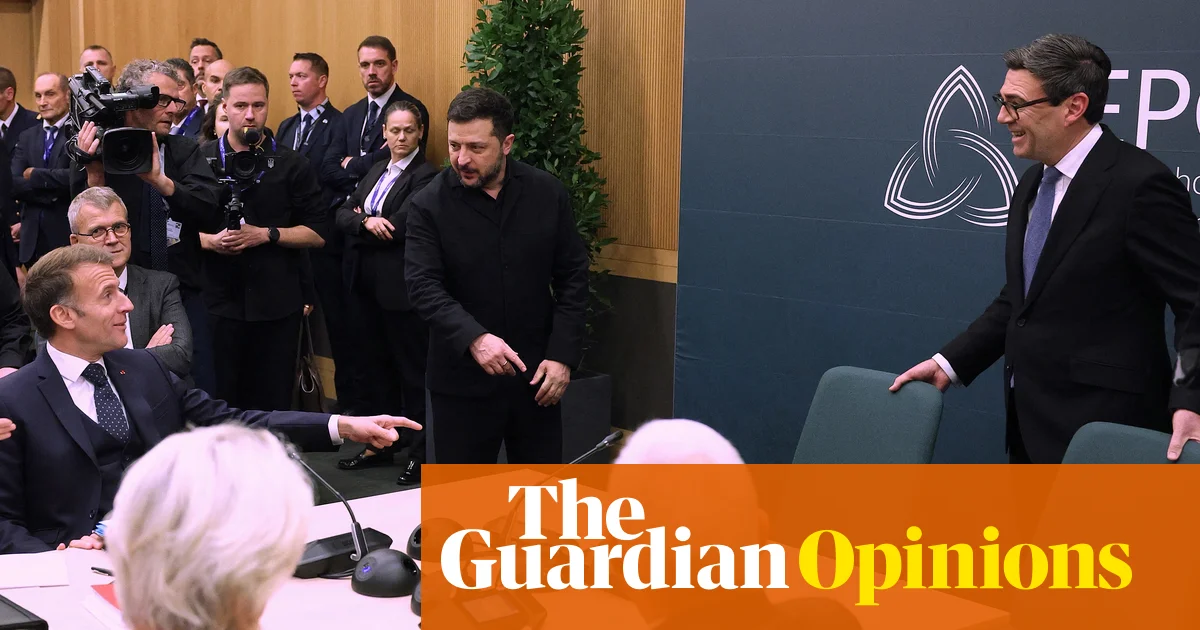
At the European Political Community summit in Dublin last week, Emmanuel Macron was pictured apparently waving a grinning Andy Burnham to a seat at the head of the table, as Ursula von der Leyen, the European Commission president, looked on. It was the visual equivalent of the “welcome back” message delivered by the French president in the early autumn, following Mr Burnham’s suggestion that rejoining the EU was an option for the UK to consider. At the time, Le Monde was among the media outlets to try out an updated portmanteau to mark the moment; mercifully, “Breturn” has yet to catch on.
By Friday, the mood music will be louder still. A long-awaited reset summit is due to deliver the first fruits of Mr Burnham’s ongoing rapprochement with Brussels, in the form of new deals on food and drink, and emissions trading. A symbolically powerful youth exchange agreement is also in the works, although not yet over the line. But as they promote such adjustments to existing Brexit arrangements, the prime minister’s allies have been notably keen to avoid pre-empting the broader “conversation” that he desires on relations with the EU.
They are right to be wary, and not just because that debate will come with domestic political risks attached. Some form of closer relationship with the UK’s largest trading partner is desired by a majority of the British public. But however warm its rhetoric, Brussels is going to have other matters on its mind during a momentous period of elections that will test the EU’s internal unity.
Mr Macron will be gone by the spring. It seems increasingly likely that his replacement will be a far‑right president committed to national preference policies that are contrary to EU law, and the cutting of support for Ukraine. Pedro Sánchez, the leader closest to Mr Burnham’s own centre-left politics, could be gone by the end of the month. Polls suggest that Spain’s snap election is set to deliver a coalition government including the far right for the first time since Franco. Poland, beset by constitutional turmoil, could also lurch to the far right in 2027.
Such political storms breaking would limit EU headspace for Mr Burnham’s overtures and may give the prime minister himself pause for thought. But volatile times also offer political opportunities. Russia’s war in Ukraine, and the wider threat posed to the EU’s eastern flank by Vladimir Putin’s revanchism, mean that a big British offer on defence would be well received and possibly open doors on other issues. Similarly, the febrile geopolitics of energy contributed to five European leaders this month calling for Britain’s re-entry into the bloc’s internal electricity market. On both sides of the channel, the rapid emergence of an unforgiving multipolar world has served to underline the need for strengthened cooperation.
Should the UK seek to rejoin the single market, recognition of that reality will not alter Brussels’ red lines in relation to core principles such as the free movement of people. But we are no longer in the world of 2016 and its aftermath. Covid, Ukraine, Donald Trump and Chinese competition have altered the landscape of EU politics and shifted priorities. Possible far-right breakthroughs threaten imminent further disruption. The direction of travel chosen by Mr Burnham is the right one. But predicting the final destination is, for now, a futile exercise.
-
Do you have an opinion on the issues raised in this article? If you would like to submit a response of up to 300 words by email to be considered for publication in our letters section, please click here.
