


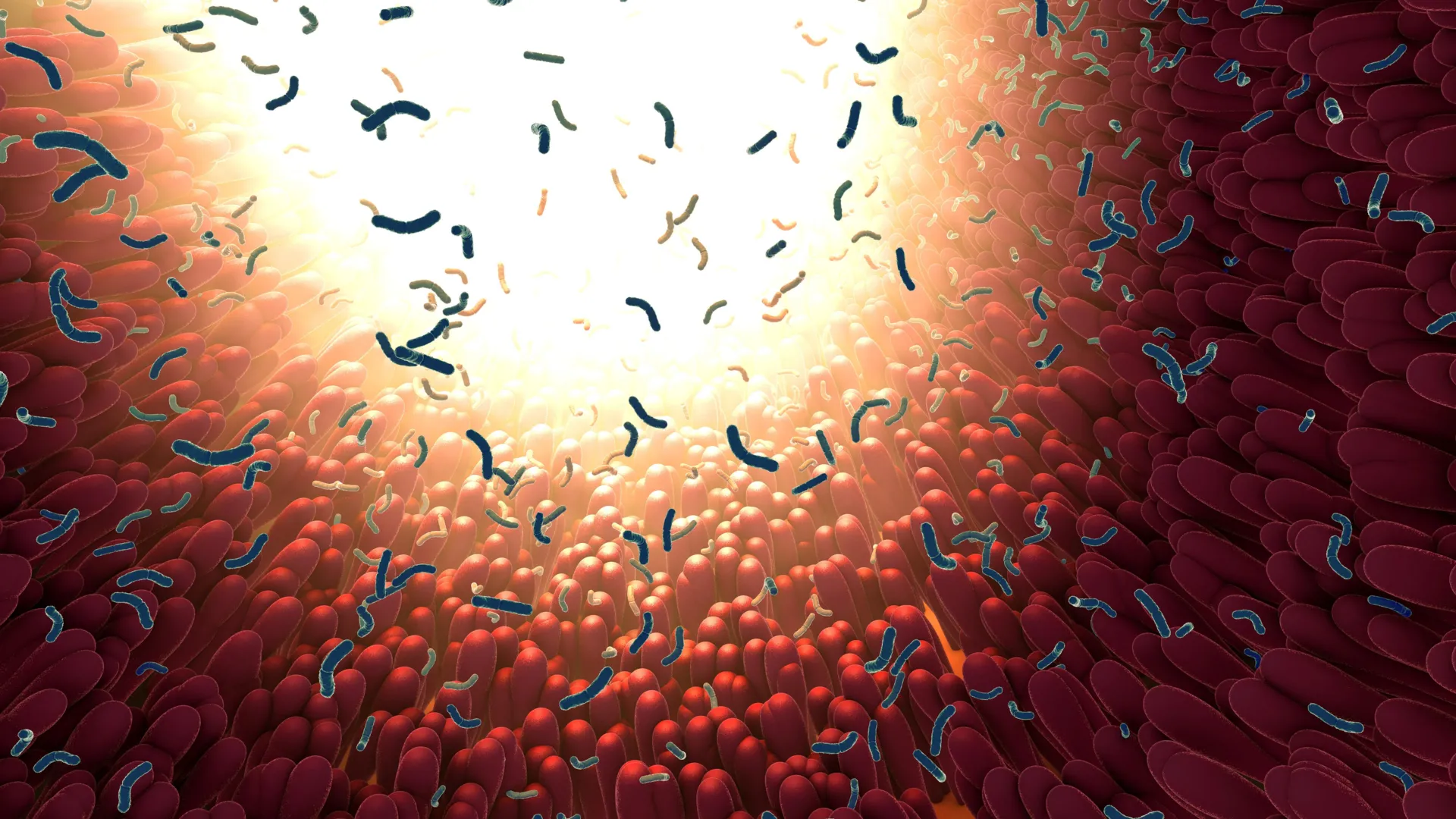
Eating more sugar while taking antibiotics may intensify the disruption those drugs cause to beneficial gut bacteria, according to new research.
The study focused on the intestinal microbiome, the vast community of bacteria that has evolved alongside humans and helps with digestion, immune function, and other essential processes. Antibiotics are among the most commonly prescribed medicines worldwide, but they can kill beneficial bacteria as well as harmful ones. In some cases, that disruption allows potentially dangerous species to gain an advantage.
A diverse microbiome is generally better able to resist the expansion of harmful pathogens. Antibiotic treatment can reduce that diversity, leaving the gut ecosystem more vulnerable to disease, according to the researchers.
Sugar Linked to Greater Microbiome Damage
Researchers from NYU Langone Health, City of Hope, and Memorial Sloan Kettering closely monitored 9,419 meals consumed by 173 hospitalized cancer patients and tracked changes in their gut microbiomes.
For every additional 100 grams of sugar eaten during the 48 hours before treatment, the researchers observed an additional 21% decline in alpha diversity, a measure of the variety of beneficial bacterial species found in the gut.
The findings, published online Sept. 30 in the journal Nature, also showed that sugary diets combined with antibiotic treatment were associated with increases in Enterococcus faecium among patients. This bacterial species has been linked to infections that can be difficult to treat.
Mouse experiments produced a similar result. Animals exposed to the antibiotic biapenem while consuming dietary sucrose experienced a 16.3-fold increase in the gut Enterococcus population by day 3 of the study. By day 6, the bacterial burden was 33.4-fold higher.
“As we are learning how collateral damage of antibiotics to the microbiome are linked with long-term health problems, it’s important to identify factors that limit these unintended health risks,” said the study’s co-senior author Jonas Schluter, PhD, assistant professor in the Department of Microbiology at NYU Langone. “Our study, which used more than 9,000 recorded meals, suggests that modifying diet during and after antibiotics, specifically by reducing sweets intake, could help with that.”
Why Researchers Studied Blood Cancer Patients
The team focused on people with blood cancers because these patients frequently receive antibiotics and their food intake can be monitored closely during hospitalization. Researchers recorded what patients ate at every meal and collected microbiome samples each day.
That combination of detailed diet records and daily biological sampling made the project one of the largest and most detailed studies of its kind to date.
“The microbiome is emerging as an important factor in cancer care,” said co-senior study author Marcel van den Brink, MD, PhD, chief physician executive at City of Hope. “For patients undergoing intensive treatments such as bone marrow transplantation, the healthy diversity of the gut microbiome can have important implications for outcomes. Studies like this help us better understand how everyday factors, including diet, may affect a delicate balance that influences how patients respond to treatment, recover, and experience side effects.”
Patients with blood cancers who receive stem cell transplants are often hospitalized for several weeks while undergoing chemotherapy and antibiotic treatment. During that period, both their diets and their gut microbiomes can change dramatically.
In these patients, potentially harmful species such as Enterococcus faecium can flourish after much of the surrounding microbial ecosystem has been “destroyed.”
Gut Microbiome Damage and Cancer Outcomes
“Especially in blood cancer patients, microbiome injury is associated with worse outcomes, including higher overall mortality and infections,” said Jonathan Peled, co-senior author on the study and associate director of the Center for Hematological Malignancies at Memorial Sloan Kettering Cancer Center. “An important next step will be to design clinical trials to test whether short-term dietary changes can improve clinical outcomes in patients.”
The researchers say dietary sugar may magnify the microbiome disruption caused by antibiotics because potentially harmful bacteria that survive treatment may be able to use those sugars to expand.
“The new work identifies dietary sugars as an amplifier of antibiotic-induced microbiome disruption, probably because the potentially harmful bacteria that survive the antibiotics are benefiting from the dietary sugars that they can use to expand,” said study second author William Jogia, a PhD student in Dr. Schluter’s lab in the Institute for Systems Genetics. “While the findings suggest that reducing simple sugars may limit microbiome injury, whether sugar directly supports Enterococcus, weakens competing bacteria, or acts through another mechanism in patients remains to be seen.”
The findings therefore suggest that cutting back on simple sugars during and after antibiotic treatment could potentially reduce microbiome damage. However, the researchers emphasize that more work is needed to determine exactly how sugar produces the effect and whether dietary changes will improve outcomes in patients.
Study Authors and Collaborators
Along with Drs. Schluter and Jogia, study authors from the Schluter lab at the Department of Microbiology and Institute for Systems Genetics at NYU Langone Health were Caichen Duan, Chenzhen Zhang, Fanny Matheis, and Alexis Sullivan.
Authors from the Adult Bone Marrow Transplantation Service in the Department of Medicine at Memorial Sloan Kettering Cancer Center were co-senior author Jonathan Peled, co-first authors Anqi Dai and Annamaria Ballweg, along with Madhumitha Rangesa, Peter Adintori, Mirae Baichoo, Nicholas Waters, Abrielle Swartz, Sukanya Sahu, Brianna Gipson, Sandeep Raj, Zoe Pierce, Kenton Wu, Justin Neuberger, Adam Warren, Marissa Lubin Buchan, Ana Gradissimo, Luigi Amoretti, Annelie Clurman, Daniel Brereton, Paul Giardina, Miguel-Angel Perales, and Sergio Giralt. Also authors from Memorial Sloan Kettering Cancer Center were Teng Fei in the Department of Epidemiology and Biostatistics, Oriana Miltiadous in the Department of Pediatrics, Tatanisha Peets in Food and Nutrition Services, and Marina Burgos da Silva in the Human Oncology & Pathogenesis Program.
Other authors were Tyler Funnell, Natalie Smith, John Slingerland, Antonio Gomes, and Robert Jenq in the Department of Hematology and Hematopoietic Cell Transplantation at City of Hope National Medical Center in Los Angeles; Eiko Hayase in the Departments of Genomic Medicine and Stem Cell Transplantation Cellular Therapy in the Division of Cancer Medicine at University of Texas MD Anderson Cancer Center; Corrado Zuanelli Brambilla in the Hematology Unit, Department of Cellular Therapy, Hematology and Laboratory Medicine at Azienda Ospedaliera Universitaria Senese in Siena, Italy; Abigail Johnson in the Division of Epidemiology and Community Health in the School of Public Health at the University of Minnesota, Minneapolis; Dan Knights in Department of Computer Science and Engineering at the University of Minnesota; and Kate Markey in the Translational Science and Therapeutics Division at Fred Hutchinson Cancer Center in Seattle.
Funding and Disclosures
Funding for the study was by National Institutes of Health grants K08HL143189, P30 CA008748, P01CA023766, R35CA284024, DP2AI164318, R01CA269617, P30CA0160087, R01-CA228358, R01-CA228308, F31-CA261086, P30 CA008748, P01-CA023766; R01-HL123340, R01-HL147584, and P01-AG052359. Other support came from the Gabrielle’s Angel Foundation, a Helen Hay Whitney postdoctoral fellowship, the Starr Cancer Consortium, The Tri-Institutional Stem Cell Initiative, the Lymphoma Foundation, the Susan and Peter Solomon Divisional Genomics Program, Cycle for Survival, the Parker Institute for Cancer Immunotherapy, the American Society of Clinical Oncology Young Investigator Award, a Hyundai Hope on Wheels Young Investigator Award, a Tow Center for Developmental Oncology Career Development Award, and an AIRC fellowship for Abroad.
Dr. Schluter has filed intellectual property applications related to the microbiome (reference numbers #63/299,607), serves on an advisory board and holds equity in Jona Health, and is cofounder of Postbiotics Plus Research. These relationships are being managed in keeping with the policies of NYU Langone Health.
