


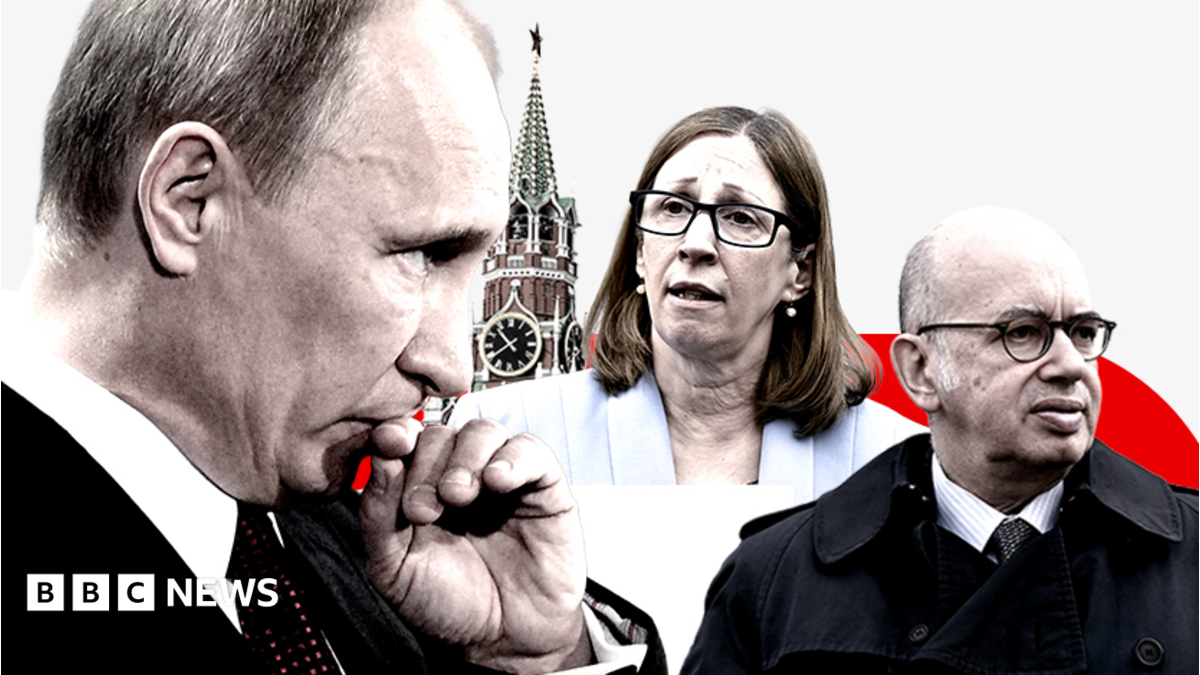
“Being the ambassador to Russia was probably the hardest assignment of my career,” Lynne Tracy, who represented the US in Moscow from 2023 to 2025, tells the BBC.
US, UK and European diplomats once played a crucial role in Russia, defusing tensions even at the worst moments of the Cold War.
But now, deemed “unfriendly” by President Vladimir Putin’s government, Western ambassadors are under constant surveillance, isolated and increasingly cut off from the country they were sent to understand, as the war in Ukraine grinds on through its fifth year.
The BBC has spoken to five diplomats who have served in Russia since it launched its full-scale invasion.
They compare current pressure levels to the Cold War era – when Western embassies were monitored through physical surveillance, listening devices hidden inside gifts, and “spy dust” – a near invisible chemical agent used to track officials.
Hundreds of Russian diplomats were expelled from countries in Europe and the US after the war began in 2022. Moscow responded in kind, declaring hundreds of Western diplomats persona non grata and leaving many embassies short-staffed.
Tracy’s 30-year career took her to countries like Pakistan, where she survived an armed attack in 2008. But she says that even under constant physical threat, her posting in Peshawar was, in a sense, easier than Russia.
“There, I still felt that there were things within my control. What made Moscow more difficult were the high levels of uncertainty.”
The constant pressure from Russian counterintelligence was the primary source of such uncertainty, she recalls.
