


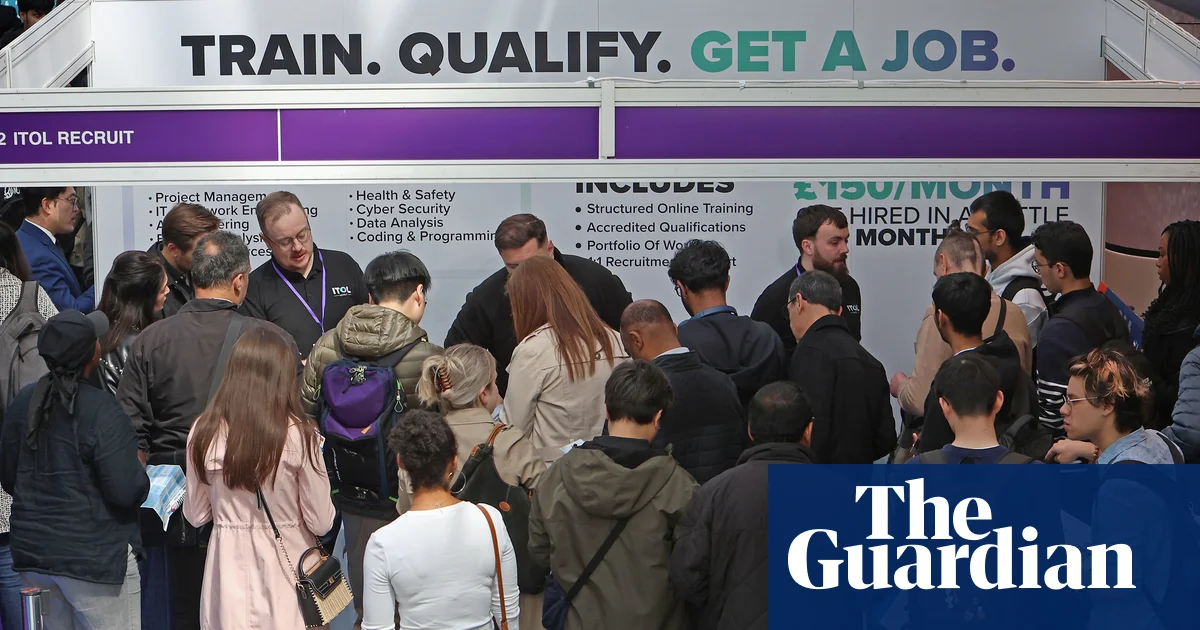
Unemployment in the UK has fallen unexpectedly in the final snapshot of the jobs market before John Healey’s first budget next week.
The jobless rate fell to 4.7% in the three months to August, from 4.9% according to the Office for National Statistics. City economists had forecast a rise to 5%.
In a further boost to the chancellor, the figures also showed that the number of payrolled employees rose by 13,000 between August and September, to 30.3m.
However, a slump in the number of job vacancies illustrated what some economists said was an economy moving sideways. After hitting a peak of 1.3m in the period after the pandemic, vacancies fell by 21,000 to 691,000 in the three months to September, the lowest since 2021 during the Covid pandemic.
Ben Harrison, director of the Work Foundation thinktank at Lancaster University, said the fall in unemployment “should not make the government complacent ahead of next week’s budget”.
He said: “The UK is still amidst a jobs drought with vacancies at their lowest for over 12 years outside of the pandemic.”
Data on wage growth was mixed. Stripping out bonuses, average pay growth rose to 3.7% from 3.6%.Hoever, when bonuses are included the rate fell to 3.7% from 3.9%, indicating that few bonuses were paid to workers.
Wage growth in the UK remains above inflation, which was 3.1% in August and is expected to rise to 3.4% when figures for September are published on Wednesday. The Bank of England is widely expected to raise interest rates in response to higher prices at next month’s meeting of the monetary policy committee.
The pound rose against the dollar after the labour market figures were released, by about half a cent to $1.3352.
The ONS estimated there were 715,000 unemployed young people aged 16 to 24, down by 28,000 on the quarter.
Harrison said ministers should be more focused on the number of jobless young people remaining at 54,000 higher than 12 months ago.
Suren Thiru, chief economistInstitute of Chartered Accountants in England and Wales, described the labour market as “running on idle” with employers limiting recruitment and pay awards “in response to surging cost pressures and pre-budget policy uncertainty”.
after newsletter promotion
He said: “The continued fall in vacancies is a flashing red warning light for the labour market, suggesting that a damaging side-effect of this year’s AI-fuelled economic growth has been weaker hiring demand, compounded by elevated employment costs.”
Average pay growth remains above the 3.1% headline rate of inflation, which is of concern to Bank of England interest rate setters, who fear higher-than-expected inflation will translate into higher pay awards, fuelling future price rises recorded by the consumer prices index (CPI).
Financial markets expect interest rates to rise to between 4.75% and 5% by the middle of next year, although the consultancy Capital Economics said recent improvements in the labour market were modest and the central bank would probably cap interest rates at 4.25%.
The secretary of state for work and pensions, Pat McFadden, said: “Today’s figures show the resilience of our labour market with unemployment falling and the UK’s employment rate now the third highest in the G7, despite a backdrop of global uncertainty.”
But he conceded that many young people needed support to enter the labour market. “That’s why we are working with industry, to bring young people back into the labour market and prevent them from drifting into the welfare system.”
