


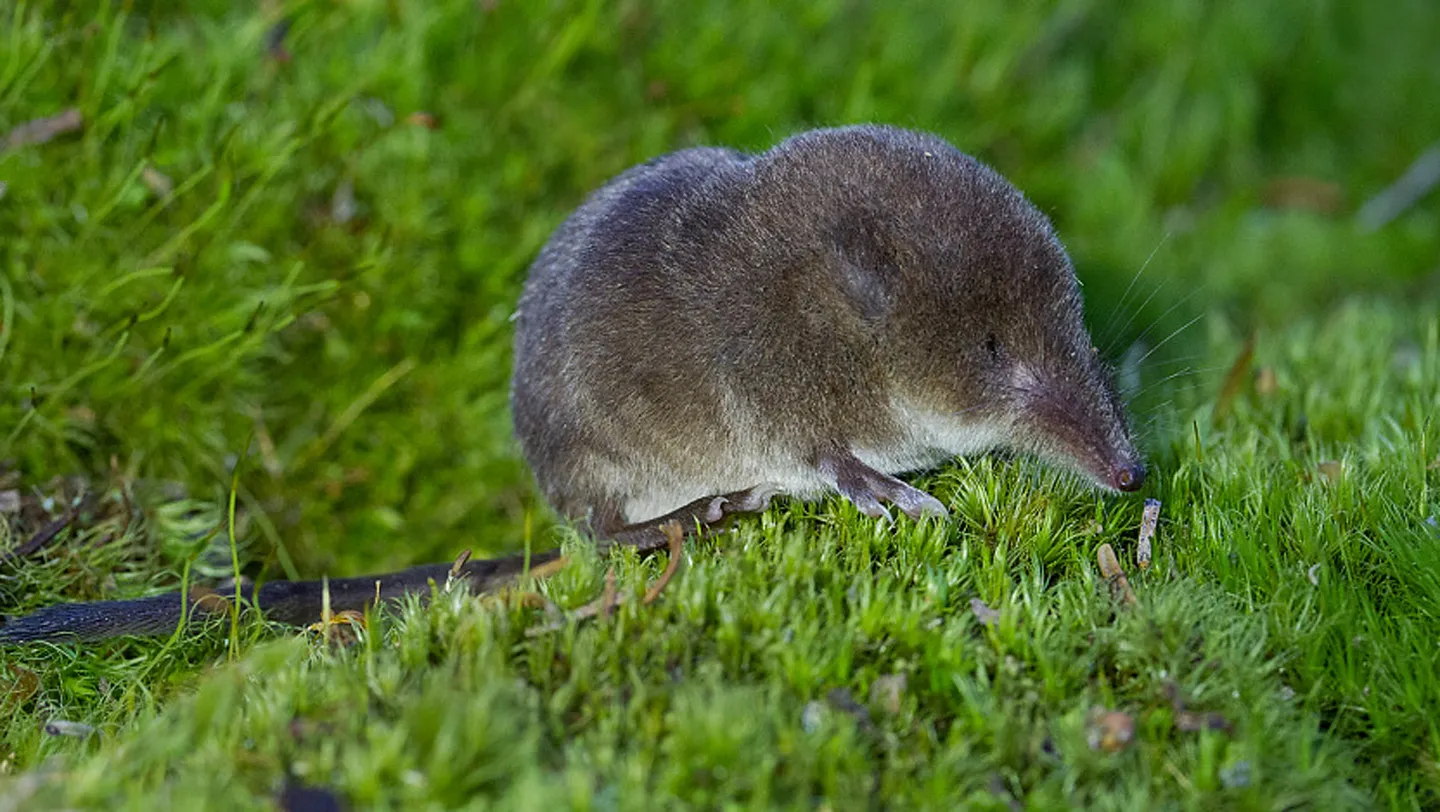
This nose grows. During harsh Japanese winters, long-clawed shrews’ snouts temporarily expand.
The seasonal swelling is the opposite of the previously known winter pattern in shrews, in which the brain and surrounding cranium shrink. The findings complicate our understanding of an already extreme adaptation for harsh, frigid conditions, researchers report August 19 in Proceedings of the Royal Society B.
The temporary dwindling and regrowth of the brain and skull tissue in shrews is part of Dehnel’s phenomenon, first described by Polish zoologist August Dehnel in 1949. The phenomenon involves winter reductions in body size and internal organ mass. It’s thought to be an adaptation for surviving winter. Paring back tissues cuts food energy costs, which is useful when calories are scarce. The new findings add an unexpected wrinkle to our understanding of the phenomenon.
Yugo Ikeda, a mammalogist at Toyo University in Tokyo, and his colleagues knew about these “mind-boggling” seasonal shifts. Some other animals like weasels, voles and moles experience similar winter changes. But scientists didn’t know if any shrews outside of Europe also went through these changes. Northeast Asia, for instance, has extreme, snowy winters that might present a challenge to local small mammals.
The researchers carefully measured the dimensions of 136 skulls from museum specimens of long-clawed shrews (Sorex unguiculatus), a species native to the region. The shrews were collected between 1948 and 1988 on the Japanese island of Hokkaido. Ikeda and his colleagues took photos of the skulls and used software to measure dozens of physical landmarks across them. The team then compared the skull dimensions with the season in which the shrews were collected.
The researchers found the expected winter reduction in the braincase. “But as we analyzed the data, we realized something was off,” Ikeda says. During the winter months, the shrews’ snouts were 7 percent taller and 6 percent wider, increasing to 2.43 and 2.19 millimeters respectively. Once spring rolled around, the snout was small again. “It wasn’t following the traditional playbook at all.”
Ikeda refers to the discovery as a “reverse Dehnel’s phenomenon.” The findings, he says, were “completely unexpected and caught us all off guard in the best way possible.”
The team has some hypotheses about why the nose might independently expand when so many other body parts shrink. For example, a larger nasal cavity would create more room for a rich network of blood vessels.
“When the shrew inhales freezing air, this network efficiently warms it before it reaches the delicate, winter-shrunken brain,” Ikeda says. This could help the shrews think clearly in the cold despite their wizened noggins. A bigger nose might also expand the surface area of shrews’ interior nasal tissues, boosting the odor-gathering efficiency of each sniff. This might help the shrews find food in deep snow during a season where resources are harder to come by.
Both factors might be behind the nasal expansion, Ikeda says.
“[The discovery] really reframes how we view skeletal flexibility,” Ikeda says. “Our findings show that skeletal plasticity isn’t just an all-or-nothing shrinking act.”
Jan R. E. Taylor, an evolutionary ecologist at the University of Białystok in Poland, who was not involved with the research, is curious to know if the snout enlargement is the same in more mild climates across the long-clawed shrew’s range. That might help establish some of the environmental factors driving this seasonal shift.
Ikeda wants to study the shrews’ behavior and physiology, especially how tissues inside the nasal cavity change across seasons. This might reveal some of the biological benefits of the snout growth.
Tracking these changes in wild animals in the field would require a substantial amount of effort, Ikeda says. “But the sheer fascination of solving this evolutionary puzzle makes every bit of hard work worth it.”
