


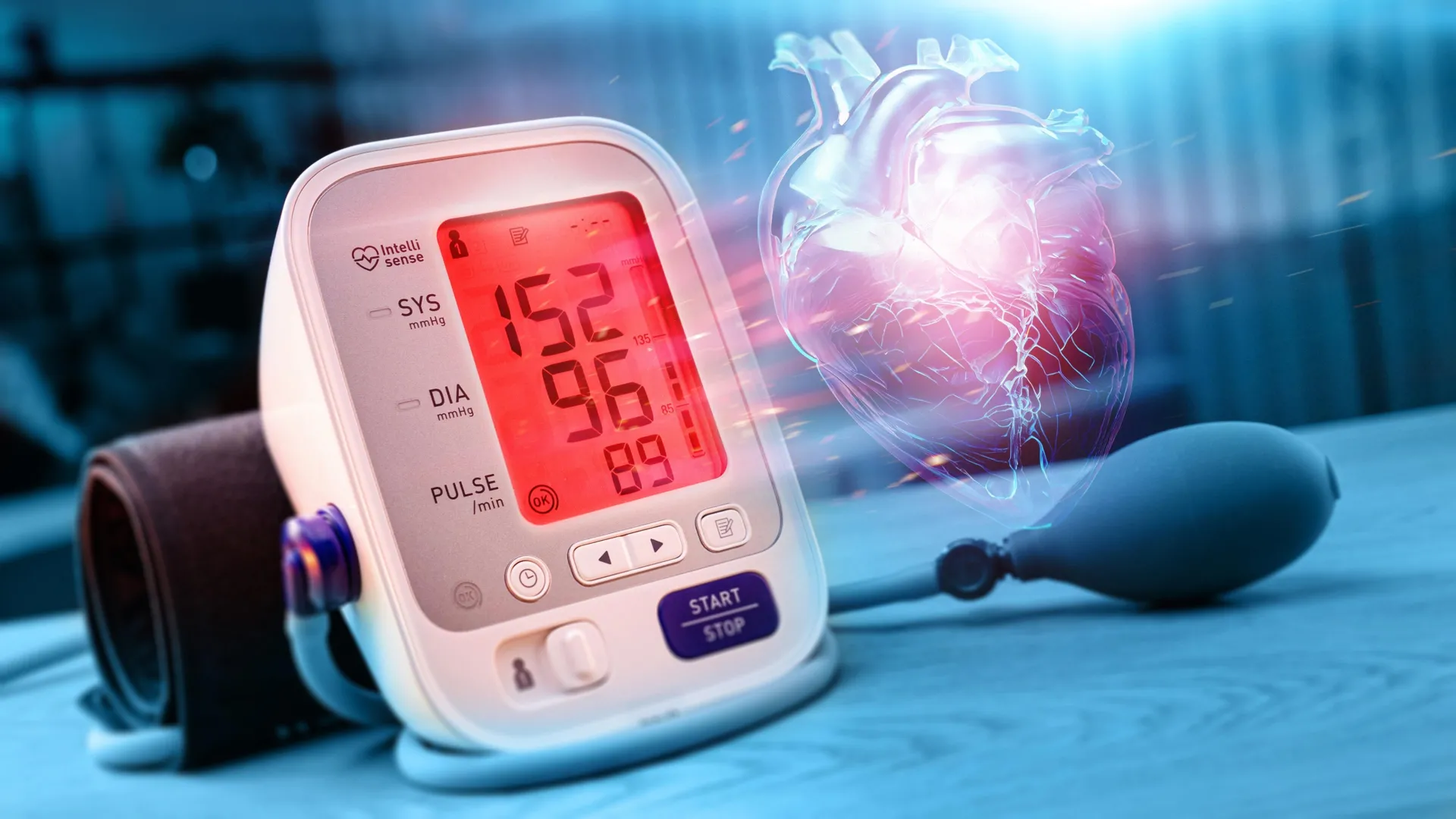
A common and frequently missed cause of high blood pressure may be easier to detect with help from a wearable device that tracks hormone changes throughout the day and night.
New research published in Science Translational Medicine focuses on primary aldosteronism, a hormone disorder that may affect up to one in five people with high blood pressure. The condition is associated with an increased risk of heart disease, stroke, diabetes, and other serious health problems.
Researchers from the University of Bristol and the University of Manchester in the UK, the University of Bergen in Norway, and collaborators in Stockholm and Athens found that people with primary aldosteronism can experience bursts of hormone production both during the day and while asleep at night. Those nighttime surges are especially important because routine blood tests are rarely performed during sleep.
A Wearable Device Tracks Hormones Around the Clock
To capture these hidden changes, the research team used a portable device developed at the University of Bristol that allowed patients to have their hormone levels monitored continuously while living normally at home rather than staying in a hospital or research facility.
This type of continuous monitoring could reveal abnormalities that may be missed by conventional testing, potentially helping doctors identify hormone-related conditions earlier.
Study co-lead author Dr. Thomas Upton, Clinical Research Fellow in Automated Sampling Clinical Fellow at the University of Bristol, and Senior Clinical Fellow at Bristol Hospitals NHS Foundation Trust said: “Primary aldosteronism is an important cause of high blood pressure and the most common cause of secondary hypertension we see in our blood pressure clinic. It could be affecting millions of people in the UK. However, due to the way hormones change during the day and the current complexity of the diagnostic process, diagnosis is often delayed or never made at all.
“In our study, patients were monitored at home during normal activity, and this allowed us to see how hormones changed over time in realistic settings. This approach could potentially revolutionize how we diagnose hypertension and ultimately reduce cardiovascular disease – particularly heart disease and strokes – that could have been prevented.”
Measuring Hormones Every 20 Minutes
The proof-of-concept study followed 60 patients in Bristol, Bergen, Stockholm, and Athens over a 24-hour period. Hormone levels were measured every 20 minutes using a lightweight wearable device about the size of a mobile phone that attaches at the waist.
Because the device samples hormones from the skin, participants were able to continue with their usual activities, including sleeping at night, while researchers collected detailed hormone data.
The technology, known as U-RHYTHM, was adopted and further developed by the spinout company Dynamic Therapeutics in 2023.
Study senior author Dr. Eder Zavala, UKRI Future Leader Fellow at the University of Manchester, said: “By continuously monitoring hormones over 24 hours, we were able to reveal a previously hidden pattern of nocturnal hormone bursts. This gives us a much clearer understanding of the disease and could ultimately help doctors detect it earlier and treat patients more effectively.
“A more detailed mathematical and computational analysis of daily hormonal profiles could eventually also help uncover earlier and more subtle forms of the disease, opening new opportunities to improve outcomes for patients living with high blood pressure.”
Why Standard Blood Tests May Miss the Disorder
Researchers used computational analysis to study changes in aldosterone, a hormone that helps control salt and water balance in the body. They also tracked two closely related hormones, 18-hydroxycortisol and 18-oxocortisol.
The results suggest that current diagnostic approaches may miss some patients because aldosterone does not remain consistently elevated.
Even in some of the most severe cases, hormone levels sometimes dropped below the minimum thresholds typically used to diagnose primary aldosteronism. A single blood test taken at one moment could therefore capture a period when hormone levels appear relatively normal.
Instead of remaining constantly high, aldosterone showed repeated bursts of secretion at night while the overall day-night rhythm of hormone activity remained intact.
Nighttime Hormone Bursts Offer a New Clue
The hormone spikes came from the adrenal glands and were especially pronounced in patients whose primary aldosteronism was caused by a problem affecting only one adrenal gland rather than both.
Importantly, the unusual hormone patterns disappeared after the affected adrenal gland was surgically removed. That finding provided additional evidence that the bursts were directly associated with the disease.
Study co-author Prof Stafford Lightman, Professor of Medicine at the University of Bristol and inventor of the U-RHYTHM technology, added: “The findings suggest that clinicians may need to rethink how they look for the disorder, which the Endocrine Society clinical practice guidelines now recommend should be considered for all people with hypertension, also known as high blood pressure.
“Future diagnosis could move away from single time point blood tests and towards tracking the body’s hormone rhythms over time, particularly the overnight patterns that appear to hold crucial clues to disease. Further research is needed to define the best clinical pathways, using dynamic hormone measurement, to ensure early diagnosis of this common and potentially curable cause of high blood pressure.”
Toward Earlier Detection of High Blood Pressure Causes
The findings raise the possibility that future testing for primary aldosteronism could rely less on a single blood sample and more on monitoring how hormones change over time.
Because the disorder can be treated and, in some cases, potentially cured, detecting it earlier could help reduce the risk of preventable cardiovascular complications.
The research was funded by EU Horizon 2020, the Trond Mohn Foundation, the UKRI Biotechnology and Biological Sciences Research Council (BBSRC), Medical Research Council, University Hospitals Bristol and Weston NHS Foundation, the Swedish Medical Research Council and Knut and Alice Wallenberg Foundation.
The findings support the University of Bristol’s research ‘Grand Challenge’ focus on Understanding and Preventing Cardiovascular Disease and builds on NIHR-funded initiatives aimed at earlier identification of people with hypertension and other cardiovascular risk factors.
