


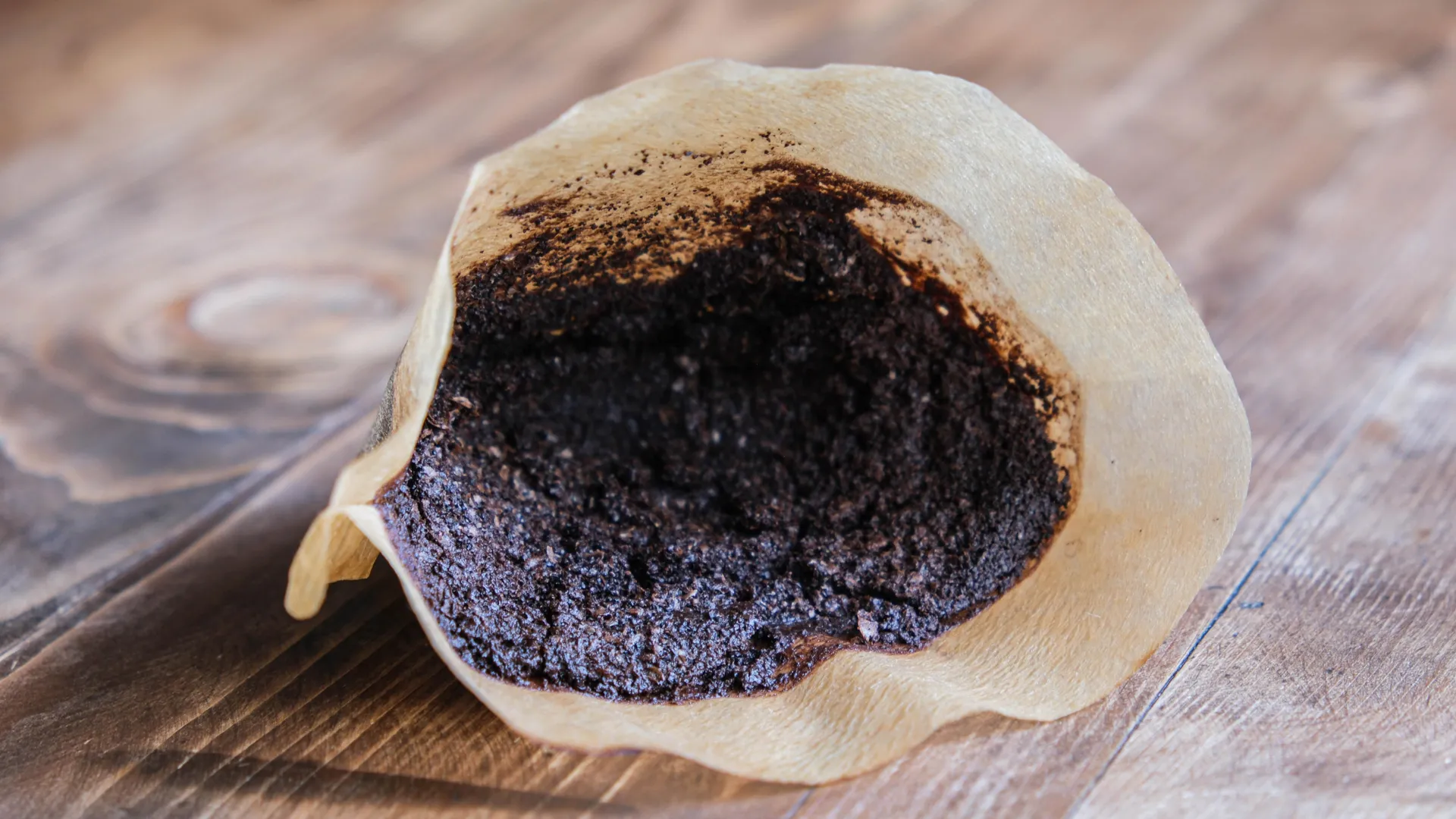
Used coffee grounds may be far more valuable than they appear. Instead of ending up in the trash, this everyday waste could provide ingredients for renewable fuels and a variety of useful chemicals. Researchers at Universitat Rovira i Virgili (URV) have identified an efficient way to recover oil from discarded coffee grounds while keeping the remaining material suitable for other industrial applications.
The findings, published in Biomass and Bioenergy, highlight the untapped potential of spent coffee grounds, a waste product generated in enormous quantities worldwide. Global coffee bean production reaches approximately 10 million metric tons annually, but only a small fraction of the beans’ material makes its way into the brewed beverage. Much of the rest is discarded as solid waste. These leftover grounds contain roughly 15% lipids, or fats, which can serve as ingredients for producing biodiesel.
Finding a More Efficient Way to Extract Oil From Coffee Grounds
To determine how best to recover these valuable oils, researchers Jorge F. Romero, Alberto Tampieri, Daniel Montané, Magdalena Constantí, and Francesc Medina from URV’s Department of Chemical Engineering examined three variables: extraction temperature, processing duration, and the amount of solvent used relative to the coffee grounds.
The team used n-hexane, a solvent widely employed to separate fats from other materials. Through a series of carefully designed experiments, they evaluated how changes in temperature, extraction time, and solvent quantity affected the results, both individually and in combination.
“We have found that the optimal conditions are at 45°C for 60 minutes with a ratio of 35 milliliters of hexane per gram of dry residue,” explained Magdalena Constantí, one of the study’s authors.
Under these conditions, the researchers recovered approximately 90% as much oil as could be extracted using Soxhlet, a standard laboratory method known for its high extraction yields. Although Soxhlet is effective, it generally takes longer, consumes more energy, and is less practical for large industrial operations.
The newer approach also produced considerably cleaner oil. The optimized extraction yielded just 0.3% impurities, compared with 3.9% using Soxhlet. Chemical analysis revealed that the oil’s fatty acid composition remained consistent across the different experimental conditions, with linoleic and palmitic acids making up the largest shares. This composition supports the oil’s potential use as an ingredient in biodiesel production.
Coffee Waste Could Produce More Than Just Biodiesel
Recovering oil is only one part of the opportunity. The scientists also wanted to ensure that extracting the fats would not destroy the remaining coffee material, which contains compounds that could be used to manufacture additional fuels and chemicals.
“In our study, we also demonstrate that extracting the oil does not mean that the rest of the material cannot be used for something else,” pointed out Francesc Medina, a researcher at the Department of Chemical Engineering who participated in the research.
A central goal was to protect the structural components of the leftover coffee grounds, collectively known as the lignocellulosic matrix. This material contains cellulose, hemicellulose, and lignin, substances that can be processed into products such as bioethanol, lactic acid, polyhydroxyalkanoates, phenolic compounds, and ingredients used to produce sustainable aviation fuels.
Removing the oil may actually make the remaining material easier to process. Fats can form a barrier that prevents solvents and catalysts from reaching other useful components within the plant matter. By extracting the oils without substantially changing the underlying structure, the researchers created a residue better suited for further processing.
In this way, the method serves two purposes. It recovers a potentially valuable source of biodiesel ingredients while preparing the leftover biomass for conversion into other products.
A Simpler Approach to Sustainable Biofuel Production
The team also investigated whether more advanced extraction methods could deliver better results. These included techniques that use ultrasound or microwaves to accelerate oil recovery.
Although both alternatives can speed up the early stages of extraction, neither offered a sufficiently compelling overall improvement. When the researchers considered oil purity, extraction efficiency, energy requirements, and the potential to expand production to an industrial scale, the conventional batch process using n-hexane under moderate conditions emerged as the more balanced option.
That combination of efficiency and practicality could make the method useful in biorefineries, facilities designed to convert biological materials into fuels, chemicals, and other products.
The research also supports the broader goal of creating a circular economy, in which materials that would otherwise be thrown away are reused to generate additional value. This approach is particularly relevant as industries search for renewable fuel alternatives in sectors that are difficult to electrify, including heavy transportation.
By finding ways to make use of both the extracted oils and the remaining coffee grounds, the scientists hope to reduce waste while expanding the range of materials available for sustainable fuel production.
As Daniel Montané, another researcher involved in the study, explained, the goal is “to transform a typically underused waste product into various energy vectors and bio-based chemical products, and to reduce the environmental impact associated with its accumulation.”
The findings suggest that discarded coffee grounds could eventually become an important feedstock for producing renewable fuels and other valuable materials, turning a familiar source of everyday waste into a resource with multiple industrial uses.
