


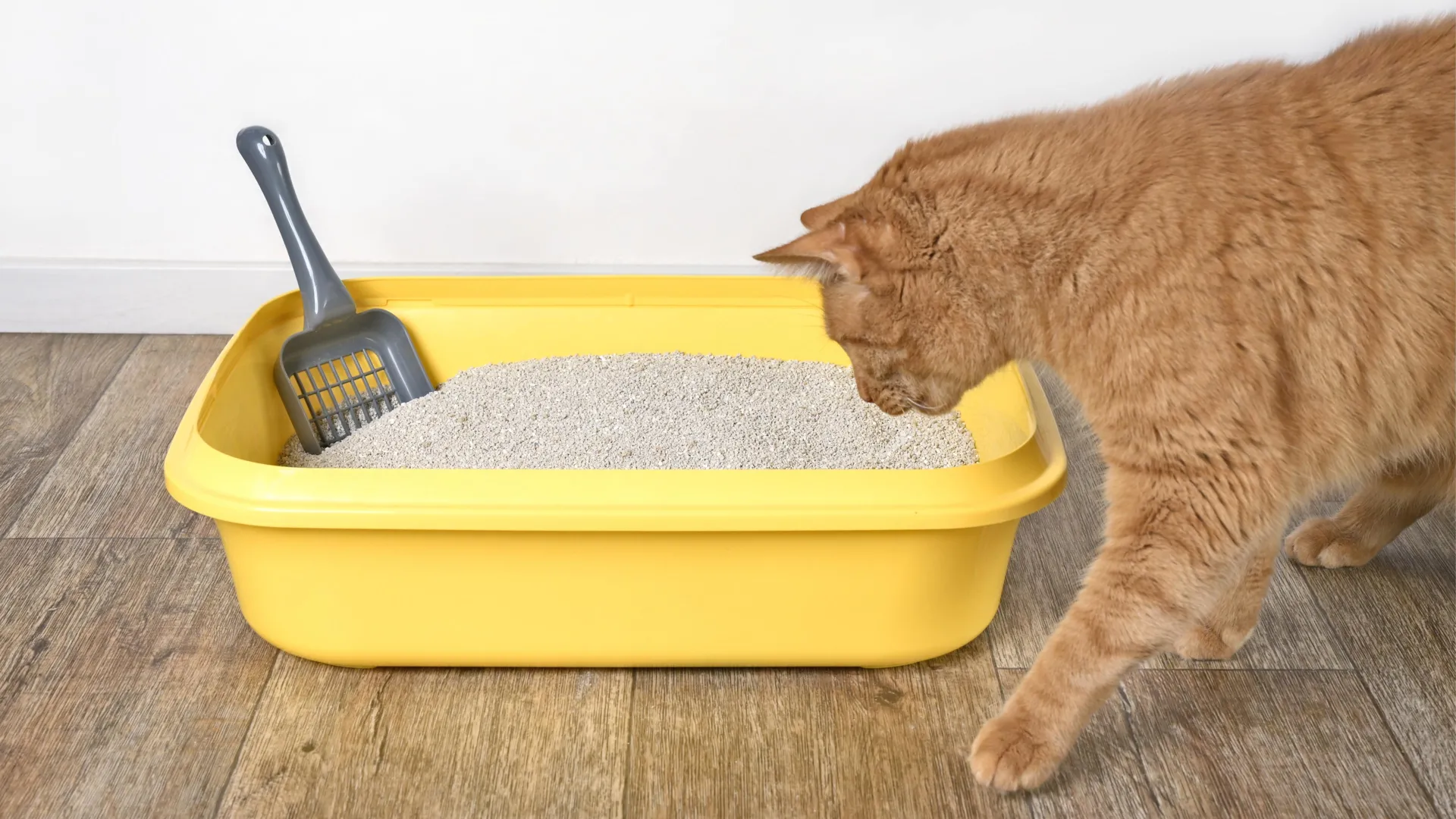
Cats rely heavily on scent to learn about one another, often gathering information from urine and other odor marks left behind in their surroundings. These chemical traces can continue communicating long after the animal that produced them has moved on.
That creates a puzzle. Many odor molecules evaporate, break down, or change with time. If a scent is constantly evolving, how can another animal still determine who originally left it?
Researchers from Japan, Germany, and Spain, led by Iwate University, may have found part of the answer in domestic cats. Their experiments point to a group of unusual fatty acids that could serve as a lasting chemical signature in cat urine.
The scientists identified 13 branched-chain fatty acids (BFAs). The particular mixture and proportions of these compounds varied from one cat to another, yet remained relatively consistent within the same animal. Behavioral tests also showed that cats could detect differences between BFA profiles when the researchers controlled for other lipids in the urine.
The findings suggest that BFAs could function as a durable chemical “calling card” that helps preserve information about individual identity. The study will be published in Current Biology.
Cats Remember Individual Urine Scents
Before searching for the chemicals involved, the researchers first needed to establish that cats could distinguish urine from different individuals.
When cats encountered the same urine sample repeatedly, they gradually spent less time investigating it. But when urine from a different cat was introduced, their interest rose again, and they spent more time sniffing.
Remarkably, cats continued to show reduced responses to previously encountered urine odors even after gaps lasting months. That pattern suggests that cats may retain long-term memories of particular urine scents.
Researchers also examined the flehmen response, the characteristic open-mouthed expression often seen when cats investigate certain odors. Cats displayed this response more often when smelling unfamiliar urine than when smelling their own.
As the same urine was presented again and again, the flehmen response became less frequent. When urine from another cat was introduced, however, the response increased once more.
“After confirming that cats can distinguish individual urine odors, we used the flehmen response as a clue to identify urinary molecules that may contribute to individual scent recognition,” said Professor Masao Miyazaki of Iwate University, who led the research project.
13 Unusual Fatty Acids Form Distinctive Profiles
Using the cats’ behavior as a guide, the scientists narrowed their search to a lipid fraction in urine containing unusual BFAs.
They ultimately identified 13 of these compounds. Based on a review of existing scientific literature, the researchers found no previous reports of the same BFAs occurring in mammalian excretions or secretions.
What stood out was not simply the presence of the compounds, but the pattern they formed. Each cat had a BFA profile defined by the combination and relative abundance of the different fatty acids.
Those profiles varied considerably between animals, while remaining comparatively stable when the same cats were sampled on different dates.
Genetics also appeared to play some role. Related cats generally had more similar BFA patterns, although each animal still maintained its own distinguishable profile even within the same family.
The compounds also proved relatively durable. Many volatile chemicals responsible for urine odor begin changing quickly once urine is deposited. BFAs, by contrast, are semi-volatile and evaporate more slowly.
In urine-soaked samples stored at 25°C, the distinctive BFA profiles associated with individual cats remained comparatively stable for at least 24 hours.
Cats Can Detect the Chemical Differences
The researchers then tested whether the cats themselves could actually distinguish these BFA patterns.
They controlled the other lipid components in the urine samples and changed only the donor-derived BFA-containing fraction. Cats that had already become accustomed to the original sample began sniffing more again when the BFA fraction was switched.
That behavioral change provided evidence that cats can perceive differences among individual BFA compositions.
The result strengthens the idea that these fatty acids may carry meaningful information about identity rather than simply being unusual chemical byproducts.
A Century-Old Cat Kidney Mystery
The investigation also produced an unexpected clue involving the kidneys.
Researchers detected BFAs in the kidney but not in the other tissues they examined. Lipids containing BFAs were also present among neutral lipids stored inside droplets in the renal cortex.
These kidney lipid droplets have puzzled scientists for more than a century. Cats are known to have large numbers of them, but their biological purpose has remained uncertain.
The new findings raise the possibility that the droplets act as a storage reservoir for lipids containing BFAs.
Such a reservoir could help keep a cat’s chemical signature relatively steady even when diet or physiological conditions temporarily change. By buffering those short-term fluctuations, the kidney might help maintain a more consistent individual chemical profile in urine.
“Lipid droplets in the cat kidney have been known for more than a century, but why cats have so many of them has remained a mystery,” Miyazaki said. “Our findings suggest that one of their functions may be to support a stable chemical signature in urine. How BFAs stored in renal lipids are ultimately released into urine is an important question for future research.”
Similar Chemistry Appears Across the Cat Family
The researchers also looked beyond domestic cats to see whether the same traits appeared elsewhere in the cat family.
BFA-related compounds in urine and renal lipid droplets were detected in several felid species, including lions, tigers, leopards, jaguars, lynxes, and the Iriomote cat.
However, the exact BFA profiles differed among species. Researchers also observed differences in both the amount and distribution of lipid droplets within the kidneys.
Differences were even seen between the Iriomote cat and the Tsushima leopard cat, two geographically isolated forms of the leopard cat found in Japan.
Together, these observations suggest that BFA-related chemistry and kidney physiology may be widespread across Felidae, while also having changed and diversified over the course of feline evolution.
Whether lions, tigers, and other wild felids actually use these compounds to recognize specific individuals has not yet been demonstrated.
How a Changing Odor Can Preserve Identity
The discovery also addresses a broader problem in animal communication.
Scent marks have to convey useful information even though their chemistry begins changing as soon as they are deposited. Understanding how an animal can leave behind a stable signal of identity despite that chemical change has long been a fundamental question.
Mice provide one known solution. In mice, major urinary proteins help preserve individual information in urine. But scientists have not established a similar protein-based identity system in many other mammals.
Cats may use a different strategy.
Instead of relying primarily on proteins, they may produce distinctive combinations of semi-volatile lipid-derived molecules. Because those compounds disappear more slowly and may be supported by a reservoir of lipids in the kidney, they could help preserve an individual’s chemical identity over time.
Possible Uses for Cat Scent Chemistry
For now, the work is basic research and does not immediately produce a new product or technology. Still, the findings point toward several possible future applications.
A better understanding of BFAs could eventually contribute to methods for managing cat urine odor.
The kidney findings could also help researchers investigate why lipid accumulation is a normal physiological feature in some situations but is associated with disease in others.
There could even be implications for wildlife conservation. If researchers can show that BFA profiles reliably identify the same animal across multiple urine samples, urine collected from the environment could potentially offer a non-invasive way to monitor rare wild felids without having to capture or directly observe them.
What began as a search for the chemistry behind cat scent recognition may therefore help explain both a century-old mystery inside feline kidneys and a broader question about how animals leave recognizable identities behind in the environment.
