


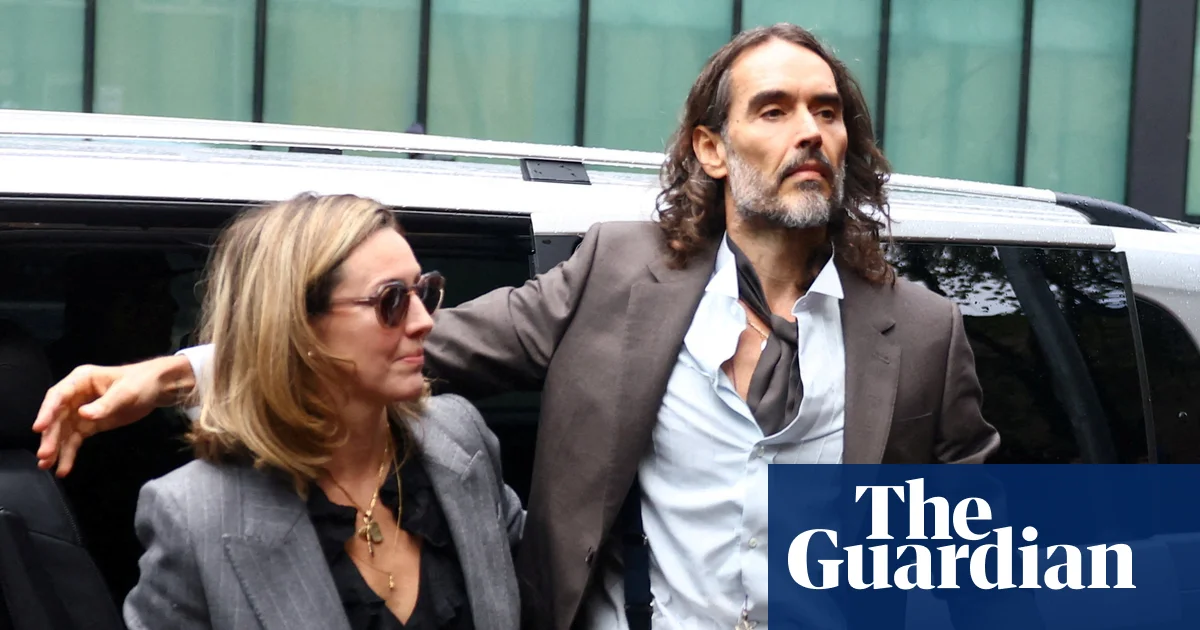
A new online safety act is likely to be needed to tackle convicted criminals such as Russell Brand using social media platforms to broadcast messages from prison, Labour MP Jess Phillips has said.
Just days after his conviction, Brand’s wife, Laura, broadcast a message from her husband to their 6.6 million YouTube subscribers, claiming he was not guilty of sexual offences for which he had been convicted by a jury. The video has had almost 850,000 views.
The Ministry of Justice (MoJ) launched an investigation into whether he had broken prison rules. Google, which owns YouTube, has rejected a UK government request, made via the Prison Service, for the video to be taken down amid warnings that it was causing distress to sexual abuse survivors.
A Google spokesperson said: “We’re aware of the new content and our teams are investigating. We suspended Russell Brand’s channel from the YouTube partner program in September 2023. The channel has not been able to monetise on YouTube since then.”
Phillips, a former minister for safeguarding and violence against women and girls, admitted the government did not have the power to compel platforms to remove distressing content of this kind.
“Ofcom codes on women’s safety online are just voluntary and frankly voluntary codes to tech companies is the triumph of hope over experience,” she told BBC Radio 4’s Today programme.
“This is an entirely new era and frankly the regulations are almost certainly not in place for the government to just demand that this be taken down.”
Passed in 2023, the Online Safety Act works to protect social media users from illegal content, as well as ensuring under-18s are not exposed to content that is not age-appropriate, such as pornography. It is being introduced on a phased basis and was expanded this year by additional legislation, updating Ofcom codes of practice. It does not explicitly address the issue of prisoners using social media platforms to directly communicate with the outside world, which in light of Brand’s platform, Phillips accepts is not sufficient.
“Regulatory frameworks, changes and potentially a second online safety act is needed, because before we haven’t had prisoners who had massive YouTube followings,” she said.
Phillips said that pressure would continue to build on organisations such as Google.
“All Google do by leaving this up is show that those codes are not good enough,” she added.
“I think it [a new online safety act] is very likely and the more that these companies show that they are not putting victims at the absolute heart of their policymaking in their content within their own content schemes. If Google want less regulation they will take this down.”
Calls by voices including the victims’ commissioner for London, Andrea Simon, for action to be taken by Google were joined on Thursday morning by ministers.
after newsletter promotion
“I hope they make the same decision that Meta has,” said the minister for children and families, Josh MacAlister, noting that the parent company of Facebook had disabled Brand’s social media accounts on the basis they breached standards prohibiting accounts that were “harmful to the community”.
Matthew Pennycook, the housing minister, told Sky News: “It’s quite a disturbing video, actually, but abhorrent in the message it’s conveying.”
“Imagine if you’re one of the victims of Brand’s heinous crimes and you see that video. Prisoners are already banned from making statements to the media. We think this is an exceptional case where MoJ ministers have asked Google to remove this specific content and we hope they’ll do so.”
Kemi Badenoch, the Conservative leader, said she was concerned if prisoners were able to use conduits in prison to send messages, but felt that Brand’s wife was a separate person and YouTube was “a private platform”.
“Immediately demanding that private platforms take down without looking at whether a law has been broken is not where I would start from,” she said.
While the Brand case has brought the issue into sharp focus, there has been concern in the past about the continued ability to retain a presence on social media of other figures such as Stephen Yaxley-Lennon, the far-right activist known as Tommy Robinson.
