


Welcome back to World Brief, where we’re looking at evolving wartime tactics from Ukraine and Russia, a new amnesty law in Lebanon, and a deadly ferry disaster in Zimbabwe.
“A Unique Operation”
Russia and Ukraine traded heavy—and atypical—blows on Tuesday that saw Moscow bombard Ukraine with North Korean ballistic missiles and Kyiv carry out what Ukrainian President Volodymyr Zelensky called “a unique operation” on a Russian Black Sea naval base.
Welcome back to World Brief, where we’re looking at evolving wartime tactics from Ukraine and Russia, a new amnesty law in Lebanon, and a deadly ferry disaster in Zimbabwe.
“A Unique Operation”
Russia and Ukraine traded heavy—and atypical—blows on Tuesday that saw Moscow bombard Ukraine with North Korean ballistic missiles and Kyiv carry out what Ukrainian President Volodymyr Zelensky called “a unique operation” on a Russian Black Sea naval base.
Russia attacked Zaporizhzhia, a city in southeastern Ukraine, with a barrage of missiles supplied by North Korea in an attempt to exploit Ukraine’s critical shortage of Patriot missile interceptors. Over the weekend, Zelensky suggested that Pyongyang could send an additional 50,000 troops to support Moscow’s war effort, reflecting the countries’ deepening ties and Russia’s voracious appetite for manpower.
Meanwhile, in a nighttime attack, Ukraine targeted Russia’s naval base in Novorossiysk, nearly 200 miles from the front lines on the far eastern reaches of the Black Sea. Kyiv sent an array of long-range, jet-powered Palianytsia drones; Neptune cruise missiles; and unmanned naval vehicles to target military infrastructure as well as Russia’s Black Sea Fleet, which reportedly retreated from Crimea to Novorossiysk. The drone attack also resulted in Russian civilian deaths, according to the region’s governor, and satellite imagery showed fires at major oil terminals.
The Black Sea is again becoming a major front in the war. On Wednesday, Russia claimed an attack on a Ukrainian cargo vessel in the Black Sea, and on Tuesday, the Romanian army reported destroying two Russian drones found floating near Romania’s largest offshore gas project. With attacks on ports and ships, Russia and Ukraine are mutually shutting down the trade routes across the sea, threatening both Russian oil exports and the vast majority of Ukraine’s agricultural exports, Paul Hockenos writes for Foreign Policy.
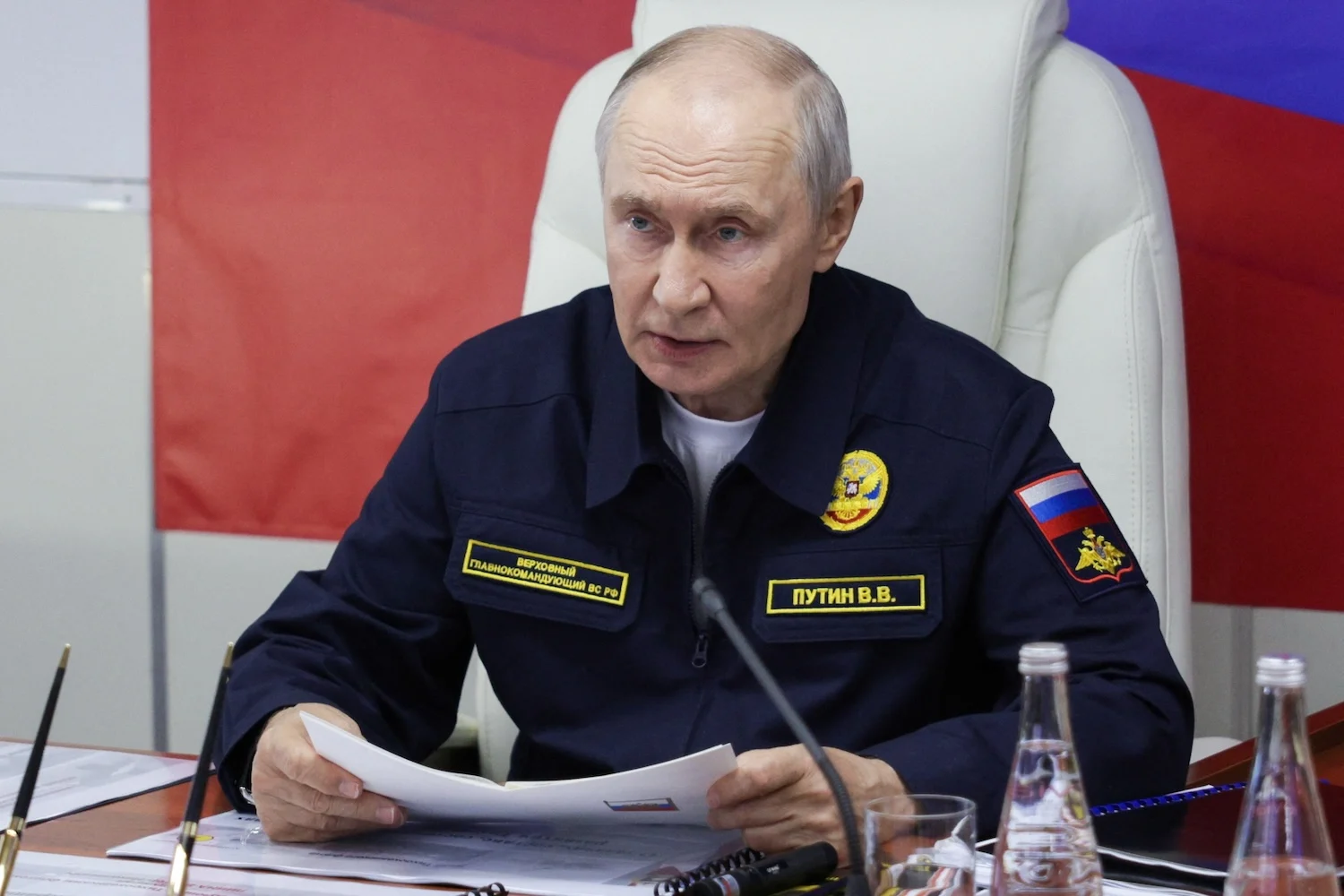
Russian President Vladimir Putin, who was overseeing naval drills in the country’s far east on Wednesday, also issued a warning to Europe. If European states continue to “plunder” commercial vessels containing Russian cargo—referring to recent seizures of ships suspected to belong to Russia’s illegal shadow fleet—Moscow will be “forced to respond in kind,” he said. Retaliation would come “wherever we ourselves deem it necessary and appropriate.”
Already, these aggressive strategies from both Kyiv and Moscow are expanding the war beyond the deadlocked front lines—at the cost of surging civilian deaths. Although Ukraine says it has handed U.S. negotiators proposals to end the war, analysts (and Zelensky himself) are skeptical that Russia wants anything but escalation. A report from the Institute for the Study of War on Monday concluded: “Ukraine’s Patriot shortages offer Russia an opportunity to cause very serious damage to Ukraine over the coming winter and will therefore contribute to delaying meaningful negotiations and protracting the war.”
Today’s Most Read
What We’re Following
Amnesty in Lebanon. Lebanon’s parliament passed two landmark bills this week designed to revamp the country’s criminal justice system. On Tuesday, the parliament voted to abolish the death penalty, becoming the first country in the Middle East to officially end capital punishment. Although Lebanon hasn’t carried out an execution since 2004, courts continued to hand out death sentences for offenses such as espionage, murder, and terrorism. Lebanon now joins more than 100 other countries that have formally abolished the death penalty for all crimes.
And on Wednesday, the country’s parliament passed a controversial and long-debated amnesty law meant to reduce overcrowding in prisons. Under the law, inmates detained without charges for more than 12 “prison years” (a prison year is defined as nine months) will be released while their trials continue. The law will also reduce sentences for certain crimes, including killing Lebanese troops and some forms of drug dealing; free some convicted militants; and allow Lebanese citizens who fought Hezbollah and later fled to Israel to return to Lebanon.
Intense debate over the bill has inflamed the country’s sectarian tensions, with Sunnis, Shiites, and Christians seeking amnesty for prisoners from their own communities. Opponents of the bill, including families of slain Lebanese soldiers, say the political bargains and sweeping amnesty fall short of real institutional reform.
Ferry disaster. A ferry capsized on Lake Kariba in Zimbabwe on Tuesday, killing 44 people. The ship had a carrying capacity of just 90 people, but Zimbabwe’s disaster management agency says that at least 114 adult passengers and five crew members were on board, and possibly as many as 153.
The government-owned vessel ferries people between rural communities on the shore of the lake to the northern town of Kariba. A witness told AFP that the boat departed in bad weather and may have been hit by a rogue wave; other witnesses told state broadcaster ZBC that the captain dismissed passengers’ urges to turn back.
President Emmerson Mnangagwa declared a state of disaster, as search and rescue operations continue. Seventy-seven people have been rescued so far. However, it remains unclear how many people may be still missing, as the total count of passengers onboard excludes potential passengers who had not bought tickets as well as children under ticketing age.
Turning a new leaf. András Baka, the former president of the Hungarian Supreme Court, was elected president of Hungary by the country’s parliament on Tuesday in a vote of 140 to 6.
His appointment follows the resignation in July of former President Tamás Sulyok, who agreed to step down after Prime Minister Peter Magyar’s ruling Tisza party passed a constitutional amendment to end his term. Before the vote to elect Baka, all 51 lawmakers belonging to former Prime Minister Viktor Orban’s Fidesz party walked out of the chamber in protest of Sulyok’s ousting.
The role of president in Hungary is largely ceremonial, but Baka’s appointment comes with a great deal of symbolism. Orban removed Baka from his role as president of the Supreme Court in 2011, three years before his term was supposed to expire—a decision later found unlawful by the European Court of Human Rights.
When Magyar defeated Orban in April, he took power with “a mandate to dismantle a competitive authoritarian system 16 years in the making,” David Koranyi wrote for Foreign Policy. Still, many have wondered whether the prime minister—who has passed 27 laws and two constitutional amendments so far—can restore democracy without resorting to undemocratic means.
After the vote, Baka told the parliament that the country’s future “demands both justice and self-restraint.” “We cannot build the new Hungary on revenge,” he said.
Odds and Ends
French cnidarians seem to have an agenda. For the second consecutive Aug. 10, “several dozen tons” of swarming jellyfish blocked pumping systems at a French nuclear plant, forcing parts of the facility to go offline. Jellyfish swarms have become more common along the French coast in recent years due to rising sea temperatures. Despite the mighty efforts of multiple fishing vessels to keep the creatures at bay over the weekend, they were eventually overrun. However, Électricité de France, the government-owned utility company that operates the plant, said that the situation has not impacted the safety of the facilities, personnel, or environment.
