


Rising sea levels due to climate change could damage hundreds of thousands of properties and millions of hectares of land along Australia’s coastline by 2100, according to a recent study. This could cost the country an economic loss of $855 billion, researchers estimate.
To calculate the costs, researchers in Australia used existing projections of sea level rise and storm surges to map out the areas that could suffer flooding by 2100. Then they identified all the houses, properties, agricultural land, and other land and infrastructure in the vulnerable areas and used real estate sources to estimate their values and arrive at what their damage could cost.
The analysis showed that by 2100, under a scenario where greenhouse gas emissions remain moderate, sea level rise and storm surges could damage roughly 268,000 properties and 2 million hectares (4.9 million acres) of land in Australia. That’s a present-value economic loss of $855.1 billion.
Under a high-emissions scenario, nearly 720,000 properties and 3.7 million hectares (9.1 million acres) of Australian coastal properties could suffer damage, amounting to present-value losses of up to $1.91 trillion.
“Sea level rise may physically affect a large number of Australians who live near the coast, as the majority of Australians live within 50 kilometres [31 miles] of the coastline,” Tom Kompas, study lead author and a professor of environmental economics and biosecurity at the University of Melbourne, said in a statement.
Australia’s coastline is massive, extending roughly 34,000 kilometers (21,000 miles). The analysis found that every region of the country will see considerable damage from sea level rise. Queensland state has the most at-risk properties, more than 93,000, followed by New South Wales and Western Australia. Among cities, the Gold Coast is most at risk, potentially facing losses of $84.4 billion.
The analysis is the foundation of a new report, “Rising Seas, Rising Bills,” released recently by the Australian nonprofit Climate Council. Climate scientist and report co-author Andrew Watkins said, “The science shows that the most extreme sea levels we see in a typical year now, will occur monthly by 2090. That’s simply too often to repair the damage.”
Scientists estimate that a 1-centimeter (0.4-inch) rise in sea level leads to a potential horizontal loss of roughly 1 meter (3.3 feet) on average. Global average sea level has already risen by at least 22 cm (8 in) over the past century, the report notes, and could rise by between 30 cm (11.8 in) and a meter compared to 2014 levels.
“Our least costly option is to avoid building in places where we know the risks are highest, and there’s a lot we can do to restore our coastlines and build in ways that reduce future risks,” Kompas said. “These are hard, but necessary decisions that communities are already facing.”
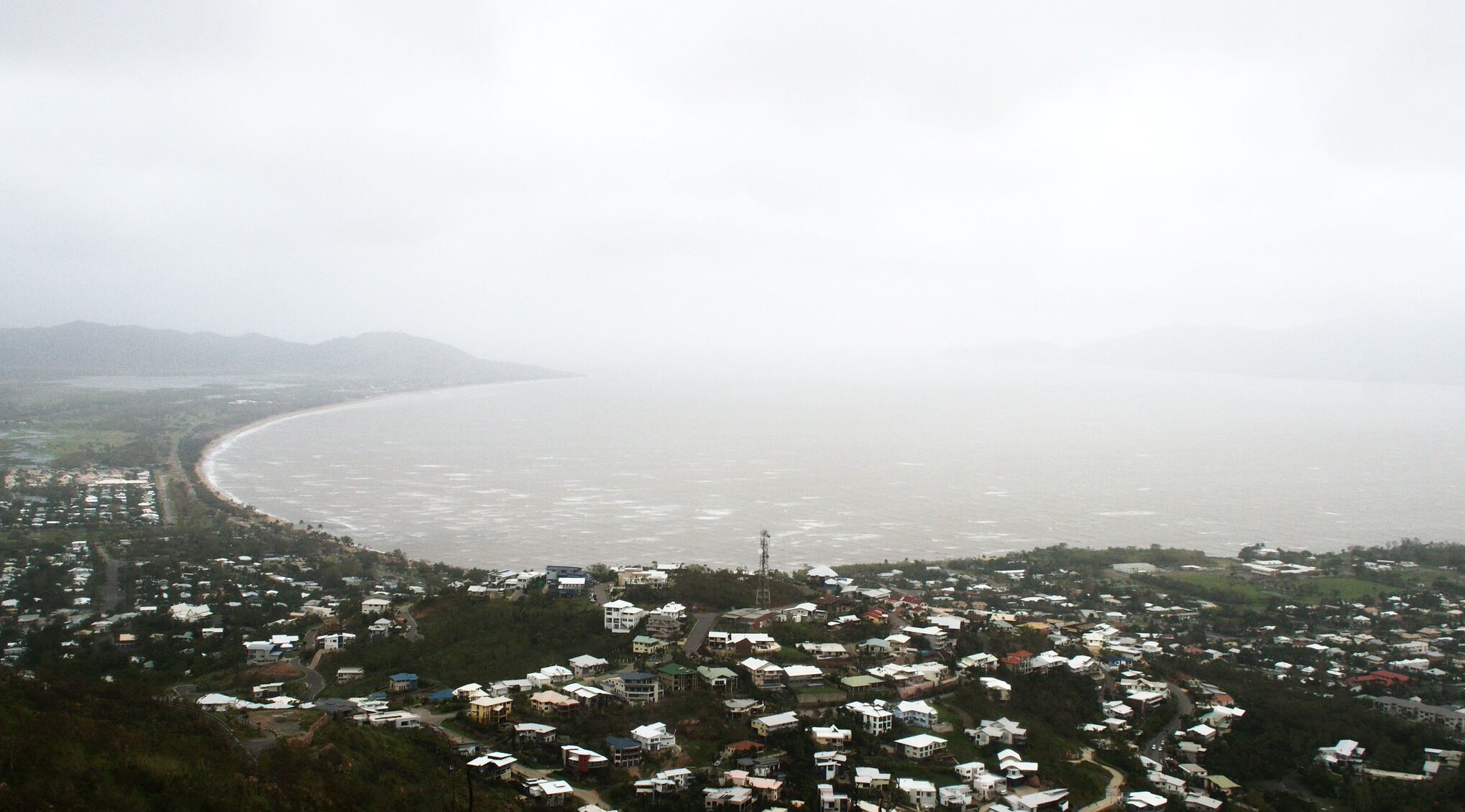
Banner image: Townsville city in Queensland suffered significant damage during Tropical Cyclone Yasi in 2011. Image by Bannon Keft via Flickr (CC BY-NC-SA 2.0).
