


ORLA, Texas—Elected officials and industry leaders warn that Texas is at the “precipice” of running out of underground space to dispose of the nearly 1 billion gallons of wastewater that oil and gas production generates every day in the Permian Basin.
The toxic wastewater, known as produced water, is usually injected underground into disposal wells. But these wells have increased underground pressure, triggering earthquakes and blowouts. Instead of underground injection, the oil industry is now seeking alternatives to treat and reuse produced water.
Industry experts made clear last week, at a legislative hearing in Austin and a conference in Midland, that a lack of disposal space could soon constrain oil production in the Permian Basin.
The Texas Commission on Environmental Quality (TCEQ) is developing two permitting programs for re-using treated produced water. The agency began accepting permit applications to discharge the treated wastewater into rivers in 2024 but has yet to issue any permits. The agency released a proposed rule earlier this year to allow treated produced water to be applied on land for irrigation or rangeland restoration.
In public testimony last week, Commissioner Jim Wright of the Railroad Commission, which regulates oil and gas, emphasized the urgency of providing alternatives to disposal wells.
“Continued delay could restrict oil and gas development across the Permian Basin,” he said during a Texas Senate hearing. “I respectfully urge TCEQ to finalize and issue workable permits as soon as possible.”
While political pressure mounts on the TCEQ to issue permits, pilot projects using treated produced water are ongoing. Researchers are still gathering data to publish more peer-reviewed papers that will inform the permitting programs. Advocates question whether regulators are jumping the gun by drafting permits as research continues on the safety of treated produced water and treatment technologies.
TCEQ declined an interview request from Inside Climate News. The agency did not respond to individual questions regarding the scientific basis of its rulemakings or when the agency anticipates issuing the first permits for produced water discharges, but it provided a statement.
“TCEQ develops permits that are unique and reflect site-specific conditions of a single entity’s proposed activities and the location of the activity,” spokesperson Victoria Cann wrote. “Permits are drafted to ensure compliance with the Texas Surface Water Quality Standards and protective of drinking water, aquatic life, and other existing uses of the receiving waterway.”
Senators Hear Updates in Austin
TCEQ regulates discharges from numerous municipal and industrial sources. But produced water is an especially complex waste stream.
Fracking companies inject often-toxic chemicals underground to stimulate wells. These fluids return to the surface in produced water, along with extremely salty water that has been trapped for thousands of years in inaccessible underground formations. Among numerous hazardous compounds, produced water may contain bromide, arsenic, strontium, barium, radioactive isotopes and volatile organic compounds, including benzene, toluene, ethylbenzene and xylenes.
TCEQ obtained primacy in 2021 from the U.S. Environmental Protection Agency to permit discharges of treated produced water. During the 2025 legislative session, Texas lawmakers transferred authority to permit land application of treated produced water from the Railroad Commission to the TCEQ, which has greater expertise in water quality.
In April, the Texas Produced Water Consortium, a research group funded by the state and based at Texas Tech University, published a report with water quality data from five pilot projects.
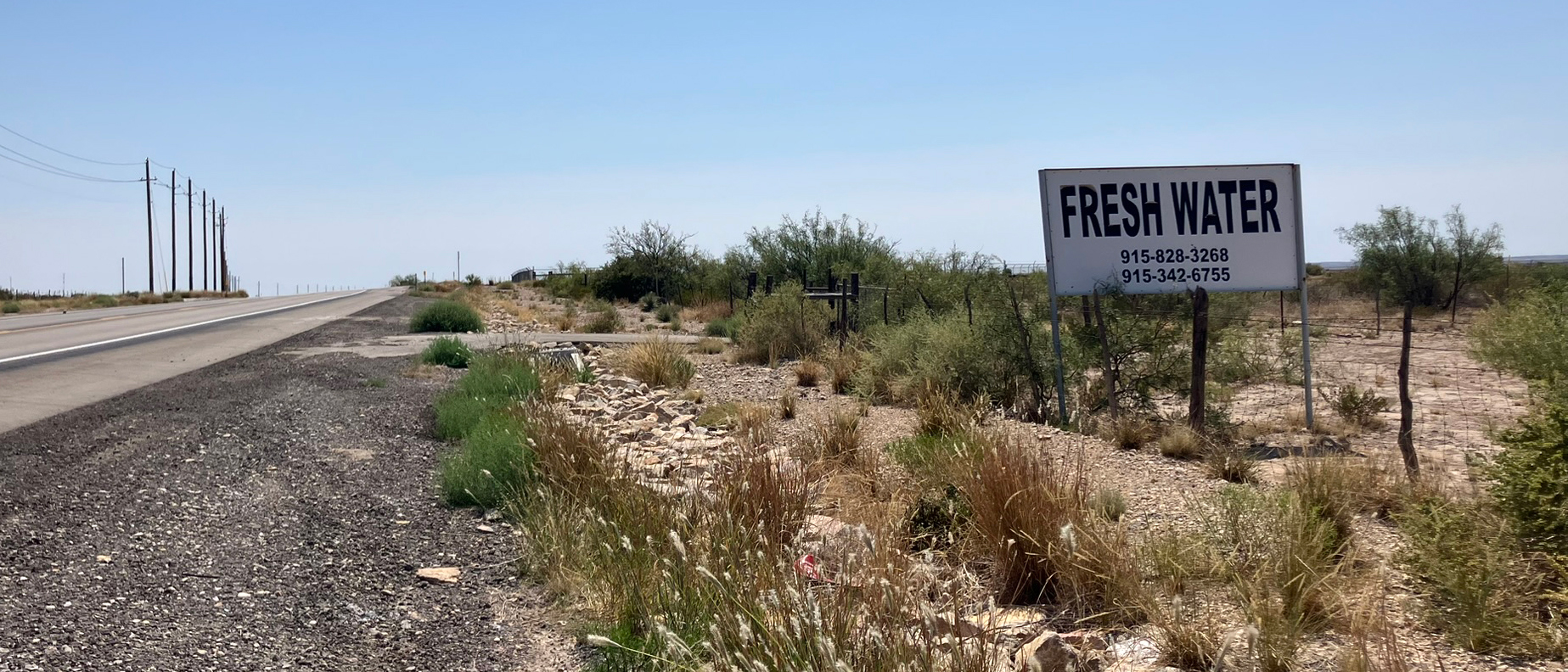
The Texas Senate Natural Resources committee met in Austin last week to hear updates from regulators and industry representatives.
Michael Lozano of the Permian Basin Petroleum Association testified that companies could soon run out of disposal space. “We’re at this precipice,” he said. “This is a large volume of water that we don’t have avenues for that we’re trying to rapidly create.”
State Sen. Kevin Sparks, a Republican from Midland and committee chair, stressed a prompt response from the TCEQ when he referred to discharges of treated produced water from treatment plants.
“Obviously, we want to make sure that the work product that comes out at the end of these plants is acceptable,” Sparks, who is also the director of an oil company, said while addressing panelists, including TCEQ Executive Director Kelly Keel. “But timing is a critical issue at this point.”
Not all the speakers recommended moving quickly. During public comments, Julie Range, policy manager for the nonprofit organization Commission Shift, noted that TCEQ has not made public any water quality standards for hazardous compounds in produced water. She added that the public does not have access to much of the data informing the permitting process.
“Let’s not trade one problem for another by hastily allowing unsafe waste fluids into our soils and into our rivers,” she said.
A Massive Ice Maker in the Desert
Further west, in the Permian Basin, energy companies aren’t waiting for regulatory certainty to move ahead with treatment technology.
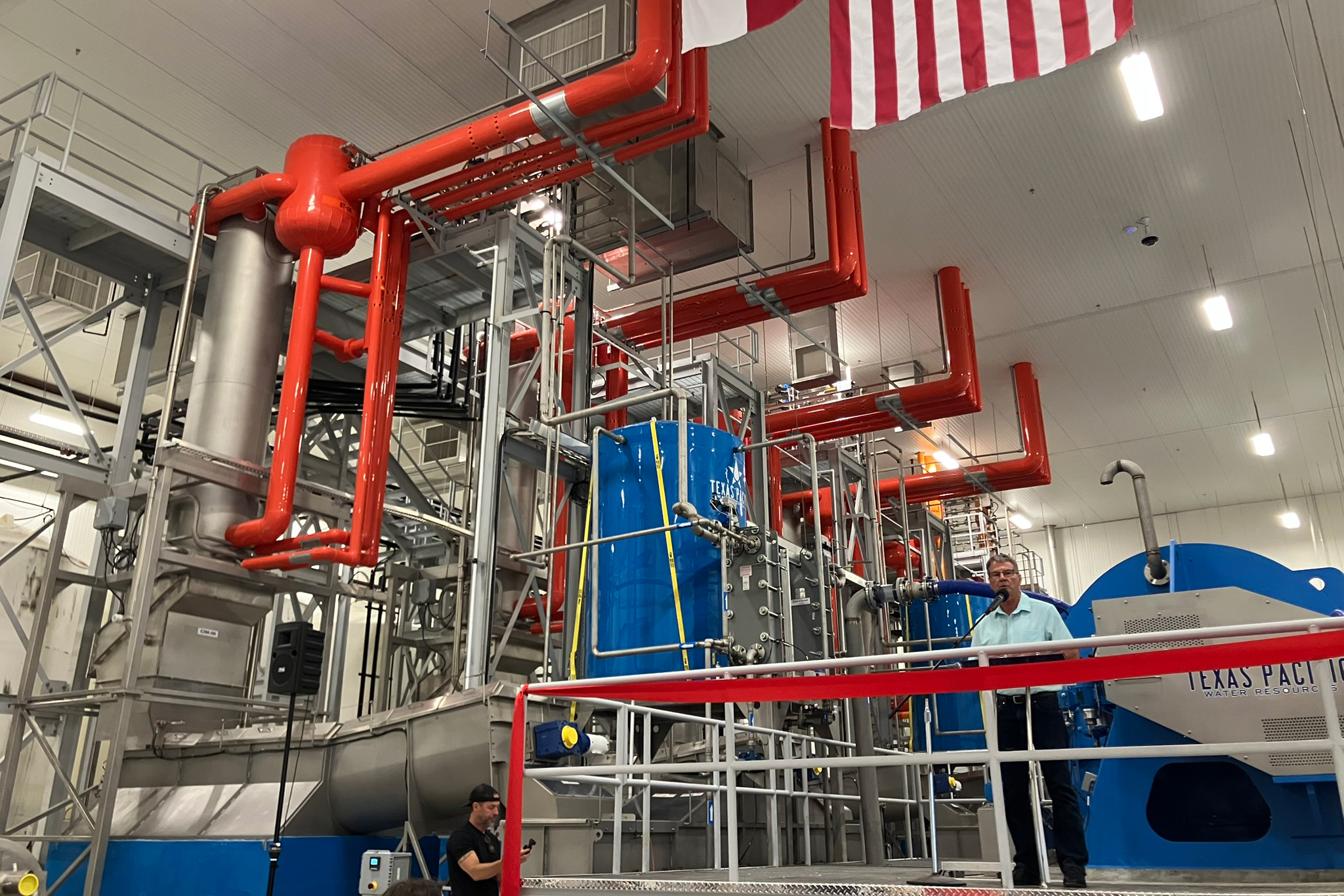
The day before the Senate committee hearing, Texas Pacific Water Resources hosted a ribbon cutting at its new treatment facility outside the small town of Orla. The plant will be able to treat up to 10,000 barrels, or 420,000 gallons, of produced water a day.
The desert sun blazed outside as invitees gathered inside the large warehouse, with red pipes towering over their heads. The plant is deep in the oilfields of Reeves County, near the New Mexico state line.
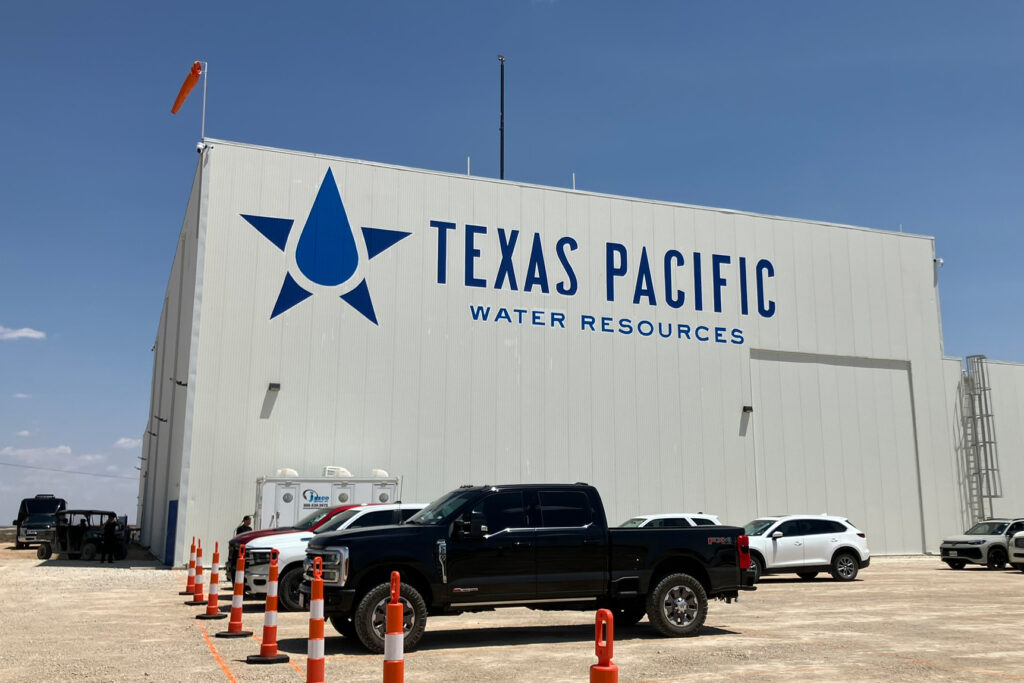
Texas Pacific Water Resources chose the location, in part, because it lies within a “seismic response area,” where the Railroad Commission has reduced underground injection to limit the risk of earthquakes. Texas Pacific expects demand for produced water treatment to be concentrated in these areas.
The company is using freeze desalination technology to treat the raw produced water, which can be several times saltier than seawater. Adrianne Lopez Billings, who leads research at Texas Pacific Water Resources, described the technology as a “massive ice maker.”
When water molecules freeze, the salts are pushed out and separate into a brine. Of the raw produced water that is treated, about half will be recoverable for reuse. The other half will be brine that still must be disposed of underground.
State Sen. Charles Perry, a Republican from Lubbock, thanked Texas Pacific for its “risk taking” and investment in the technology.
“If they tell me it’s good enough to drink one day, I’ll drink it,” he said. “I’m looking for the first glass.”
Texas Pacific Water Resources is a subsidiary of Texas Pacific Land Corp., one of the largest landowners in the state. Texas Pacific already holds a permit for a pilot project to apply treated produced water onto nearby rangeland. The company recently requested permission to increase the permitted volume of water to 2.73 million gallons per day spread across 102 acres.
Texas Pacific Water Resources submitted a permit application to the TCEQ in 2024 to discharge treated produced water into the nearby Salt Creek, a tributary of the Pecos River. More than two years later, they are still waiting on the permit to be issued. Several other companies have applied to discharge treated produced water into the Pecos River watershed. Lopez Billings, of Texas Pacific Water Resources, said that they have worked on a second draft of the permit with the TCEQ and hope to receive approval by the end of the year.
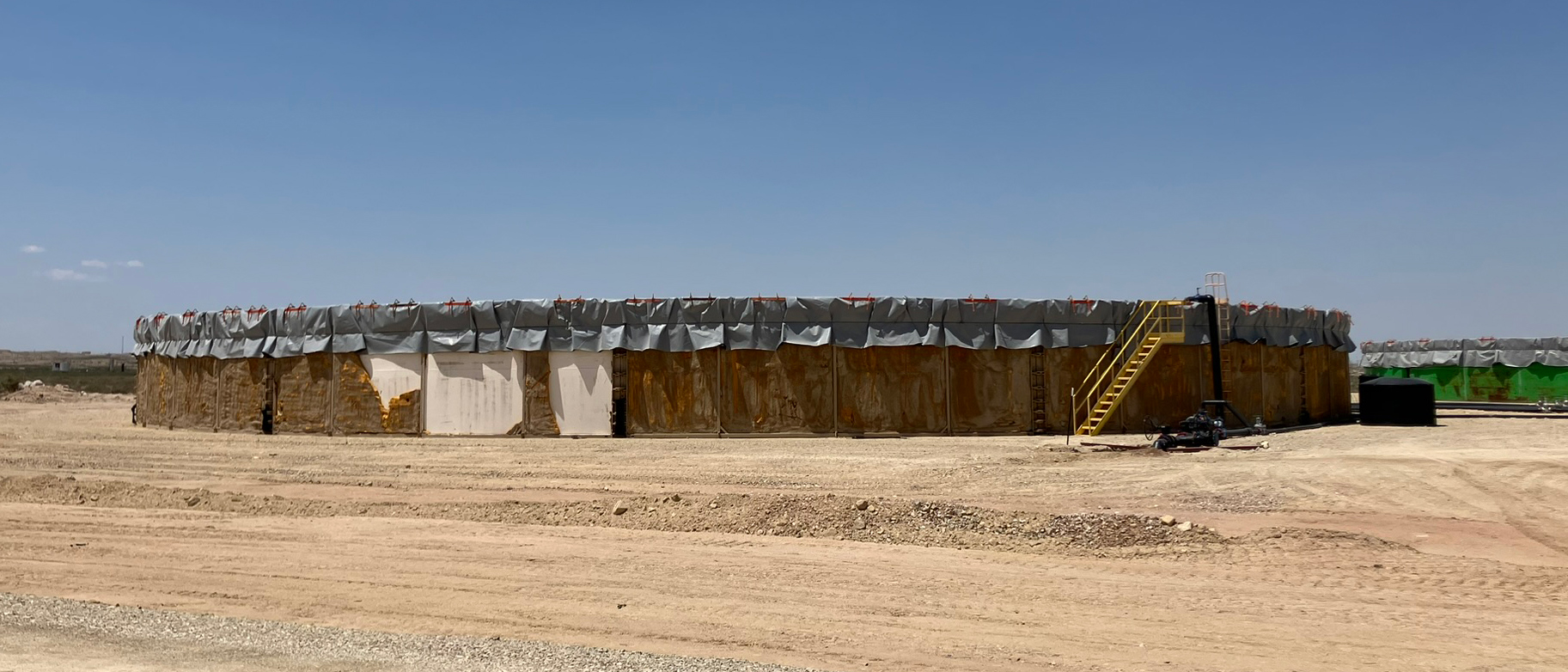
Lopez Billings partnered with scientists at Texas Tech University to study using treated produced water to irrigate alfalfa at another Texas Pacific facility near Midland. A peer-reviewed paper in the journal Irrigation Science based on that research was published mere days before the recent ribbon cutting, after more than two years of work.
“There is a turnaround time in doing the pilots, gathering the data, submitting it for peer review,” she told Inside Climate News. “I think a lot of that work was really important for TCEQ to take what we were saying as fact. They had to see it in peer-reviewed articles.”
She added that Texas Pacific can also use the treated produced water on-site for internal re-use, in condensers and chillers. She said that is informing their plans to use treated produced water at data centers that are flocking to the Permian Basin.
“If they tell me it’s good enough to drink one day, I’ll drink it. I’m looking for the first glass.”
— State Sen. Charles Perry
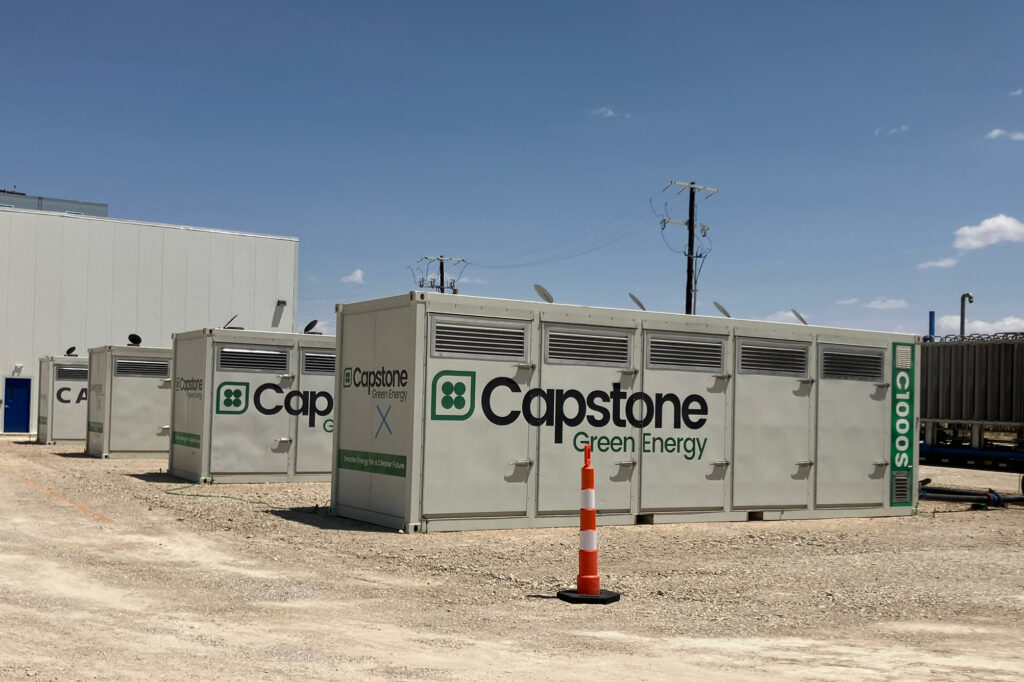
Challenges remain. Desalination technology is energy intensive. To treat 10,000 barrels a day—a drop in the bucket compared to what the industry hopes to eventually treat—the Orla facility needs 5.5 megawatts of electricity, enough to power several thousand homes. They are relying on a mix of line power and micro-turbine generators.
Produced water treatment companies will have to line up alongside data centers and other projects seeking to connect to the electric grid or secure power generation equipment. The energy demand is one reason why treating produced water is still more expensive than the alternative of injecting it underground.
Scientific Research Continues
The Produced Water Society’s annual conference in Midland drew hundreds of people to two days of panels last week. The status of TCEQ permit applications was a hot topic.
In the words of Brady Murphy, president and CEO of the energy services company TETRA Technologies, the next step is for regulators to “really define what is acceptable to put into the environment.” TETRA Technologies currently treats produced water for reuse in the oilfields.
Those who hoped that remarks from TCEQ Commissioner Catarina Gonzales would clear the uncertainty were likely disappointed. After an extended aside about cowboy boots, Gonzales said she couldn’t speak to specific permit applications for produced water discharge.
“There’s a couple that, I’m told, are pretty close,” she said. “We’re kind of in the final stages of going back and forth with companies. But at this point, I can’t even tell you who those are.”
This story is funded by readers like you.
Our nonprofit newsroom provides award-winning climate coverage free of charge and advertising. We rely on donations from readers like you to keep going. Please donate now to support our work.
Robert Crain, executive vice president at Texas Pacific Water Resources, followed Gonzales on the stage. He touched on the status of the company’s permit application with TCEQ to discharge treated produced water into the Salt Creek.
“We want this permit framework to be defensible,” he said. “We don’t want to discharge … bad water.
“But we also have to have a framework that we can meet and that fits in those economic boundaries,” Crain continued. “We can’t have a $100,000-a-month sample fee. We need to do all the homework, we need to do all the legwork.”
His comments hinted at the tension between regulatory rigor and economic feasibility. Pilot studies and academic research on produced water have included wide-ranging water testing methods, including non-targeted analysis and “whole effluent toxicity.” Researchers have looked for hundreds of constituents that may be in the waste stream. But this battery of tests is expensive and can only be completed at certain labs.
TCEQ has not publicly disclosed what ongoing monitoring will be required of treated produced water and the frequency of testing. Companies could push back on testing requirements that they consider too costly or onerous, as indicated by Crain’s comments.
While many industry leaders are bullish on the prospects for treating produced water to use outside the oilfields, researchers have called for more scientific study.
Authors of the recent peer-reviewed paper in Irrigation Science wrote that their findings suggest that irrigating alfalfa with treated produced water “has the potential” to supplement existing irrigation resources. But the authors wrote that results should be considered preliminary because the study was limited to a single growing season. The authors recommended multi-year studies to evaluate cumulative effects of continuous irrigation with treated produced water.
Another study published in July in Separation and Purification Technology sought to address “knowledge gaps” in the literature. The authors wrote that short-term laboratory or bench-scale experiments conducted to date “do not adequately capture the operational variability or long-term reliability of treatment technologies under real-world conditions.” They also noted a “lack of comprehensive water quality characterization and toxicity studies for PW treatment.”
The Sierra Club Lone Star Chapter, which is a member of the Texas Produced Water Research Consortium, wrote earlier this year that additional research is needed to determine what level of treatment is necessary, what water quality standards should apply and how treated produced water may affect the environment and public health over the long-term.
“Writing the regulations before robust research can inform them is unreasonable,” the group wrote.
These ongoing questions have fueled public concern over the use of treated produced water outside the oilfields. TCEQ received nearly 450 comments on the proposed land application rule earlier this year. An analysis by the organization Future Heist found that over two-thirds of commenters opposed the draft rule.
About This Story
Perhaps you noticed: This story, like all the news we publish, is free to read. That’s because Inside Climate News is a 501c3 nonprofit organization. We do not charge a subscription fee, lock our news behind a paywall, or clutter our website with ads. We make our news on climate and the environment freely available to you and anyone who wants it.
That’s not all. We also share our news for free with scores of other media organizations around the country. Many of them can’t afford to do environmental journalism of their own. We’ve built bureaus from coast to coast to report local stories, collaborate with local newsrooms and co-publish articles so that this vital work is shared as widely as possible.
Two of us launched ICN in 2007. Six years later we earned a Pulitzer Prize for National Reporting, and now we run the oldest and largest dedicated climate newsroom in the nation. We tell the story in all its complexity. We hold polluters accountable. We expose environmental injustice. We debunk misinformation. We scrutinize solutions and inspire action.
Donations from readers like you fund every aspect of what we do. If you don’t already, will you support our ongoing work, our reporting on the biggest crisis facing our planet, and help us reach even more readers in more places?
Please take a moment to make a tax-deductible donation. Every one of them makes a difference.
Thank you,

Reporter, El Paso, Texas
Martha Pskowski covers climate change and the environment in Texas from her base in El Paso. She was previously an environmental reporter at the El Paso Times. She began her career as a freelance journalist in Mexico, reporting for outlets including The Guardian and Yale E360. Martha has a B.A. in Environmental Studies from Hampshire College and a master’s degree in Journalism and Latin American Studies from New York University. She is a former Fulbright research fellow in Mexico. Martha can be reached on Signal at psskow.33.
