


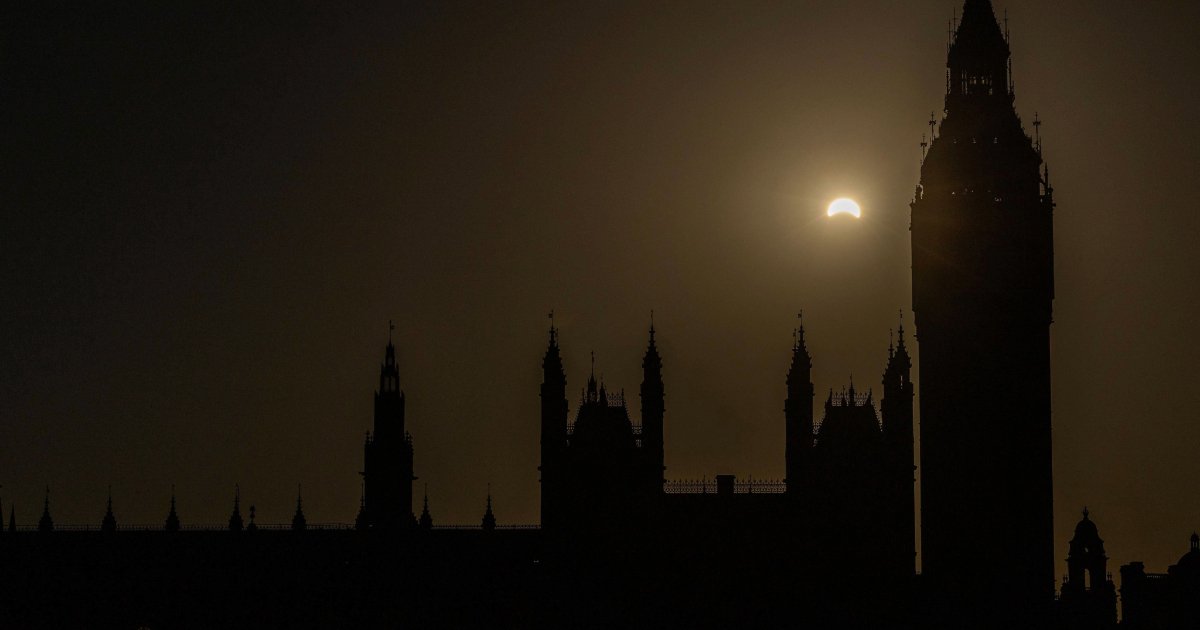
What was claimed
A photo shows a “ring of fire” total solar eclipse at its peak over Stonehenge.
Our verdict
It’s fake. The picture contains Google’s SynthID watermark. The eclipse visible from the UK on Wednesday 12 August was partial, not total.
A picture being shared online with claims it shows a total eclipse over Stonehenge isn’t real.
The image has been circulating on Facebook with captions saying: “This is what Totality looks like.”
But the picture is fake and the recent eclipse didn’t reach totality in the UK.
A partial eclipse was visible to many people across the country on Wednesday 12 August, with up to 95% of the sun being covered by the moon in some places. But a total eclipse only occurred in other parts of Europe.
Join 74,000 newsletter subscribers who trust us to check the facts
Sign up to get weekly updates on politics, immigration, health and more.
Subscribe to weekly email newsletters from Full Fact for updates on politics, immigration, health and more.
Our fact checks are free to read but not to produce, so you will also get occasional emails about fundraising
and other ways you can help. You can unsubscribe at any time. For more information about how we use your data
see our Privacy Policy.
Besides, the image itself is bogus.
We found it contained SynthID, an invisible watermark added to AI-generated content created with some tools, in this case, Google’s AI tools.
Stonehenge also doesn’t really look how it’s shown in the picture.
It’s important to consider whether what you see on social media comes from a trustworthy source before sharing. Our Full Fact toolkit and guides to spotting AI-generated images and videos can help you do this.
