


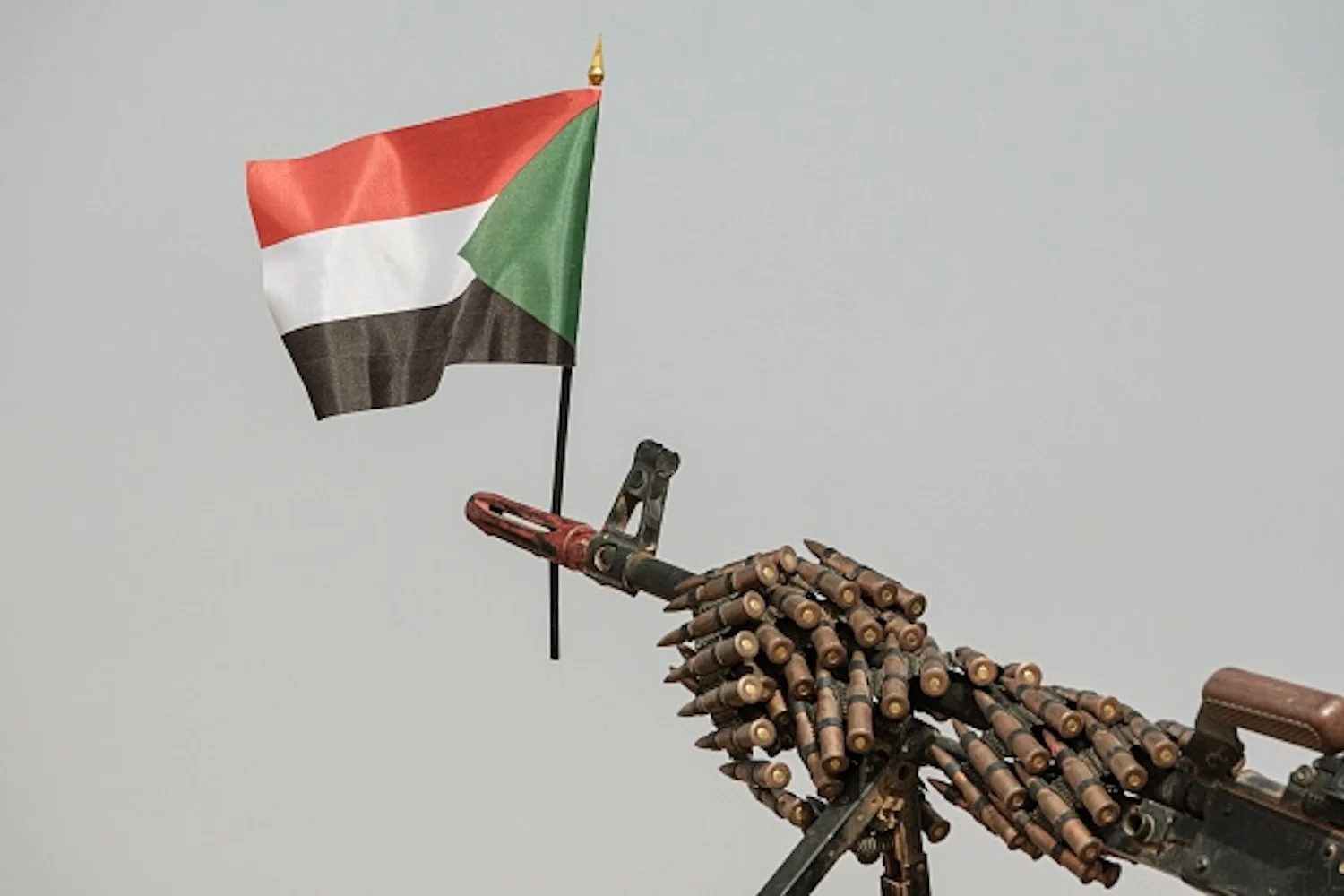
Sudan has been descending into hell for years. The United Nations Security Council now has a chance to do right by the people of Sudan and remember what it was created to do: stop wars, keep the peace, and protect lives. But it can do those things only if its members are willing to step up.
Sudan is experiencing the world’s worst humanitarian crisis. More than 33 million people are in need of basic assistance. An estimated 19.5 million people, disproportionately women and children, face acute hunger. Almost 9 million people have now been driven from their homes, another 4.5 million have fled the country, and at least 150,000 are dead. Yet somehow, this historic catastrophe has generated little more than horrified whispers from the West’s most vaunted institutions.
Sudan has been descending into hell for years. The United Nations Security Council now has a chance to do right by the people of Sudan and remember what it was created to do: stop wars, keep the peace, and protect lives. But it can do those things only if its members are willing to step up.
Sudan is experiencing the world’s worst humanitarian crisis. More than 33 million people are in need of basic assistance. An estimated 19.5 million people, disproportionately women and children, face acute hunger. Almost 9 million people have now been driven from their homes, another 4.5 million have fled the country, and at least 150,000 are dead. Yet somehow, this historic catastrophe has generated little more than horrified whispers from the West’s most vaunted institutions.
The Rapid Support Forces (RSF) and its allied militias have committed genocide, murdering men and boys on an ethnic basis and raping women and girls. The U.N. estimates that more than 12 million Sudanese women and girls—roughly half the country’s female population—are at risk of sexual violence. The Sudanese Armed Forces (SAF) have committed atrocities, too.
More than 130 humanitarian workers have been killed since the war began. Both sides loot and block food, aid, and other supplies. They also brandish access to lifesaving aid as a tool of suppression, with the lives of local recipients hanging in the balance. And now, with the advent of drone warfare, both sides are finding it easier and cheaper to inflict more lethal damage.
Last year, at least 2,670 people, a number that includes combatants and civilians, were killed in drone attacks. That represents a 600 percent increase in drone-related deaths over a single year. In just the first five months of this year, drones killed more than 1,000 people, making up roughly 80 percent of civilian deaths during that period. Markets, hospitals, schools, and aid routes have become fair game for thugs with remote controls. The barrier to entry for mass violence in Sudan has never been lower, yet the U.N. is policing the conflict with an arms embargo written more than two decades ago. Security Council Resolution 1591, which imposed an arms embargo on Darfur in 2005, is older than Apple’s iPhone—let alone the drones hovering above Sudan today.
The international community’s approach to Sudan has simply not kept up with the times.
First, there’s the battlefield. The war has spread into the Kordofan region and Blue Nile state. The Security Council’s embargo stops at Darfur, several hundred miles away from the new arenas of conflict.
Then there’s the international meddling, which has undoubtedly prolonged the fighting and heightened the heavy toll on civilians. More than a dozen countries with diverse motives are providing some form of military support to the warring parties. Mercenaries have been recruited from as far away as Colombia. Foreign networks of all stripes supply drones, weapons, parts, money, and their own renditions of expertise.
Munitions do not become duds and drones do not fall out of the sky if they cross imaginary embargo lines on maps, for example where Kordofan begins and Darfur ends. Neither do smugglers sit on their hands when they can move weapons from other parts of Sudan. They adapt—just as the RSF and SAF have.
But the U.N. has failed to adapt. For more than 20 years, the Security Council has kept the same geographic embargo in place while the battlefield, the weapons, and the players supplying them have shifted unrecognizably.
That’s why the G-7—including the United States—has called on the Security Council to expand the embargo across all of Sudan.
So let’s do it.
Read More
-
Solidarity activists take part in a Hands Off Sudan march in London on Nov. 9, 2024. Solidarity activists take part in a Hands Off Sudan march in London on Nov. 9, 2024. Washington Must Confront Abu Dhabi Over Sudan
If Trump truly wants to be a peacemaker, he should banish the UAE from the negotiating table.
-

In a landscape almost entirely covered with light brown sand, a small cemetery in the foreground is filled with mounds of dirt marked with sticks or small stones. Beyond that, a woman in an ankle-length dress and a headscarf walks by, her shadow long behind her. Low-rise buildings in a similar sandy color are visible beyond a fence behind her. In a landscape almost entirely covered with light brown sand, a small cemetery in the foreground is filled with mounds of dirt marked with sticks or small stones. Beyond that, a woman in an ankle-length dress and a headscarf walks by, her shadow long behind her. Low-rise buildings in a similar sandy color are visible beyond a fence behind her. Horrors in Sudan Highlight Deterioration of Western Diplomatic Corps
Decades of neglect have hollowed out expertise and experience.
-

Mona Ibrahim, a displaced Sudanese mother, and her children sit on the ground in the famine-stricken Zamzam camp for Internally Displaced Persons (IDP) in northern Darfur, Sudan, on Jan. 21. Mona Ibrahim, a displaced Sudanese mother, and her children sit on the ground in the famine-stricken Zamzam camp for Internally Displaced Persons (IDP) in northern Darfur, Sudan, on Jan. 21. Why Won’t the UAE End the War in Sudan?
An independent inquiry has established the complicity of external actors.
The United States has presented a resolution to the Security Council that would expand the arms embargo nationwide, making clear that sanctions and member state implementation of those rules apply to all the networks keeping this war alive—on both sides, with no carve-outs. Yes, it will even apply to the arms traffickers, procurement agents, mercenary recruiters, state-backed patrons, established financiers, drone suppliers, and genocidal commanders who have for so long evaded justice.
Already, some on the Security Council are posturing to oppose or abstain from this resolution. They may try to portray this embargo as taking sides in Sudan’s civil war. Others may try to deny their own direct involvement in Sudan, suggesting instead that private traders and intermediaries are responsible for the flow of weapons into the country.
There is irony in both arguments. For one, the new blanket embargo would apply to the RSF, the SAF, and any actors that feed either side munitions. If anything, evangelizing the current embargo, evidently porous and incomplete as it is, betrays that those warning against “taking sides” already have.
Then there’s the cognitive dissonance in blaming rogue traders and freelance brokers as the real culprits while opposing a resolution designed to reach precisely those actors. If private financiers, smugglers, and unofficial procurement networks are really to blame, then help us identify them, sanction them, block their arms trafficking, and shut them down. A government that truly has nothing to hide should have no objection helping the U.N. monitor and close arms channels it claims are operating beyond its control.
Under President Donald Trump, the United States has already gone to work. We have sanctioned individuals and entities facilitating mercenary recruitment, foreign fighters, procurement, and other support to this war. Other countries should do the same at and beyond the U.N.
Think of this resolution as a rubric. Those tearing Sudan apart will be graded for their actions. But it will still be the member states that must enforce consequences.
The U.N. will monitor violations, identify the networks moving weapons, and document who flouts the embargo. And for member states, most of which place a premium on acting pursuant to clear U.N. authority, this resolution removes any ambiguity or excuse. With the Security Council’s mandate behind them, member states can—and should—stop shipments, freeze assets, tighten export controls, and move against the networks violating the embargo.
In the end, Sudan’s warring parties must still stand down. We, for our part, believe they should do so via a humanitarian truce that the United States has proposed alongside a U.N. mechanism to deliver aid and create space for a broader peace process.
As long as weapons are easier to come by than food in Sudan, cooler heads have little chance to prevail. And it appears that some on the Security Council are just fine with that. Any Security Council member considering abstaining or voting no should understand what it is voting for. It will mean business as usual in Sudan—and all the wanton violence that entails.
At best, vetoes and abstentions alike turn a blind eye to drones bombing hospitals and markets, aid blocked from starving families, and millions of innocents paying the price for others’ geopolitical voyeurism. At worst, those who would veto or abstain should welcome the question: Why are you aiding and abetting those on either side who are destroying Sudan, its people, and its future?
Neither the RSF nor the SAF has any legitimate claim to govern Sudan when this war ends. Both have committed atrocities against the Sudanese people, and both have forfeited any suggestion that they possess political legitimacy. Sudan’s future cannot belong to whichever armed faction is left standing. It must come from a credible, independent civilian dialogue that gives the Sudanese people themselves—not the men with the most guns or the deadliest drones—a say over their future.
The United States will not rubber-stamp another year of descension into hell. We and the world will note who stands with the Sudanese people and who stands against them.
