

Close Menu
NCIJ Network NCIJ Network
    What's Hot

    Google Research Introduces GlucoFM: A 0.72M-Parameter Dual-Stream Foundation Model for Continuous Glucose Monitoring

    August 27, 2026

    Fake Apple Support AI Calls Target Stolen-Device Owners for Passcodes and 2FA Codes

    August 27, 2026

    Coinbase And Better Announce Bitcoin-Backed Mortgages

    August 27, 2026
    Facebook X (Twitter) Instagram
    Trending
    • Google Research Introduces GlucoFM: A 0.72M-Parameter Dual-Stream Foundation Model for Continuous Glucose Monitoring
    • Fake Apple Support AI Calls Target Stolen-Device Owners for Passcodes and 2FA Codes
    • Coinbase And Better Announce Bitcoin-Backed Mortgages
    • Once upon a time, insects had 24 legs
    • China’s Tianmu Mountain reserve tackles modern conservation amid religious tradition
    • At least one dead after car crashes into crowd in northern France
    • Apple sets its iPhone 18 event for September: A new foldable and CEO could steal the show
    • Red Flags That Expose Fake North Korean IT Workers
    • About
      • Our Team
      • Editorial Policy
      • Editorial Independence
      • International Support
    • Trust & Standards
      • AI Usage Policy
      • Conflict of Interest Policy
      • Corrections Policy
      • Ethics Policy
      • Fact-Checking Policy
      • Source Protection
    • Get Involved
      • Guide for Sources
      • Support Independent Journalism
    • Legal
      • Cookie Policy
      • Privacy Policy
      • Terms of Use
    Facebook X (Twitter) Instagram
    NCIJ Network NCIJ Network
    Thursday, August 27
    • Home
    • World
    • Ai
    • Business
    • Politics
    • Health
    • Crypto
    • Science
    • Technology
    • Cybersecurity
    • Defense & Security
    • Economy
    • Energy
    • Europe
    • More
      • Fact Check
      • Investigations
      • Opinion & Analysis
      • Environment
    NCIJ Network NCIJ Network
    Home»Science

    Once upon a time, insects had 24 legs

    NCIJ NETWNCIJ NETWORKBy NCIJ NETWNCIJ NETWORKAugust 27, 2026 Science No Comments4 Mins Read
    Share
    Facebook Twitter LinkedIn Pinterest Email

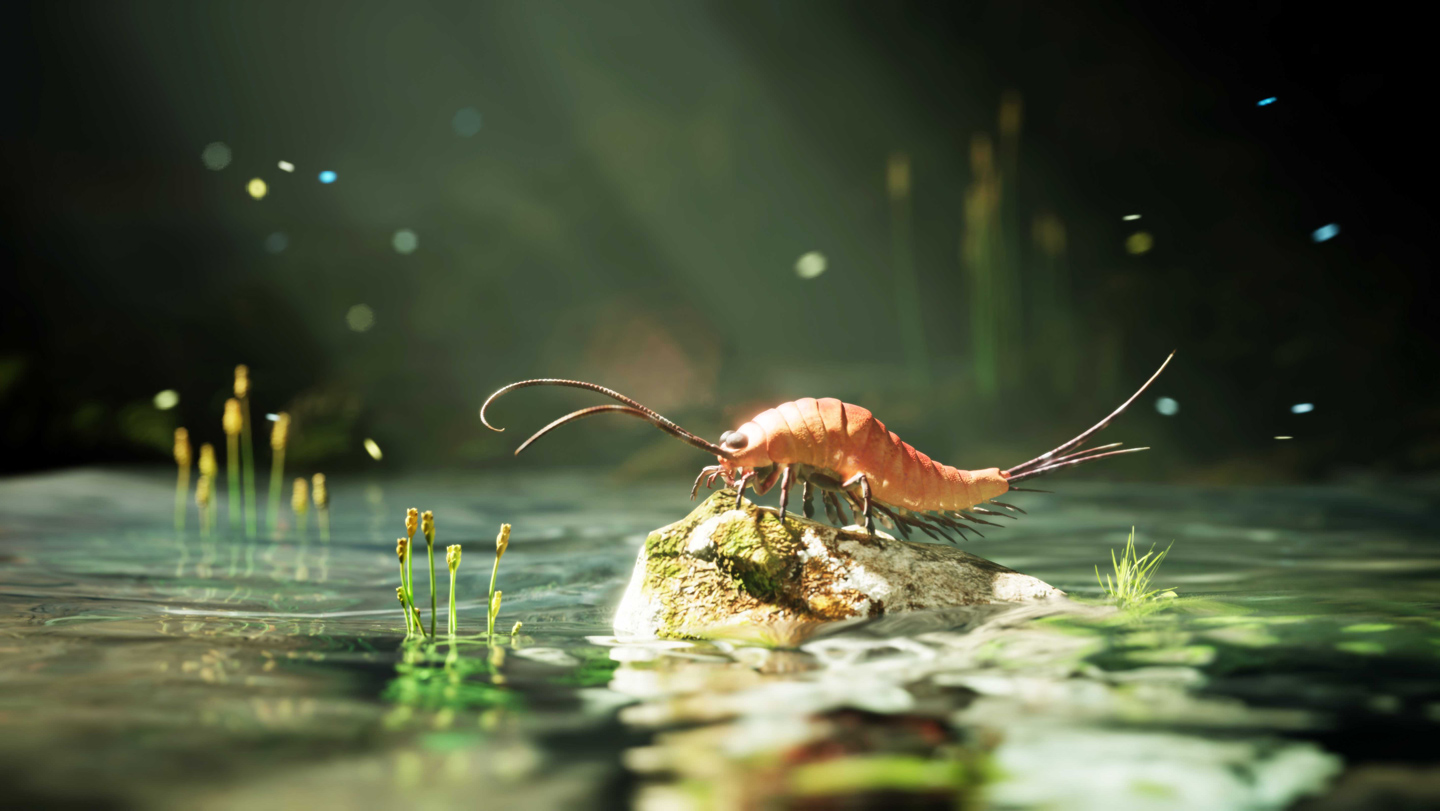
    Insects are famous for their six-legged body plan, but that wasn’t always the rule. A 324-million-year-old fossil dug up from a shale bed in West Texas had a markedly different setup, sporting a whopping 18 extra legs along its belly — a body plan unlike that of any living insect.

    It is one of the oddest insects ever found, and possibly the most consequential, researchers report August 26 in Nature.

    The discovery “straddles a big gap in the fossil record,” says paleoentomologist Erik Tihelka of the University of Cambridge. It offers a glimpse of the transition from many-legged, shrimplike ancestors to the six-legged insects of today. “It shows that there were these transitional forms along the way,” he says, before insects shed their extra legs and settled on six.

    Sign up for our newsletter

    We summarize the week’s scientific breakthroughs every Thursday.


    Tihelka and his team named the fossil Chosha praecursor. It is inspired by the Navajo creation myth, in which a primordial world was inhabited by insectlike people whose descendants went on to populate Earth, combining the Navajo word for “insect” (ch’osh) with the Latin for “predecessor.”

    For decades, however, the fossil bore a different name. Collected from a rocky outcrop north of Big Bend National Park in 1985, the specimen was initially mistaken for a juvenile of a crustacean called Tesnusocaris goldichi, found in the same dark shale. Researchers saw little significance in the find, and it languished in a museum drawer in San Diego for years.

    Then Tihelka spotted a line drawing of the fossil in a Russian paleontology textbook he had bought secondhand. He tracked down the original papers, but the specimen’s supposed identity as a crustacean didn’t sit right with him. He traveled to the San Diego Museum of Natural History to see it for himself.

    At first glance, the unassuming fossil resembled little more than a “black smudge,” Tihelka recalls. But by peering at it through polarized light filters, which cut the glare and sharpened contrast, he could make out a series of anatomical details that all pointed toward insects: a three-segmented thorax; an extended abdomen with 11 sections; whiplike antennae; a long central tail flanked by two shorter ones; a stiff tube for laying eggs; and, of course, three pairs of walking legs.

    There was just one, tiny hangup. The Chosha fossil had nine extra pairs of short, stubby legs on its abdomen, the rear ones ending in flattened, grooved paddles. These paddles may have helped the insects swim or scuttle through muddy shallow seas.

    What struck Tihelka was that he had seen other fossils like it, including a 405-million-year-old specimen from Scotland and an undescribed pair of multi-legged, insectlike fossils from the Mazon Creek beds of Illinois.

    This fossil sat in a museum drawer for four decades until a fresh look under polarized light recast it as Chosha praecursor, a paddle-legged cousin of every insect alive today.Erik Tihelka

    Comparing the bodies of these ancient oddballs with known insects and crustaceans, both living and extinct, more closely, Tihelka could see that Chosha and the other fossils all landed same place. They all sat just outside the group containing every insect alive today, with crustaceans a distant branch away.

    The picture that emerges, then, is of Chosha and its many-legged kin, with their extra limbs and paddlelike appendages, living semi-aquatic lifestyles. Somewhere along the way, one such protoinsect presumably made the leap onto land full-time, shedding the surplus legs until only six remained. That terrestrial ancestor then gave rise to the millions of insect species on Earth today.

    “It’s a funny thing,” Tihelka says. “We call insects ‘hexapods,’ meaning six legs. But it turns out that the original ones had many more.”

    Sponsor Message


    For all its strangeness, though, Chosha may offer a surprisingly straightforward explanation for how insects made the leap from water to land. “This fossil is a major milestone in a puzzling period when everything was changing from mostly aquatic to terrestrial, and we had almost no fossil evidence from that time,” says Dany Azar, a paleoentomologist at Lebanese University in Fanar and the Nanjing Institute of Geology and Palaeontology in China.

    “It opens a lot of doors to the study of insect evolution,” says William Shear, a retired paleobiologist from Hampden-Sydney College in Virginia. “And one can only hope that more fossils of this particular organism will turn up upon further searching.”

    Insects legs time
    NCIJ NETWNCIJ NETWORK
    • Website

    Keep Reading

    One asteroid strike may explain two mysteries of Mars’ moon Deimos

    NASA’s Roman Space Telescope is ready to hunt thousands of alien worlds

    Turmeric compound may protect blood vessels from diabetes damage

    What you eat before age 2 may affect your health 70 years later

    Monkeys hunt small animals when fruit is scarce

    Manhattan-sized ice island breaks off Greenland’s Petermann Glacier

    Add A Comment
    Leave A Reply Cancel Reply

    Editors Picks

    Google Research Introduces GlucoFM: A 0.72M-Parameter Dual-Stream Foundation Model for Continuous Glucose Monitoring

    August 27, 2026

    Fake Apple Support AI Calls Target Stolen-Device Owners for Passcodes and 2FA Codes

    August 27, 2026

    Coinbase And Better Announce Bitcoin-Backed Mortgages

    August 27, 2026

    Once upon a time, insects had 24 legs

    August 27, 2026
    Latest Posts

    Andy Burnham wants to fix social care. It’s personal for him and for a lot of us too | John Crace

    July 29, 2026

    France orders Russian journalist Xenia Fedorova to leave country over alleged Kremlin propaganda

    July 29, 2026

    Russia-Ukraine War: The Wildberries Theory of Moscow’s Defeat

    July 29, 2026

    Subscribe to News

    Get the latest sports news from NewsSite about world, sports and politics.

    NCIJ Network is an independent digital news platform delivering trusted investigative journalism, European and global news, in-depth analysis, and fact-based reporting with accuracy, transparency, and integrity.

    Facebook X (Twitter) Instagram Pinterest YouTube

    Google Research Introduces GlucoFM: A 0.72M-Parameter Dual-Stream Foundation Model for Continuous Glucose Monitoring

    August 27, 2026

    Fake Apple Support AI Calls Target Stolen-Device Owners for Passcodes and 2FA Codes

    August 27, 2026

    Coinbase And Better Announce Bitcoin-Backed Mortgages

    August 27, 2026

    Subscribe to Updates

    Get the latest creative news from FooBar about art, design and business.

    Type above and press Enter to search. Press Esc to cancel.