


In the last four years, Nepal’s wild tiger population has experienced a historic increase.
In 2022, the tiger (Panthera tigris tigris) population was numbered at 355 individuals. Now, it has reached an estimated 429 individuals — nearly a four-fold jump from 16 years ago, reports Mongabay’s Abhaya Raj Joshi.
Bed Kumar Dhakal, spokesperson for the Department of National Parks and Wildlife Conservation, said that the department’s latest tiger monitoring survey results “reflect the positive outcomes of ongoing efforts in the field of tiger conservation in Nepal, such as habitat conservation and management, poaching control, conservation of prey species, and biological corridor conservation.”
However, a closer look at the latest numbers reveals an uneven recovery. Growth is concentrated almost entirely within the country’s newest national parks, Banke, Parsa and Shuklaphanta, while Bardiya, the country’s second-oldest park, experienced a population decline.
Shant Raj Jnawali, a researcher and conservationist, said the uneven growth of tiger numbers across Nepal’s parks is due to water availability, spread of weed species and improved connectivity with potential habitats in India, rather than administrative or management changes.
“We have seen some areas of Bardiya, especially the banks of the Geruwa River, and Chitwan (west) are facing droughts due to changing river course,” Jnawali said. This dry spell, he added, may be pushing tigers toward parks with better water infrastructure, such as Banke and Parsa, where officials have heavily invested in artificial ponds.
Additionally, older parks are suffering from invasive weeds such as bitter vine (Mikania micrantha) and common lantana (Lantana camara), Jnawali said. “The younger national parks, to some extent, don’t face the problem, as until recently their grasslands were used for livestock grazing, which helped keep the invasives out,” he added. This grazing history preserved high-quality grasslands for deer, drawing tigers to follow their prey, Jnawali said.
A 2025 study also suggests water availability, specifically proximity to artificial waterholes, is a stronger predictor of tiger distribution than prey abundance. Bardiya’s prey density actually rose by 74% between 2022 and 2026, the highest gain of any park, even as tiger numbers fell.
The increase in tiger numbers in the new national parks may not only lead to more tiger-human conflict, but also more conflict between people and leopards, studies have found. As tiger populations expand, they displace common leopards (Panthera pardus) from core habitats, pushing them into surrounding human settlements, said researcher Saneer Lamichhane, a PhD candidate at the wildlife ecology and conservation department at the University of Florida.
Read the full story by Abhaya Raj Joshi here.
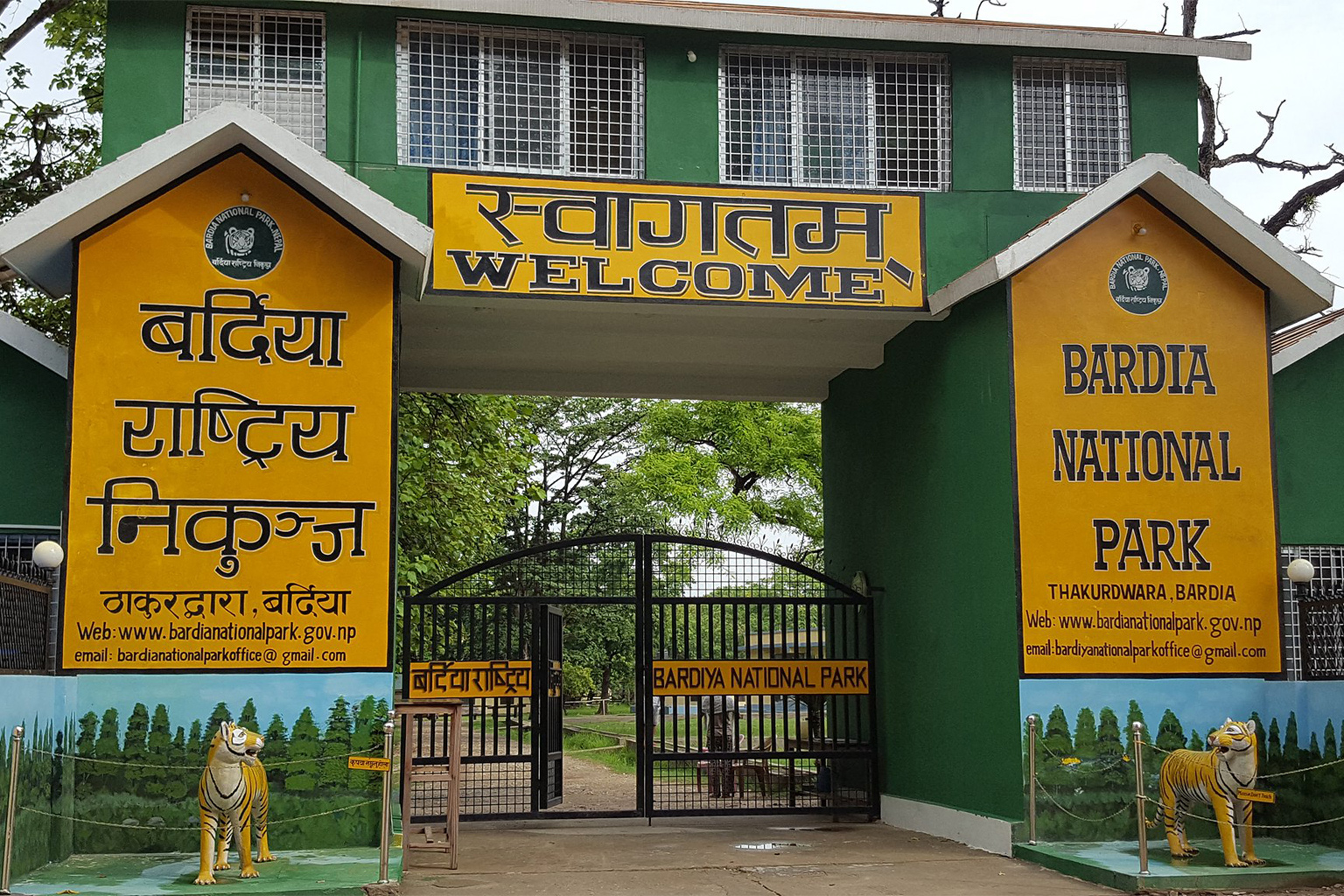
Banner image: Bardiya National Park is among the many protected areas in Nepal that are known for their tigers. Authorities here focus on keeping the habitat suitable for tigers. Image by The Advocacy Project via Flickr (CC BY-NC-SA 2.0).
