

Close Menu
NCIJ Network NCIJ Network
    What's Hot

    Vivid Seats Promo Codes and Deals: Get 10% Off

    September 17, 2026

    BragJack Attack Can Turn a Browser’s Agentic AI Against It

    September 17, 2026

    Ethereum’s client diversity picture fractures under incompatible estimates

    September 17, 2026
    Facebook X (Twitter) Instagram
    Trending
    • Vivid Seats Promo Codes and Deals: Get 10% Off
    • BragJack Attack Can Turn a Browser’s Agentic AI Against It
    • Ethereum’s client diversity picture fractures under incompatible estimates
    • NASA’s Moon Orbiter Spots New, ‘Once-in-Century’ Moon Crater
    • U.S. Fed Raises Interest Rates, Bucks Trump
    • ‘Like a Disney movie’: Three wild dog brothers make Africa’s longest journey | Endangered species
    • Learn about AI in HR at Disrupt 2026
    • Attacker Hijacks AI Coding Assistant Session, Spreads Shai-Hulud Across About 100 Repositories
    • About
      • Our Team
      • Editorial Policy
      • Editorial Independence
      • International Support
    • Trust & Standards
      • AI Usage Policy
      • Conflict of Interest Policy
      • Corrections Policy
      • Ethics Policy
      • Fact-Checking Policy
      • Source Protection
    • Get Involved
      • Guide for Sources
      • Support Independent Journalism
    • Legal
      • Cookie Policy
      • Privacy Policy
      • Terms of Use
    Facebook X (Twitter) Instagram
    NCIJ Network NCIJ Network
    Thursday, September 17
    • Home
    • World
    • Ai
    • Business
    • Politics
    • Health
    • Crypto
    • Science
    • Technology
    • Cybersecurity
    • Defense & Security
    • Economy
    • Energy
    • Europe
    • More
      • Fact Check
      • Investigations
      • Opinion & Analysis
      • Environment
    NCIJ Network NCIJ Network
    Home»Science

    NASA’s Moon Orbiter Spots New, ‘Once-in-Century’ Moon Crater

    NCIJ NETWNCIJ NETWORKBy NCIJ NETWNCIJ NETWORKSeptember 17, 2026 Science No Comments3 Mins Read
    Share
    Facebook Twitter LinkedIn Pinterest Email

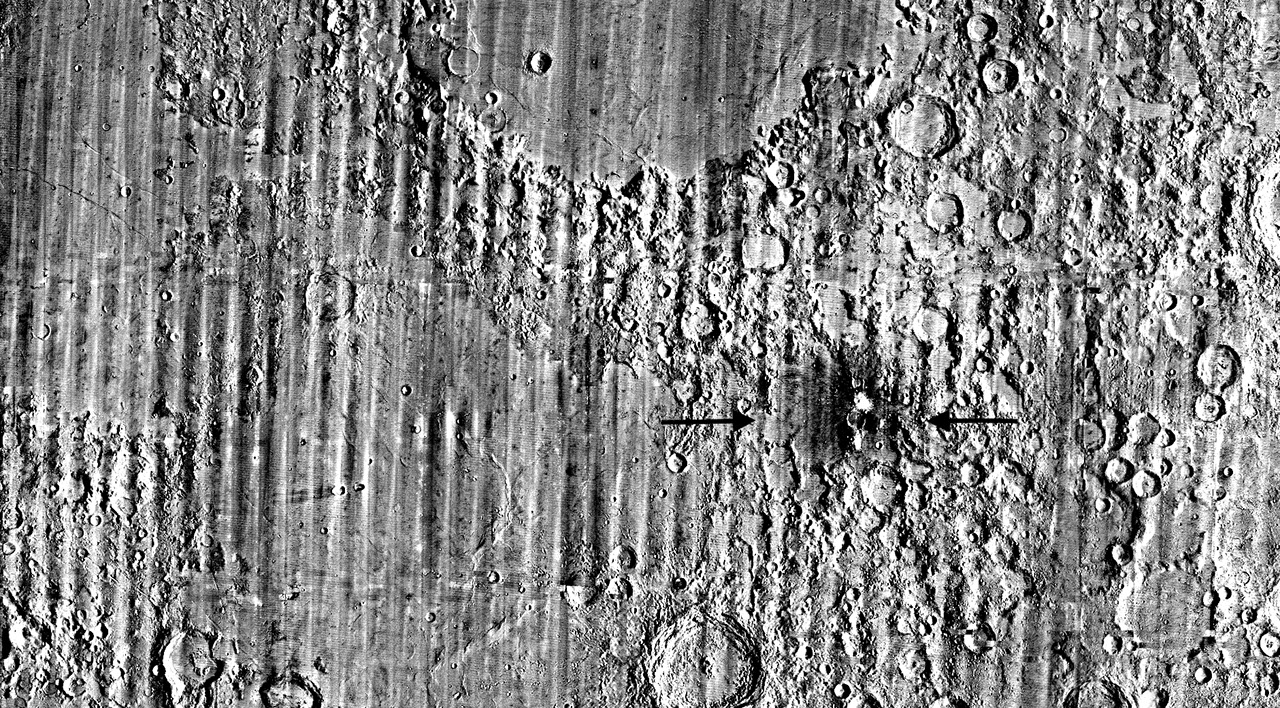
    It started as a routine data-quality check. But as Robert Wagner, a scientist with NASA’s Lunar Reconnaissance Orbiter (LRO), scanned a giant Moon map on his computer screen, an unusually large bright spot circled by a dark halo caught his eye, as it implied that surface material in that area had been shaken up.

    “I just stopped, dropped everything, and started looking into what that spot was,” said Wagner, an image-processing specialist from Intuitive Machines who works with data from the Lunar Reconnaissance Orbiter Camera (LROC) system.

    By comparing before and after images of the Moon, Wagner realized he had discovered the largest, newly formed crater ever found in the solar system, as scientists reported Wednesday in Science Advances. This discovery highlights the value of NASA’s Moon orbiter data in studying a dynamic landscape as the agency advances a sustained human presence and expanded scientific and commercial activity on the Moon.

    Officially named McGetchin after pioneering lunar scientist Tom McGetchin, the crater formed on the Moon’s eastern edge sometime between April 11 and May 22, 2024, after a comet or asteroid the size of a three- to six-story building hit the surface.
     
    The crash left a crater, 728 feet wide, that spans the length of two football fields. And at 141 feet deep, the crater could fit three vertically stacked yellow school buses.
     
    Scientists estimate that an impact of this magnitude happens on the Moon about once in a century or even longer.

    For more than 17 years, LRO has been circling the Moon and using its seven instruments to map the topography, surface composition, temperature, and radiation environment there. The spacecraft’s team has identified at least 1,000 new impact craters throughout the mission and flagged 100,000 more surface changes from an object smashing into the Moon or from the debris that flung out after.

    With no atmosphere to slow them or burn them up, space rocks and other objects easily reach the lunar surface. Most are much smaller compared to the object that carved out McGetchin crater. The smallest craters scientists can distinguish from LRO images are about 30 feet wide, the length of a three-story building laid on its side, made by rocks about 43 inches wide, the size of a monster-truck tire. Scientists estimate that impacts of this scale produce about 140 new craters across the Moon each year. But most new ones are made by microscopic projectiles that leave holes too small to identify in orbital images.

    With its numerous instruments, the spacecraft can observe changes to the lunar surface that aren’t apparent in the LROC images alone. After the crater was discovered, scientists working with LRO’s thermal instrument, Diviner, made follow-up observations of the site. They found a 4-mile-wide area around the crater that is about 16 degrees Fahrenheit cooler at night than its surroundings.

    Reporting in a second paper Wednesday in the same journal, researchers say that the cooling happens because the impact fluffs up the regolith around the crater, making it less dense and therefore less able to retain heat.

    The large extent of this “cold spot” is striking, scientists say, because it shows that impacts can modify the Moon’s surface far beyond the crater itself. These physical changes could affect how rover wheels interact with the surface, for instance.

    crater moon NASAs OnceinCentury Orbiter Spots
    NCIJ NETWNCIJ NETWORK
    • Website

    Keep Reading

    Irrigation’s climate benefit could equal 363 years of its own emissions

    Venus may have swallowed its own moon

    Passion Meets Precision at NASA’s Flight Research Lab

    Scientists recreated what mice saw from brain activity alone

    Scientists find the whole grain “sweet spot” for better heart health

    A 240-million-year-old fossil just changed the dinosaur timeline

    Add A Comment
    Leave A Reply Cancel Reply

    Editors Picks

    Vivid Seats Promo Codes and Deals: Get 10% Off

    September 17, 2026

    BragJack Attack Can Turn a Browser’s Agentic AI Against It

    September 17, 2026

    Ethereum’s client diversity picture fractures under incompatible estimates

    September 17, 2026

    NASA’s Moon Orbiter Spots New, ‘Once-in-Century’ Moon Crater

    September 17, 2026
    Latest Posts

    What is Trump Media’s Truth API and why is it controversial?

    August 4, 2026

    How ProPublica Tested Hundreds of Omaha Homes for Lead — ProPublica

    August 4, 2026

    Golar LNG raises $600 million loan with FLNG business expansion in mind

    August 4, 2026

    Subscribe to News

    Get the latest sports news from NewsSite about world, sports and politics.

    NCIJ Network is an independent digital news platform delivering trusted investigative journalism, European and global news, in-depth analysis, and fact-based reporting with accuracy, transparency, and integrity.

    Facebook X (Twitter) Instagram Pinterest YouTube

    Vivid Seats Promo Codes and Deals: Get 10% Off

    September 17, 2026

    BragJack Attack Can Turn a Browser’s Agentic AI Against It

    September 17, 2026

    Ethereum’s client diversity picture fractures under incompatible estimates

    September 17, 2026

    Subscribe to Updates

    Get the latest creative news from FooBar about art, design and business.

    Type above and press Enter to search. Press Esc to cancel.