



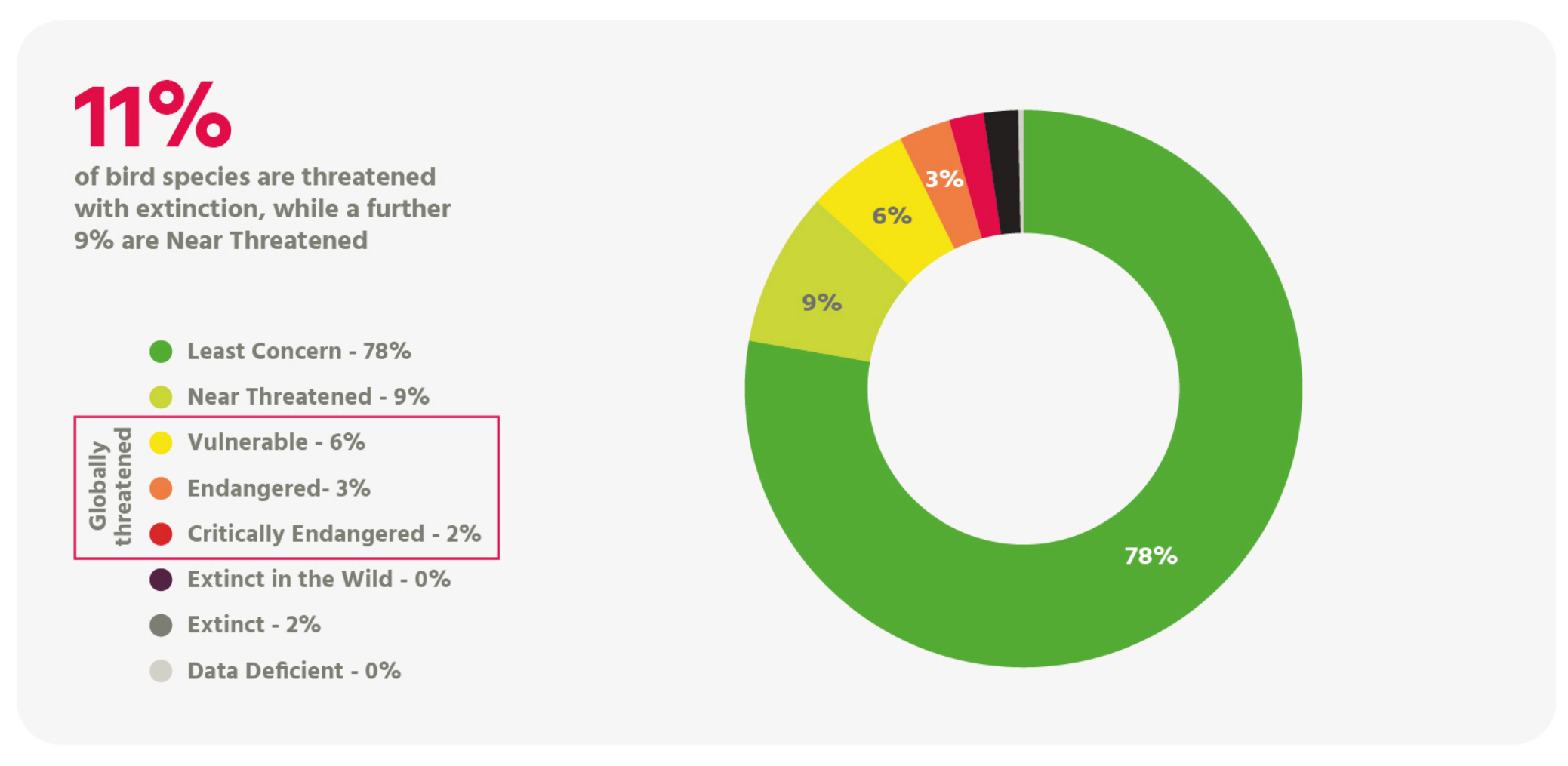
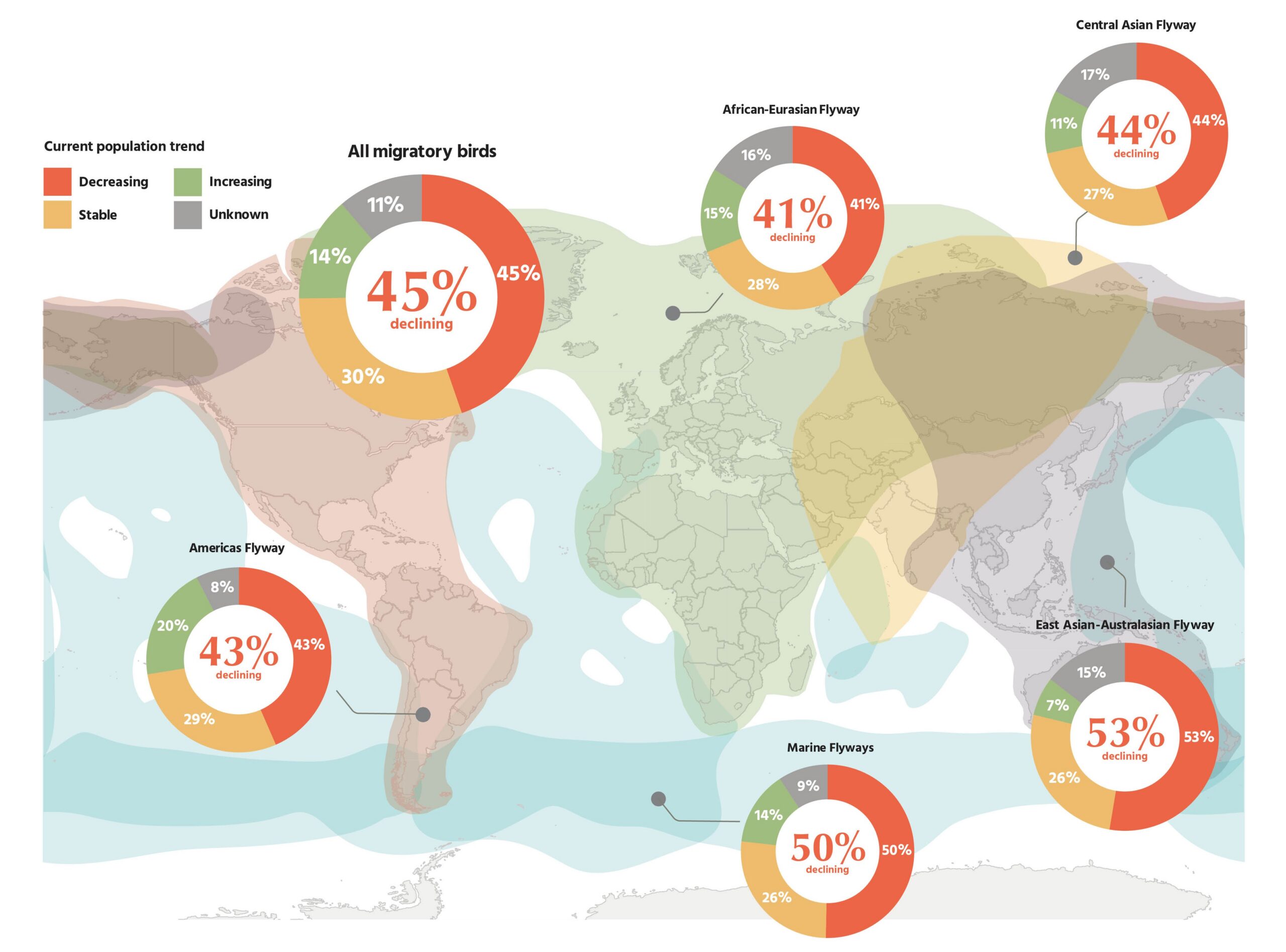
- The new State of the World’s Birds report says 45% of migratory bird species are in decline with 11% threatened with extinction.
- “This report is about migratory birds, but it also serves as a warning about the state of the planet in general,” the report’s lead author says.
- Currently only around 9% of migratory bird species have adequate protection across their full cycle, compared with 45% of non-migratory species, the report states.
- The launch of the report coincided with the signing of the Nairobi Flyways Declaration by governments, conservation organizations and others that are committing to protecting vital flyways.
Every year, billions of birds take to the skies, responding to changing seasons, navigating to breeding sites or escaping the cold of winter. The newest edition of BirdLife International’s State of the World’s Birds report says 45% of migratory bird species are in decline — 11% are threatened with extinction, the authors write.
Launched at the Global Flyways Summit in Nairobi, Kenya, on Sept. 11, the report is the first to focus on migratory birds. Migratory birds are sensitive indicators of wider ecosystem health, the report’s lead author Lucy Haskell, senior science officer at BirdLife, told Mongabay in an interview. They play a vital role in connecting ecosystems, cultures and people.
“This report is about migratory birds, but it also serves as a warning about the state of the planet in general,” she said.
Invasive species, agricultural expansion, climate change, residential and commercial development and hunting are major threats facing multiple species across the globe. The report found that seabirds and shorebirds are particularly threatened, while species that depend on marine habitats, forests and coastal wetlands are also increasingly imperiled.
Last year, the IUCN, the global wildlife conservation authority, officially confirmed the extinction of the slender-bill curlew, last seen in Morocco in 1995. It’s a poignant example of the pressures facing birds the world over, the experts say. Seven other migratory avian species are confirmed or suspected to have become extinct in the last 150 years.
In 2024, responding to research finding steep declines in populations of many North American shorebird species, BirdLife reassessed more than a 100 such species; nine were reclassified from “least concern” to “vulnerable” and the threat to 16 species was elevated to “near threatened.”
“While many of these shorebirds remain numerous and are still commonly encountered along their flyways,” Ian Burfield, BirdLife International’s global science coordinator said at the time, “new analyses of data from long-term monitoring schemes reveal that the global populations of some species have declined by more than a third in recent decades.”
In its 2026 report, BirdLife states that across just over 11,000 birds on the IUCN Red List (including both migratory and non-migratory species), 11% — 1,256 species — are threatened with extinction. For migratory birds, 45% of species show declining population trends, with just 14% increasing — and for 11% of migrating avian species, the trend is unknown.

A warning and a source of hope
Currently only around 9% of migratory bird species have adequate protection across their full cycle, compared with 45% of non-migratory species, the report states. Analysis of 1,099 Key Biodiversity Areas for migratory birds also found that over half are in poor or very poor condition.
“The findings of this report are sobering, but there are also reasons for hope, with increasing ambition around the world to halt and reverse species declines,” Katie-Jo Luxton, director of conservation at the Royal Society for Protection of Birds who wasn’t involved in the report, wrote in an email. “The need to conserve and restore key habitats at scale across international flyways has never been greater as this benefits all biodiversity. Maintaining efforts to address climate change and the human activities that remain the major driver of declines is just as critical.”
The launch of the report coincided with the signing of the Nairobi Flyways Declaration by governments, conservation organizations and others that are committing to protecting vital flyways. That includes new pledges from international development banks to support habitat protection, such as the Asian Development Bank putting $3 billion toward protecting wetlands in the East Asian-Australasian Flyway.
“We’ve established a number of what we call regional flyway initiatives, where we’re partnering with multilateral development banks,” said Stuart Butchart, chief editor of the report and chief scientist at BirdLife International. That will benefit birds, but also local people and provide climate mitigation through habitat restoration and protection, he added.
Haskell says the Egyptian vulture (Neophron percnopterus) shows how collaboration across borders offers hope. Faced with imminent extinction less than a decade ago, the Balkans population is now recovering after an international effort to halt its decline. “This is probably one of the first really great success stories to come out of this flyway scale conservation,” she said.
Protecting migratory birds’ habitat along the entirety of flyways will bring large benefits beyond the birds themselves, according to Butchart.
“We can and we have to safeguard this amazing wonder of migration, both for its own sake, but also because the ecosystems that those birds depend on underpin our economies, our livelihoods, and human health as well,” he said. “Migratory birds provide both a warning but also a source of hope.”
Banner image: Lesser and greater flamingos amass at Lake Natron, northern Tanzania. The report finds that 58% of assessed Key Biodiversity Areas for migratory birds are in poor or very poor condition. Image © Akshita Rabdiya.
Up to half the bird species using the African-Eurasian flyway are declining
Tiny trackers reveal where migratory shorebirds need protection across Africa
Feedback: Use this form to send a message to the author of this post. If you want to post a public comment, you can do that at the bottom of the page.

