


Elina Valtonen is Finland’s foreign minister. Penny Wong is Australia’s foreign minister.
Many people look at the state of today’s world and wonder if the United Nations has failed in its promise. Some question whether it can still rise to meet the moment and if we should be searching for solutions elsewhere. It is understandable, but it is dangerous and misguided.
To paraphrase Dag Hammarskjöld, U.N. secretary-general from 1953 to 1961, the U.N. may not have brought us to heaven, but it has — so far — saved us from hell.
For more than 80 years, the U.N. has underpinned humanity’s progress. At its best, the international organization mobilizes global responses to major global challenges, preventing conflict, responding to crises and working to eradicate poverty, address climate change and biodiversity loss, and promote health and human rights. U.N. personnel and peacekeepers work to alleviate suffering and support progress, often in difficult circumstances and at great personal risk.
For countries like Finland and Australia, and the vast majority of member countries, the United Nations remains indispensable. It is the only global forum where all states have a voice, regardless of their size, their military capability or their economy.
Over decades, the U.N. system has built an architecture of rules and standards. Most of us rarely think about it when it is working — but would notice failures quickly. It governs the systems that enable modern life; the phones that connect us, planes that land safely, the mail that crosses borders, the accurate weather forecasts that help farmers who grow our food, the interventions to contain disease and the safeguards that help keep nuclear catastrophe at bay.
The U.N. brings tangible progress across the globe. Without it, our world would be more brutal, less safe and poorer. It would be harder for nations to assert their sovereignty; coercion and interference would become the norm. Conflict would be more likely, as diplomacy and dialogue would give way to aggression.
We know these dangers are not hypothetical, because we have witnessed the decline in stability as multilateralism and international law have come under increasing pressure.
We are already living through the most violent conflicts since World War II, and civilians are bearing the brunt. In 2025, the world witnessed the highest number of grave violations against children in conflicts in 30 years. In the past three years, more than 1,000 aid workers have been killed. International humanitarian law, which humanity created to protect the most vulnerable in war, is often ignored or openly violated.
At the same time, geostrategic competition is intensifying — often with destabilizing behavior — while new technologies reshape our societies and change the nature of power. Supply chains that we all depend on are being disrupted, including for food and energy.
Instability is spreading across borders, and Russia — a permanent member of the U.N. Security Council — continues to violate the U.N. Charter with its ongoing, unjustified war on Ukraine. Grave violations of international law continue in the Middle East, Sudan and elsewhere. Too often, the Security Council has failed to respond with the resolve these situations require, falling short in its responsibility to protect civilians most in need.
All of this demonstrates the urgency of United Nations reform and the need for political will to act decisively in the face of grave violations. Unless we succeed, humanity will pay the price.
Finland and Australia see the world from opposite ends of the globe, but we share the same belief: As countries that depend on international rules and norms, we cannot be bystanders in history, waiting for geostrategic circumstances to change in our favor.
That is why Australia has invested in reinvigorating the Geneva Conventions by spearheading a new Declaration for the Protection of Humanitarian Personnel — a shared commitment by 130 countries — more than two-thirds of the United Nations — for stronger accountability, safer access and better protection for aid workers everywhere.
It is why Finland has invested in strengthening the U.N.’s ability to mediate peace and support peace processes. The unique role of the United Nations as a trusted convener, source of expertise and guardian of international norms makes its leadership indispensable.
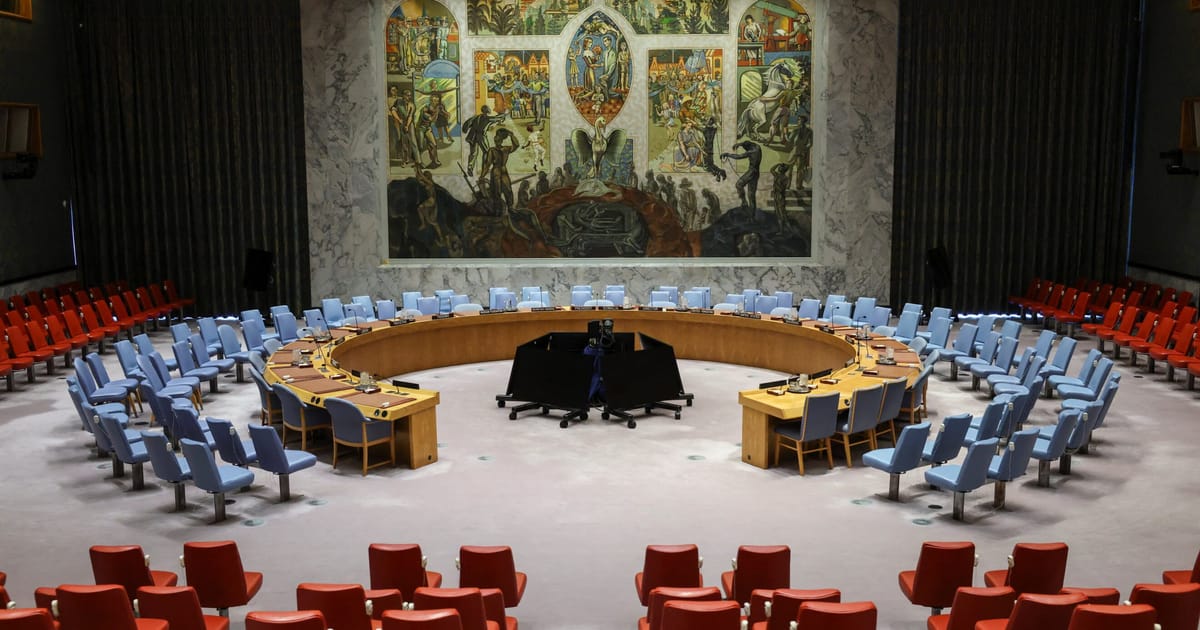
And it is why both our countries are seeking non-permanent seats on the Security Council for 2029–30. Small countries and middle powers have a particular stake in making the system work, and we believe we have a responsibility to step up at this moment in history.
The U.N. Security Council will — and should — be judged on whether it fulfils its promise. Over decades it has been able to play a role in managing tensions and solving conflicts. Today, however, confronted by some of the world’s most complex wars and humanitarian crises, the Council is too often paralyzed by major-power dynamics.
It must do better at preventing conflicts before violence erupts, addressing new forms of coercion, responding effectively to humanitarian crises and holding all its members accountable to the U.N. Charter.
It must also be equipped for a rapidly changing security environment. Cyber threats, artificial intelligence, attacks on critical digital infrastructure, autonomous systems and technology-enabled disinformation are already being deployed in conflict.
But technology is also a source of opportunity. Governed well and used widely, new tools can help identify emerging tensions earlier, support more inclusive peacebuilding and better protect humanitarian personnel. The U.N. Security Council should seize every opportunity to harness these tools for humanity’s progress.
For all its imperfections, the U.N. remains the only institution that brings the countries of the world together in the same room, talking to each other, every day. We must help it evolve, modernize and face the future.
POLITICO occasionally publishes opinion pieces from guest authors to offer our readers a range of perspectives on the intersection of power and politics. The views expressed are those of the authors and do not reflect the views of POLITICO.
