


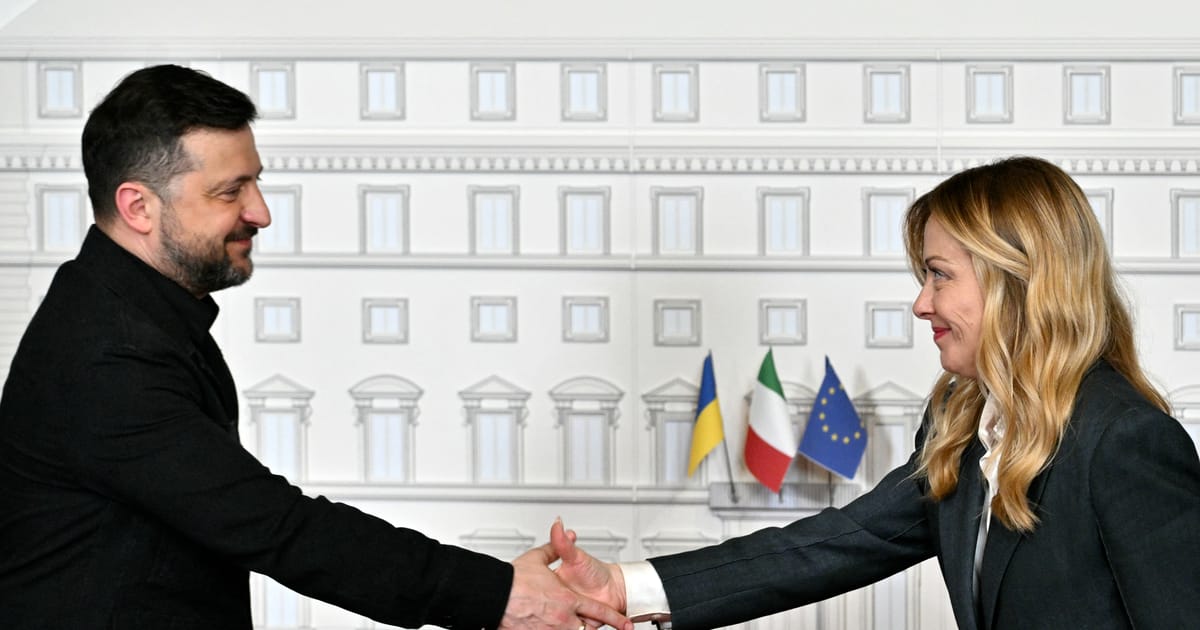
Writing in response to Meloni on Thursday evening, Costa thanked the Italian premier for setting out her concerns “so clearly” and said he agreed “Europe needs to act with coherence, unity and determination.”
“The European Union’s participation must be organised in a manner that enables it to convey a clear and unified message,” he wrote. “Indeed, the European Union’s interests need to be represented by its institutions, in accordance with the Treaties. As you know, I have raised this issue on several previous occasions in our discussions between Leaders.”
EU leaders meet in Dublin for an informal European Council on Nov. 13. A meeting of the European Political Community, which involves all EU states plus Ukraine and other allies, takes place the day before.
As the format for talks increasingly coalesces around the E3 — the U.K., France and Germany — alongside the EU, NATO and Ukraine, Italy has found itself sidelined.
Rome was excluded from meetings in Miami in October and Brussels this week, although it did take part in talks in Oslo at the invitation of the Norwegian government. An Italian national security adviser attended a working dinner there, but Italy’s participation came in place of France, rather than as an additional seat at the table.
Over the past year, Italy has emerged as the EU’s most vocal and persistent advocate for appointing a special envoy for Russia-Ukraine peace talks. Meloni first publicly floated the proposal in January, arguing that the bloc needed to “speak with one voice” and engage directly with Moscow.
