


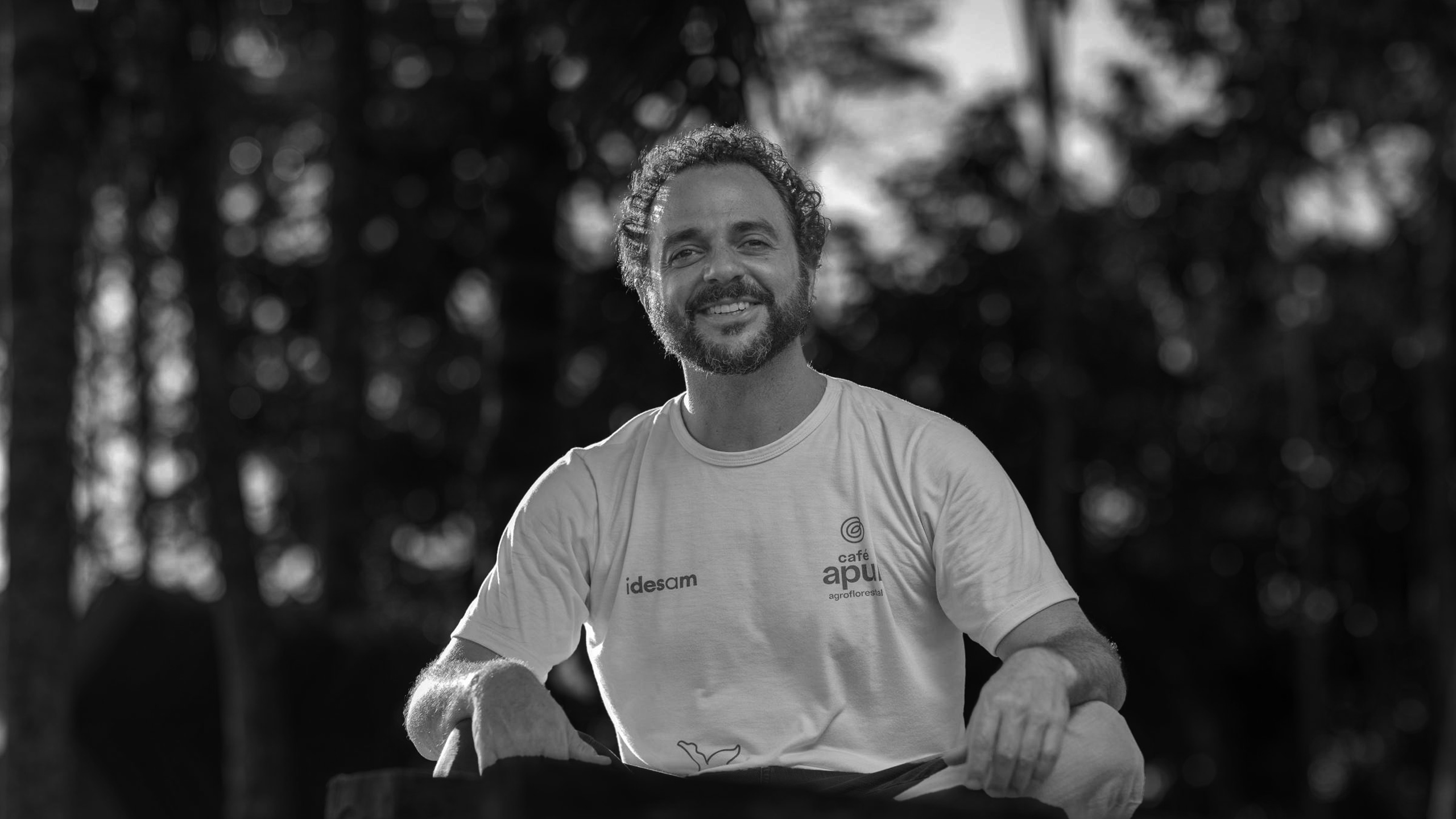
- Mariano Cenamo spent more than two decades trying to make standing forests economically competitive with cattle ranching and other activities driving Amazon deforestation, helping establish Idesam and later backing a new generation of sustainable businesses.
- His work evolved from early efforts on forest carbon and REDD+ to agroforestry, bioeconomy ventures, investment, and entrepreneurship, always centered on creating practical sources of income for people living in the Amazon.
- Drawing on Cenamo’s own writings and interviews, as well as Vanessa Adachi’s posthumous portrait in Reset, this obituary explores the ideas, motivations, and personal style behind one of the Amazon’s most influential environmental entrepreneurs.
- Cenamo died on July 10 after several years with cancer. He was 46.
For people trying to protect the Amazon, one problem has persisted for decades. A hectare of intact forest stores carbon, regulates water, supports wildlife, and provides food and materials for the people who live there. Much of that value does not appear in an economic ledger. Cattle, timber, soy, and gold do. For a farmer, a company, or a local government, clearing forest can therefore produce income more readily than keeping it standing.
The Amazon bioeconomy grew from efforts to change that calculation. It includes forest products, agroforestry, biotechnology, carbon markets, and other businesses that depend on maintaining living forests. The aim is to make such activities commercially viable at a scale that matters.
Mariano Cenamo spent most of his career working on that problem.
He was 23 when he moved from São Paulo to Manaus in 2003. Trained as a forestry engineer at the University of São Paulo, he had first come to the Amazon for an internship. He stayed at the encouragement of Virgílio Viana, a former professor who was then Amazonas state’s environment secretary.
Cenamo was struck by the gap between conservation work and the economic realities of people living in the forest. Environmental groups were doing important work, he later recalled, but local livelihoods often sat outside the conservation discussion. In 2004 he helped establish what became Idesam, the Institute for the Conservation and Sustainable Development of the Amazon.
At first there was barely an institution. Cenamo later described himself as an “ING”, an indivíduo não governamental, carrying a computer in his backpack. Idesam became an “ONG de garagem”, or garage NGO. From there he began looking for ways to direct money toward forest conservation and the people whose livelihoods depended on it.
One of his early interests was REDD+, the effort to pay tropical countries and communities for reducing emissions from deforestation. Cenamo became one of its early Brazilian advocates. In a 2013 article responding to critics, he acknowledged that the mechanism was unfinished and contested. He still believed it could be useful.
That approach carried through much of his career. Cenamo was willing to work with mechanisms that were complicated or incomplete if he thought they could be improved and put to use. His attention gradually widened from carbon markets to agroforestry, entrepreneurship, investment, and what became known as the bioeconomy.
Apuí, in southern Amazonas, provided one test. The municipality had suffered heavy deforestation, much of it for cattle. Idesam worked with farmers to replace degraded pasture with agroforestry systems producing coffee. Cenamo liked to explain the economics in simple terms. A hectare of cattle pasture might produce R$700-800 in annual income; agroforestry coffee could generate R$7,000-10,000. Café Apuí eventually became a business in its own right.
He traveled with packets of the coffee and pressed them on people he met. Vanessa Adachi, a journalist and founder of the Brazilian environmental publication Reset, recalled after his death that he could seem like Café Apuí’s most enthusiastic salesman.
Adachi’s portrait of Cenamo also shows how he worked. He moved easily among Indigenous leaders, investors, entrepreneurs, environmentalists, and officials. He listened closely, introduced people to one another, and tried to move ideas toward implementation. Joanna Martins, the founder of the Amazonian food company Manioca, told Adachi that Cenamo was among the first people to take her business seriously. He invested, advised her, promoted the company’s products, and introduced other investors.
Over time, Cenamo became increasingly interested in what such businesses needed around them. Amazonian entrepreneurs required patient capital, technical assistance, logistics, markets, and skilled workers. He thought investors accustomed to Silicon Valley often brought expectations that did not fit the region. Building a company in Manaus or the Amazonian interior could take longer and require different combinations of philanthropy, debt, and equity.
He also argued that the bioeconomy would have to be dispersed. The Amazon was too varied for a handful of large companies to represent it. He imagined hundreds of locally rooted businesses, adapted to different places, cultures, and products.
Markets, in Cenamo’s view, were only part of the picture. In an essay proposing seven measures to save the Amazon, his first was strengthening Ibama, ICMBio, and Funai, the public agencies responsible for environmental enforcement and Indigenous affairs. Illegal enterprises had an enormous advantage when enforcement was weak.
He kept returning to the question of who benefited. Shortly before his death, according to Adachi, Cenamo objected to a corporate carbon-credit tender that excluded agroforestry. Such a rule, he argued, would shut out small farmers, settlers, and communities. He wanted to know what the decision would mean for income and prosperity in the Amazon.
Cancer increasingly interrupted his work. Cenamo underwent treatment for several years. Adachi once drove him to the hospital for chemotherapy. The next day, while dealing with its effects, he contacted her to recommend a strategic-planning consultant for Reset. Even then, his attention kept moving toward other people’s projects.
By that point, the man who had arrived in Manaus with a computer in his backpack had helped create Idesam, an investment accelerator called AMAZ, the Fiinsa festival for Amazonian entrepreneurship, and a network around businesses that barely constituted a sector when he arrived. He remained frustrated by how slowly money reached them.
Mariano Cenamo died on July 10th, aged 46. Illness had already forced him to withdraw from much of his work. Yet Adachi found him still talking enthusiastically about the next Fiinsa.
The economic problem that drew him to this work at 23 remains. Forest is still often worth more on a balance sheet after it has been cut, mined, or converted to pasture than while it is standing. Cenamo spent 22 years testing ways to change that. By the end, he had accumulated many answers, none of them sufficient on its own.
Banner image: Mariano Cenamo. Photo by Renato Stockler / Folha Press

