


- Large old trees store substantial amounts of carbon and provide essential nesting and denning hollows for hundreds of Australian animal species.
- Logging removes these trees directly and increases the risk that surviving trees will be damaged by wind and regeneration burns.
- In this commentary, David Lindenmayer of the Australian National University argues that protecting large old trees is essential because they take centuries to replace.
- This article is a commentary. The views expressed are those of the author, not necessarily of Mongabay.
Large old trees are among the most important structures in native forests, in Australia and around the world. They store disproportionately large amounts of carbon relative to small, young trees, and they provide the nesting and denning hollows that hundreds of animal species depend on. A single large old tree can take two or three centuries to grow.
There is a persistent claim that logging does little or no lasting harm to these trees. It is worth examining what the evidence actually shows. I have studied populations of thousands of large old trees for more than four decades and published that work in the international peer-reviewed literature. I have also written a series of global reviews on large old trees and co-edited an international book on the subject – so the issue of logging effects on large old trees can be examined from data rather than assertion.
Our long-term research has shown quite clearly that logged and regenerated forests have far fewer large old trees than places that have not been logged. There are several reasons for this – some obvious and some not so obvious. First, most trees are removed in a logging operation. Second, trees that are retained in logged areas are very exposed to increased windspeeds – the previous tree cover is not there to slow air movement. Third, the debris left on the forest floor after logging is burnt in a fire lit deliberately to help regenerate the forest. These are very high severity fires which often badly damage or destroy retained trees. Those trees that do survive the regeneration burn, often collapse within a few years. We know these things because we have measured thousands of trees on hundreds of sites, including previously logged areas as part of decades of challenging field work.
It is not surprising that logged areas support fewer large old trees than anywhere else in the landscape – trees are deliberately removed in the logging process. But there are logging effects at a landscape scale too. We have found from years of monitoring that collapse rate of large old trees is elevated right across logged landscapes; the more areas of forest that are cut, the greater the rate of tree loss. It is likely that the more logging across a landscape, the greater the windspeeds and the more likely trees are to be blown down. This problem is particularly pronounced in places like Central Victoria where there can be many dozens of logging coupes in any given forest landscape and the distance from any random point in the landscape to a disturbance boundary (such as logged area or burnt patch) is on average less than 200 metres.
The logging industry has also had a massive impact on old growth forests – the places where such trees are most likely to occur. Many people will be unaware that from the 1920s until the late 1980s, forest management agencies (like the precursor to the Forest Commission of Victoria) had deliberate policies to remove old growth forest and replace it with regrowth forest. One of the forestry textbooks that I had to read as an undergraduate even termed large old trees in old growth forests “useless veterans”. Literally millions of these trees were removed as a result – with the vast majority used for pulp and paper-making. Such forestry policies have led to old growth forests now being rare in many parts of mainland Australia where there was a lot of historical logging.
Having established the unequivocal and clearly demonstrated negative effects of logging on large old trees, the key next question is: Does it matter? The answer is absolutely it does. This is because large old trees are critical nesting and denning sites for more than 300 species of Australian vertebrates. Many of these species cannot survive without being able to access these trees; and some animals spend more than 75% of their lives living in cavities within big trees. In fact, Australia has a disproportionately greater proportion of its fauna dependent on these trees than anywhere else in the world. Our long-term work has shown that in some wood production forests, the declines in cavity-tree dependent fauna such as possums and gliders are intimately and significantly linked to the declines of large old trees.
The evidence is clear; logging has major, long-term negative effects on populations of large old trees at the scale of the individual coupe and right across whole landscapes. The idea that these effects are benign is not supported by the scientific literature, and it overlooks a long history of deliberate policies to clear old growth and replace it with young regrowth.
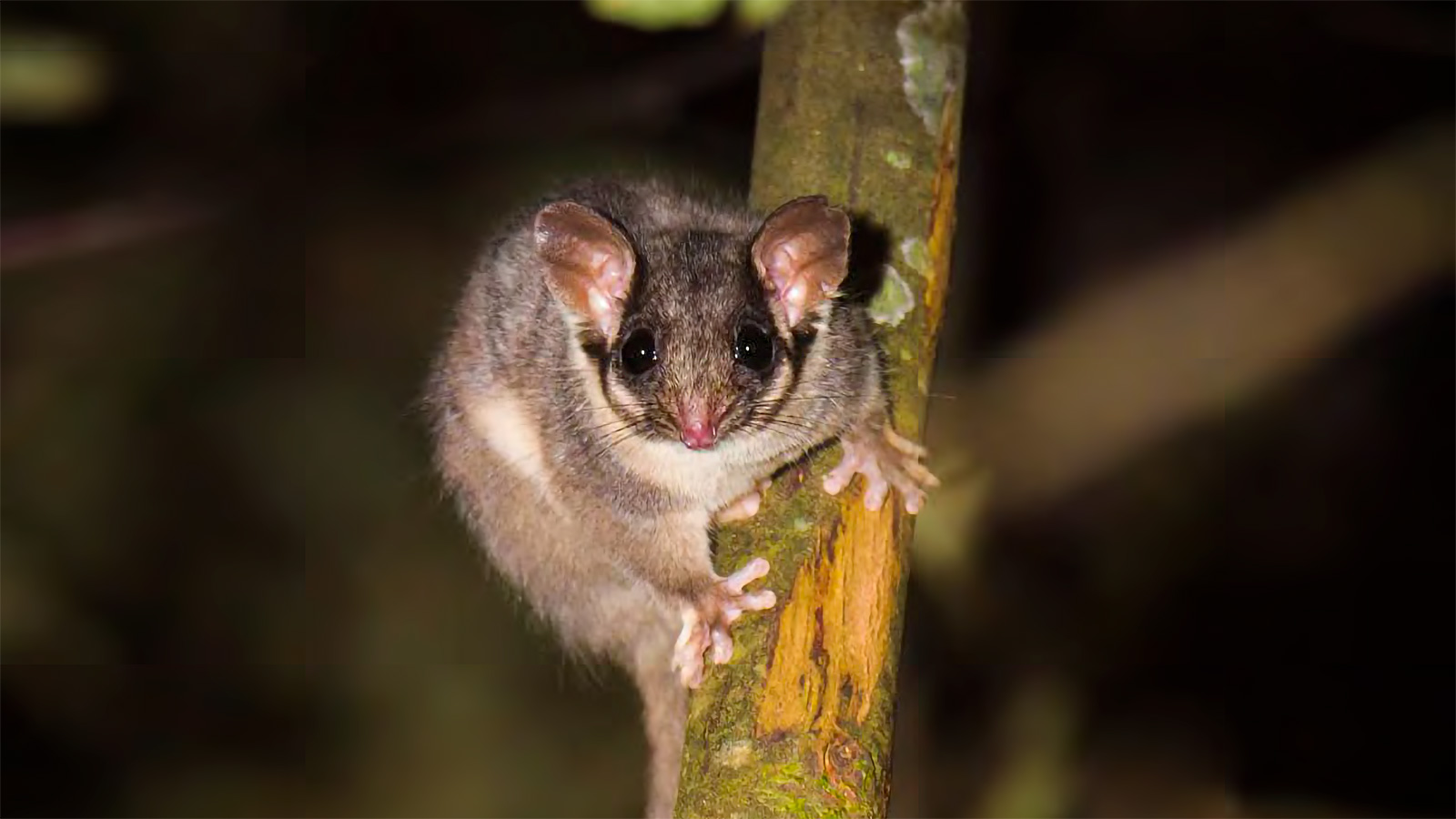
We cannot manufacture a large old tree. A hollow suitable for a greater glider or a Leadbeater’s possum takes upwards of a century to form. Once these trees are gone from a landscape, they and the animals that rely on them do not come back within any timeframe that means much to us.
David Lindenmayer is a Distinguished Professor at The Australian National University and has conducted research on large old trees for more than 43 years. He writes regularly on conservation issues directly connected to his long-term research. He can be reached via LinkedIn.
Banner image: Wollert (Leadbeater’s Possum) on Wurundjeri Country. Photo by Steven Kuiter
Cite this article
David Lindenmayer (2026). Logging and the slow disappearance of Australia’s large old trees (commentary). Mongabay Conservation news. DOI: https://doi.org/10.66709/news-326317

