


After being stuck for more than a year in legislative purgatory, the late U.S. Sen. Lindsey Graham’s legislation mandating sweeping sanctions on Russia is one big step closer to becoming law. The bill easily passed a procedural vote in the Senate this week and is expected to pass the full Senate with a large bipartisan majority later this week.
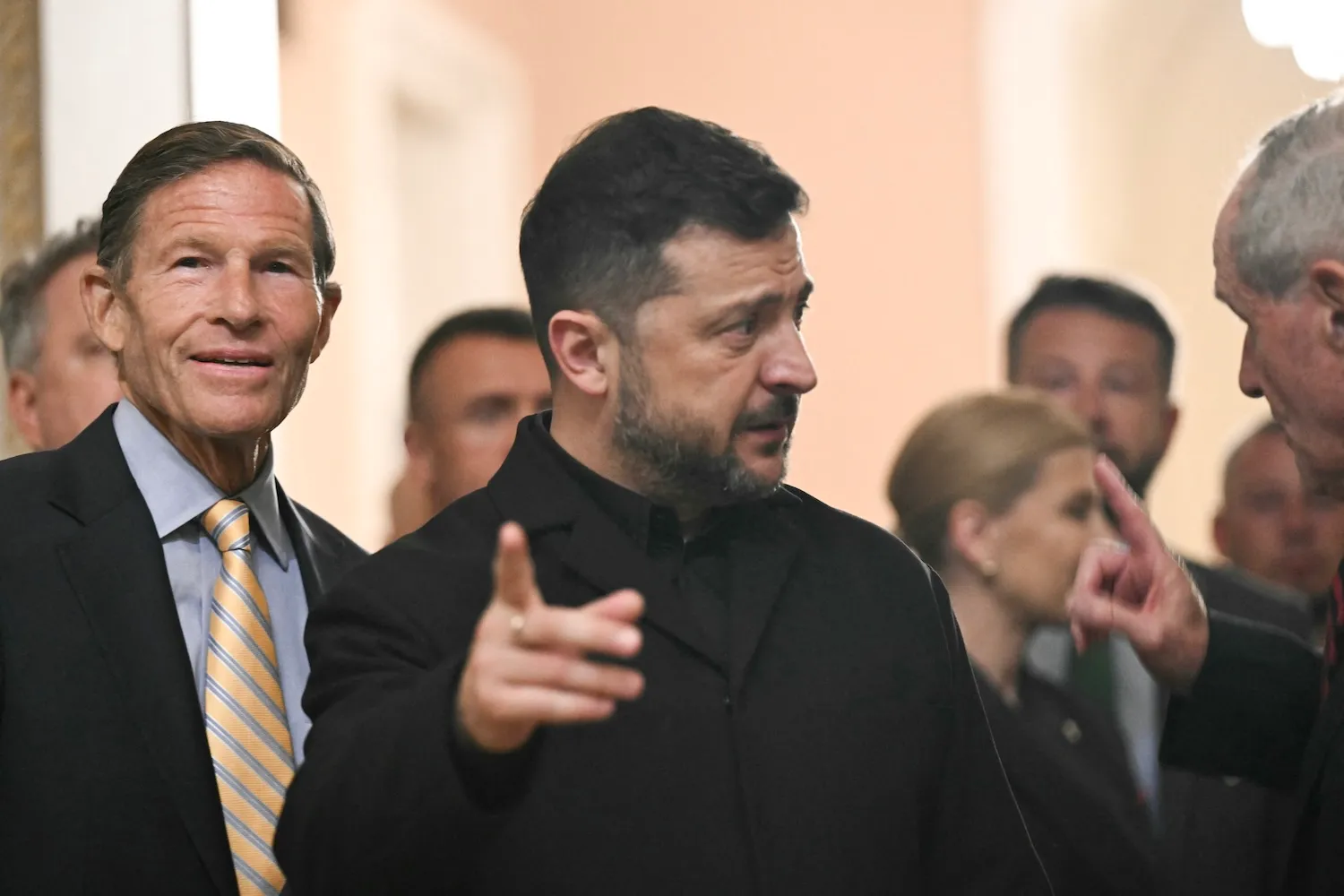
If the companion bill passes the House of Representatives later this year—as ample support suggests it will—the Lindsey O. Graham Sanctioning Russia Act of 2026 will mark a rebirth of Republican support for Ukraine after more than four years of war with Russia, and it would be the first comprehensive U.S. sanctions package on Moscow in Trump’s second term. Ukrainian President Volodymyr Zelensky, in Washington this week for Graham’s funeral and talks with U.S. President Donald Trump, was present in the Senate for the first vote and called the legislation a “big signal for Europe, a big signal for Ukraine.”
After being stuck for more than a year in legislative purgatory, the late U.S. Sen. Lindsey Graham’s legislation mandating sweeping sanctions on Russia is one big step closer to becoming law. The bill easily passed a procedural vote in the Senate this week and is expected to pass the full Senate with a large bipartisan majority later this week.
If the companion bill passes the House of Representatives later this year—as ample support suggests it will—the Lindsey O. Graham Sanctioning Russia Act of 2026 will mark a rebirth of Republican support for Ukraine after more than four years of war with Russia, and it would be the first comprehensive U.S. sanctions package on Moscow in Trump’s second term. Ukrainian President Volodymyr Zelensky, in Washington this week for Graham’s funeral and talks with U.S. President Donald Trump, was present in the Senate for the first vote and called the legislation a “big signal for Europe, a big signal for Ukraine.”
Europe and the United Kingdom have been steadily ratcheting up the sanctions pressure on Russia over the past 18 months, targeting especially Russia’s use of “shadow fleet” tankers to illicitly move oil, as well as banks, cryptocurrency payment systems, and energy companies. (The European Union has done 21 sanctions packages on Russia since the Ukraine war began.) But the Trump administration has failed to keep up the pressure on Moscow, and even relaxed existing sanctions on Russia to ease pressure on global oil markets due to the fallout of the Iran war. (It wasn’t the first time Trump relaxed sanctions and blunted the force of a big U.S. geoeconomic weapon.)
Graham pushed for passage of his bill relentlessly up until the day before his sudden death. He was a consistent advocate of ramping up economic pressure on Russia using all available tools of U.S. economic statecraft, but Trump’s cold shoulder kept the bill in limbo for more than a year.
In a bid to ensure Trump’s support of the bill, the final version of the legislation includes an update extending existing, 30-year-old Iran sanctions for another five years.
There are some positive things in the revised version of the bill.
“Most Russia sanctions currently are not codified in law, so what this bill would do is name specific banks and companies that would have to be sanctioned. For future administrations, that would be difficult to undo,” said Maia Nikoladze, the deputy director of the Economic Statecraft Initiative at the Atlantic Council, who has written about the new legislation.
It would also harmonize U.S. sanctions on Russia’s shadow fleet with those maintained by the U.K. and the European Union. Since a last burst of U.S. action against Russia’s shadow fleet in the waning days of the Biden administration, the United States has been AWOL on that front, while Europe has charged ahead.
Getting Russia’s shadow fleet off the high seas is important if the West wants to seriously curtail Russian exports of oil and refined products. The majority of Russia’s seaborne crude oil exports still go on sanctioned shadow tankers. European and British sanctions become much more effective if backed by the reach and sting of the U.S. dollar and the enforcement arm of the U.S. Treasury, as Robin Brooks and Ben Harris of the Brookings Institution have documented.
Another positive aspect of the prospective legislation are the sanctions on shipping companies that provide the tankers that replenish Russia’s (and Iran’s) aging shadow fleet. Many of those shipping companies are Greek. Not coincidentally, Greece earlier this month blocked an EU measure to limit Russian natural gas exports in order to protect a Greek shipping company.
But there’s a lot not to like about the revised bill, too. For starters, unlike previous congressional sanctions legislation such as CAATSA, the sanctions on Russia are for the most part not mandatory, but are rather at the president’s discretion, and the bill includes all the usual waivers for national security reasons. That means that the ultimate impact of the sanctions bill will be up to Trump, who has not taken a hard line on Russian President Vladimir Putin since he regained office.
The other big reason to be skeptical is that the Graham bill, from its inception, included secondary tariffs as a way to increase the pressure on Russia. That means hefty import duties on countries that buy Russian oil and gas, a tool that Trump already used once against India (a big buyer of Russian oil) but not China (the biggest buyer of Russian oil). The bill would authorize tariffs of up to 100 percent on the top five importing countries of Russian oil and natural gas.
Critics of that part of the legislation argue that giving Trump more tariff authority is a bad idea. The president has already stretched existing presidential authority to unilaterally raise import taxes beyond the law and continues to test the limits of courts’ forbearance; his latest batch of global tariffs landed a week ago.
The question of expanded tariff authority for Trump is perhaps the biggest hurdle to smooth passage of the companion House bill, as leading Democrats are loath to give the executive even more powers to raise taxes on a whim. The bill’s proponents, especially in the Senate, think they can talk recalcitrant House members off the ledge on the tariff issue by the time the lower chamber reconvenes at the end of next month.
“Adding tariffs into this equation has not been something that’s been highly effective,” said Nikoladze, noting that India scaled back purchases of Russian oil mainly due to U.S. sanctions on Russian energy firms, not because of punitive tariffs.
And while China and India are without a doubt the two biggest buyers of Russian oil, it’s not entirely clear which countries would complete the list of the top five that are vulnerable to tariffs, according to the language in the legislation. Petroleum products are not even included, so big Russian customers such as Turkey would seem to be off the hook, while smaller buyers of Russian crude could face penalties. In any event, tariffs remain taxes on U.S. businesses and consumers, not something paid by another country, making them a less effective weapon of economic statecraft than sanctions.
And then there is the question of the ultimate impact of the legislation. Codifying sanctions, many of which are already in place, on Russian individuals, banks, and energy firms would be a bigger step than the administration has previously taken, but it won’t put a chokehold on Russian war financing any more than previous rounds of Western sanctions over the last four years have.
The very gradual pace of sanctions escalation, both by the United States and by Europe, since the war began in 2022 has allowed Russia to adapt and find workarounds to continue selling oil and making billions of dollars, even if less than before the war started. The bigger blow to Russia’s energy complex, and energy earnings, has come from Ukrainian drones and missiles—what Zelensky calls “long-range sanctions.”
“Russian banks and energy companies would not likely face any immediate consequences” after the passage of the bill, Nikoladze said. “The sanctions have been in place for four years, and Russia adapts. They all learn how to evade sanctions. So you need to figure out how to escalate your pressure and improve enforcement of existing sanctions.”
