


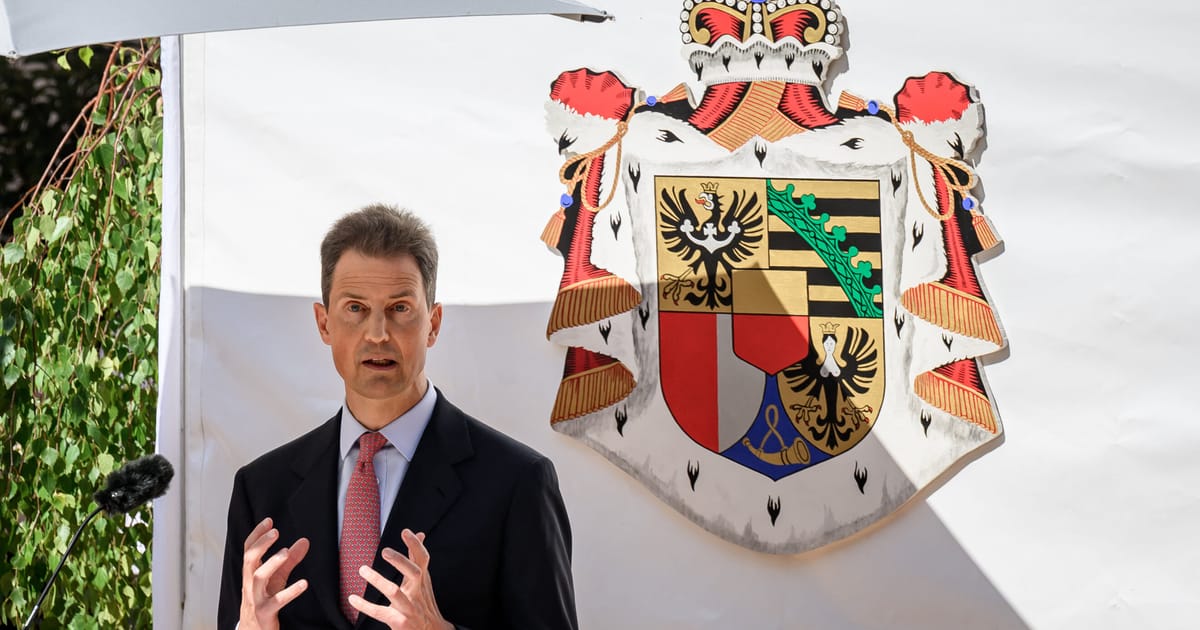
The bill “is not suitable for adequately protecting unborn life as a central legal interest,” a statement from the princely house reads. Alois had already indicated in June he would veto the proposal on these grounds.
“We’re disappointed, but not really surprised,” Tatjana As’Ad, a campaigner for the initiative and a co-managing director for the Free List, Liechtenstein’s progressive opposition party, told POLITICO. “It was clear his decision was fixed in June and that there was no way we would change it.” She added campaigners met Alois on Tuesday morning, but that there was no indication he would announce his veto shortly after.
“We are frustrated because it feels like everything we did since June was decorative,” As’Ad said.
Liechtenstein, a small Alpine principality of about 40,000 people, has an atypical political system associating referendum-led direct democracy with a monarchy where the reigning prince retains extensive executive powers. Alois’s absolute veto right was itself confirmed by a 2012 referendum. He used it for the first time to block the abortion bill.
“The promise of dualism” between democracy and the monarchy “that the Liechtensteiners are trusting has got some cracks,” As’Ad said.
She added that the parliament’s decision to vote through the bill and send it directly to Alois for assent, instead of calling for a referendum, “spared” the hereditary prince from a “conflict” with his people.
