


- A recent study examines 60 years of land use change in Jammu and Kashir and finds a decline in the area’s water bodies while built-up areas expanded markedly.
- The research found that socioeconomic factors were more strongly associated with many of the changes than climatic variables examined.
- The findings raise a broader question: As development continues to reshape the landscape, are conservation initiatives and land use planning keeping pace with the pressures on the region’s water bodies?
- Experts say that while development is necessary for economic growth, it needs to be balanced against ecological conservation, while individual water bodies need to be examined according to their specific pressures.
For generations, Kashmir’s wetlands, lakes and rivers have been woven into the landscape around its towns and villages. Paddy fields once stretched across parts of the valley, while canals and springs were familiar features of everyday life.
But much of that landscape has changed.
A new study published in Water Science assessing six decades of land use and land cover change in the union territory of Jammu and Kashmir in the northernmost part of India finds that the extent of water bodies declined between 1960 and 2020, while built-up areas expanded markedly, particularly after the 1990s. The researchers found that socioeconomic factors including urbanization, population growth, literacy, per capita income and passenger and freight traffic were more strongly associated with many of these changes than the climatic variables they examined, including annual precipitation and mean maximum and minimum temperatures.
The findings raise a broader question for Jammu and Kashmir: As development continues to reshape the landscape, are conservation initiatives and land use planning keeping pace with the pressures on the region’s water bodies?
The authors caution that the study is not based on primary field surveys. Because land use records were available mainly at decadal intervals, the researchers interpolated data between those years to create an annual data set for their statistical analysis. They acknowledge that this approach can inflate some statistical measures and say the results should be interpreted primarily as associations rather than precise predictions.
Still, the broad direction of change is clear.
Built-up land expanded sharply, while the extent of water bodies contracted. The study found that transport-related variables, urbanization, literacy and per capita income consistently ranked among the stronger socioeconomic factors associated with land use change.
For Ishrat Farooq Bhat, a faculty member at the Sher-e-Kashmir University of Agricultural Sciences and Technology (SKUAST-K) and one of the study’s authors, the statistics reflect a transformation that is visible on the ground.
Agricultural land in Jammu and Kashmir has increasingly been converted to residential and horticultural uses over the past several decades, Bhat told Mongabay in an interview.
Bhat, who comes from Srinagar, the summer capital of Jammu and Kashmir, described how the landscape around the area has changed.
“We are moving more towards urbanization. The canal, the springs, which once used to be in front of our houses, are nowhere. Two or three decades back, we used to have these rice paddy fields all over here, but where are they now? They have vanished because of urbanization and, more importantly, encroachments,” Bhat said.
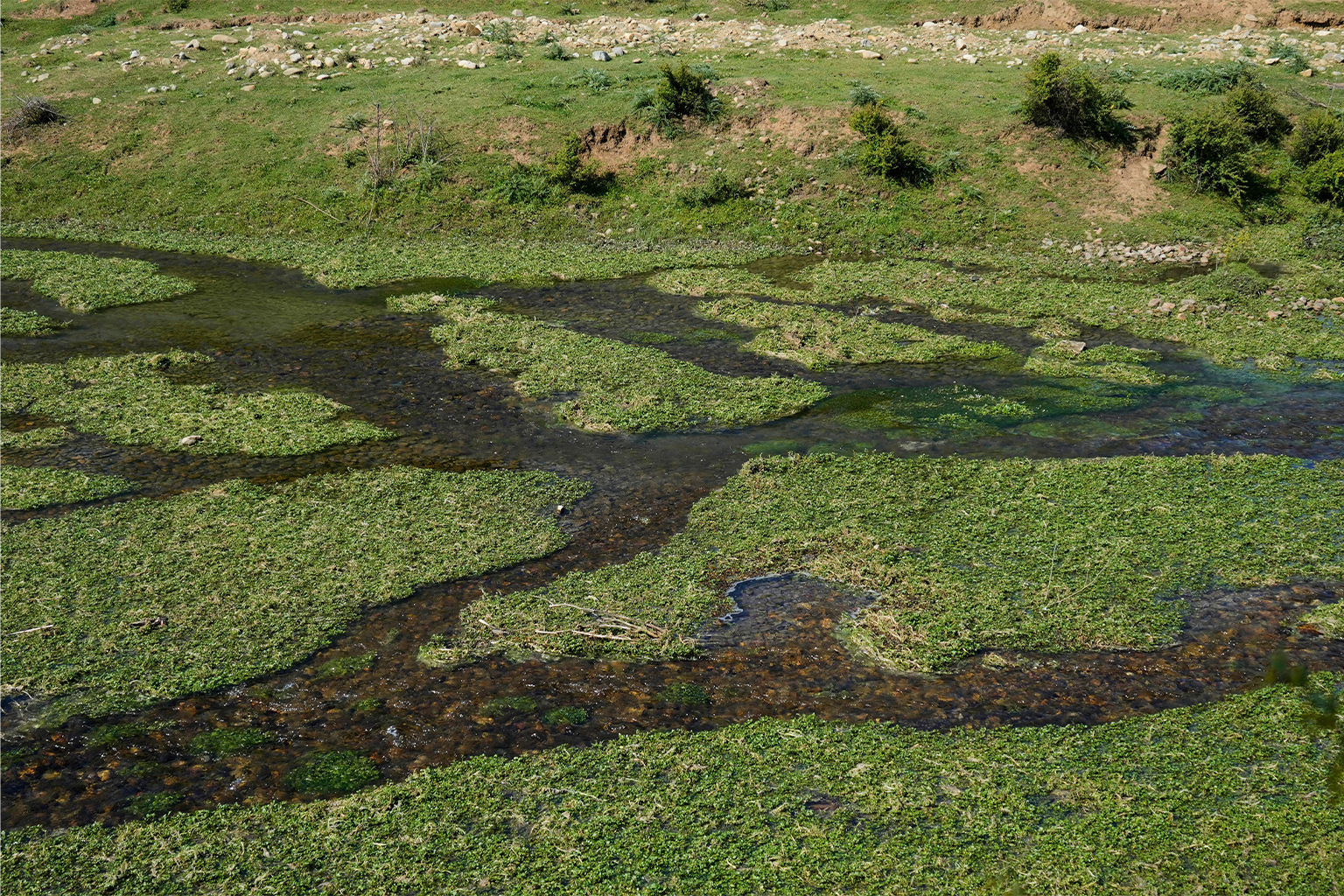
The expansion of urban centers has also brought industrial development onto land that was previously used for agriculture or horticulture, she said.
“The land is not adding. We are taking it from the geographical land,” Bhat said.
Bhat’s comments are important to understanding what the study measures. The geographical area itself has not disappeared. Rather, land that once performed agricultural, ecological or water-related functions is increasingly being converted to other uses.
Farhet A. Shaheen, doctor of philosophy, currently serving as department head at SKUAST and co-author of the study, similarly pointed to the expansion of concrete infrastructure, including housing, roads, railways and other development, particularly over the past two to three decades.
Development is necessary for economic growth but needs to be balanced against ecological conservation, Shaheen told Mongabay in an interview, adding that siltation is another major concern.
Shaheen said deforestation and development in catchment areas can loosen soil, which rainfall and snowmelt then carry into lakes, depositing sediment on their beds. Around lakes such as Wular and Anchar, he said, areas affected by siltation are also being used for activities including paddy cultivation, vegetable farming and plantations.
Encroachment, urbanization, infrastructure development and agricultural practices can also affect water quality, he said, with fertilizers, pesticides and untreated household sewage contributing to eutrophication and algal growth.
But the relationship between land use change and wetland degradation is not identical everywhere.
Conservationists need to examine individual water bodies according to their specific pressures, Sami Ullah Bhat, an assistant professor at the University of Kashmir and a PhD researcher in wetland and freshwater ecology who was not involved in the study, told Mongabay.
“There are certain commonalities, but we need to understand each system in its own way,” he said in an interview.
For example, he identified willow infestation as an issue in Wular Lake, while sewage associated with houseboats and tourism is a more prominent concern in Dal Lake.

For wetlands, Sami Ullah Bhat identified land conversion, encroachment and pollution as the three major pressures based on his more than two decades of work in the field. On the other hand, he highlighted catchment degradation, pollution and mining, particularly sand and boulder mining, as the greatest pressures affecting riverine wetlands.
The distinction matters because the health of a wetland does not depend only on what happens within its visible boundaries. “A river or a stream is a reflection of a catchment,” he said.
If forests are degraded, sediment can enter streams and increase turbidity, he said, adding that if fertilizers or other pollutants are applied in the catchment, their effects can eventually be reflected in the chemistry of the water.
The same principle applies to wetlands. “If something happens in the catchment, it will be a symptom in this river,” he said.
The loss or alteration of wetlands can affect hydrological processes, biodiversity and the ecosystem services on which surrounding communities depend. Sami Ullah Bhat said continued land use change could contribute to hydrological disruption and affect the physical, biological and societal dimensions of Kashmir’s ecosystems.
That does not mean climate change can be ignored.
Climate change is already affecting ecosystems and resources in Kashmir and should be considered alongside local pressures such as urbanization, encroachment and infrastructure development, Sami Ullah Bhat said.
The challenge, therefore, is not simply to identify whether climate change or urbanization is responsible for wetland degradation. Sami Ullah Bhat said the pressures need to be understood in relation to the specific conditions of each wetland, including land conversion, encroachment and pollution, rather than treating all water bodies as facing the same threats.
The Water Science study recommends stronger integration of transport and land use planning, along with statutory protection buffers around wetlands. But its authors also acknowledge the limitations of the data available to them.
According to Ishrat Farooq Bhat, the need for better evidence is part of a larger challenge facing Kashmir’s land use planning.
Policymakers need to pay closer attention to the region’s ground realities rather than treating urbanization as an isolated development trend, she said.

Shaheen, similarly, argued that infrastructure expansion has to be balanced with ecological conservation.
Kashmir already has wetland conservation and management programs, but a recent performance audit by the Comptroller and Auditor General of India found inadequacies in their implementation across several major lakes. The audit examined Dal, Wular, Hokersar, Mansar, Surinsar and Manasbal and flagged issues including land use change, encroachment, untreated sewage, inadequate sewer networks, underutilization of funds and weaknesses in monitoring and management. But there is room for improvement, Sami Ullah Bhat said, pointing to the need for stronger management, adequate funding and greater technical expertise.
He said restoration cannot be reduced to treating visible symptoms. “They will study the symptoms, and those symptoms will lead to the diagnosis of the disease,” Sami Ullah Bhat said. “Symptoms are equally important in understanding the cause.”
That may ultimately determine whether the next phase of wetland conservation in Kashmir can address the forces driving degradation rather than simply respond after damage has occurred.
The landscape documented by the researchers between 1960 and 2020 is not static. Roads will continue to expand, settlements will grow and demand for land will increase.
The question is whether Kashmir’s water bodies will continue to give way to that expansion or whether land use planning can begin to treat wetlands, rivers and their surrounding catchments as infrastructure worth protecting before they are lost.
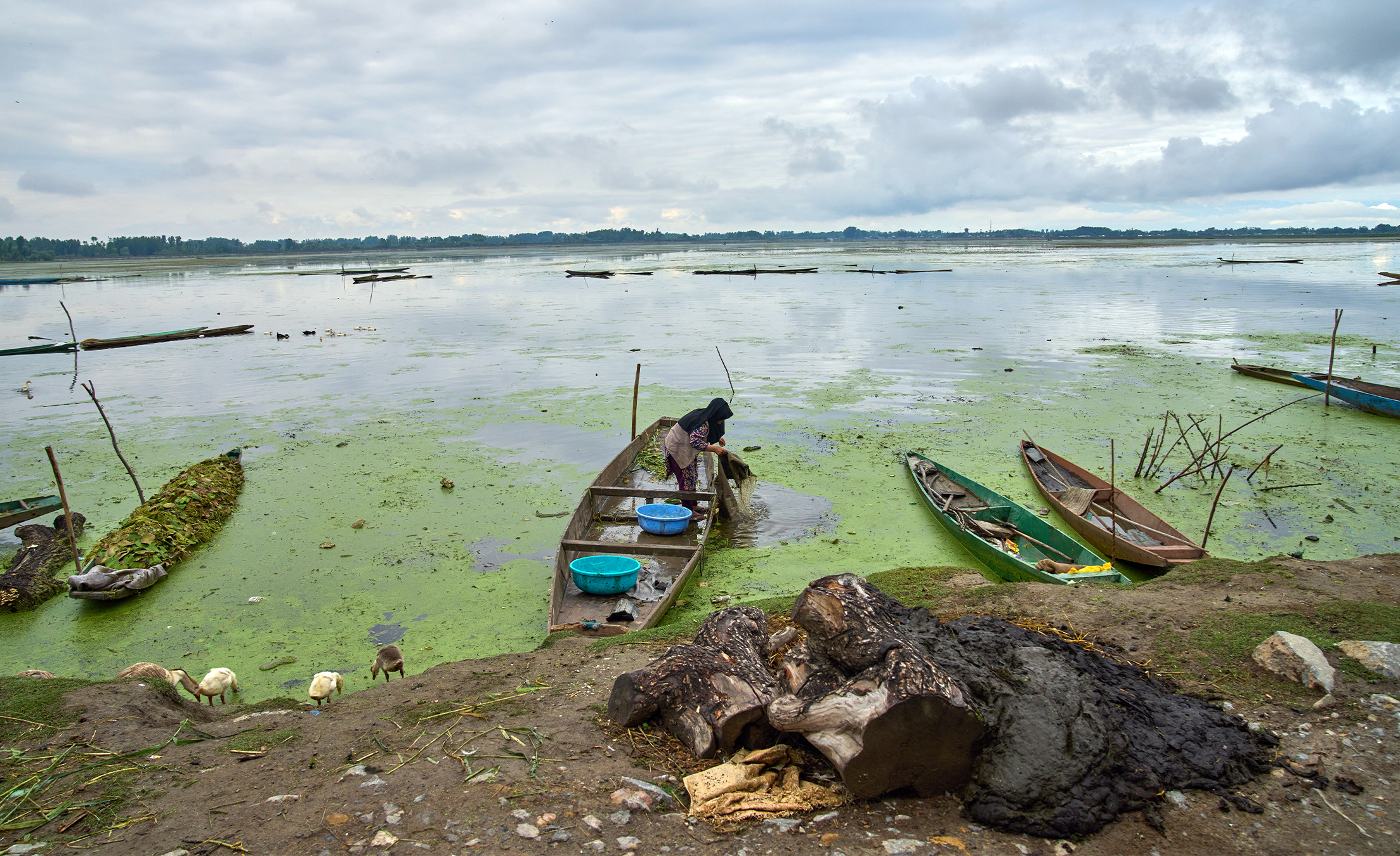
Banner image: A woman cleans a blanket in algae-filled water on the banks of Wular Lake in Kashmir. Recent research examines widespread development and diminishing water bodies over decades in Kashmir. Image by AP Photo/Dar Yasin.
Restoring Kashmir’s lakes one community at a time: Interview with Manzoor Ahmad Wangnoo
In Pakistan, desert irrigation plans spark protests & fears among Sindh farmers
Citation:
Bhat, I. F., Shaheen, F. A., Majid, M., Wani, F. J., Lone, F. A., Lone, M. A., … Rather, A. A. (2026). Six decades of land-use and land-cover change in Jammu and Kashmir: Socio-economic drivers and implications for water resources. Water Science, 40(1). doi:10.1007/s44533-026-00046-4
Cite this article
Hashim Quraishi (2026). Kashmir’s water bodies have declined for decades. Is conservation keeping pace?. Mongabay Conservation news. DOI: https://doi.org/10.66709/news-329254

