


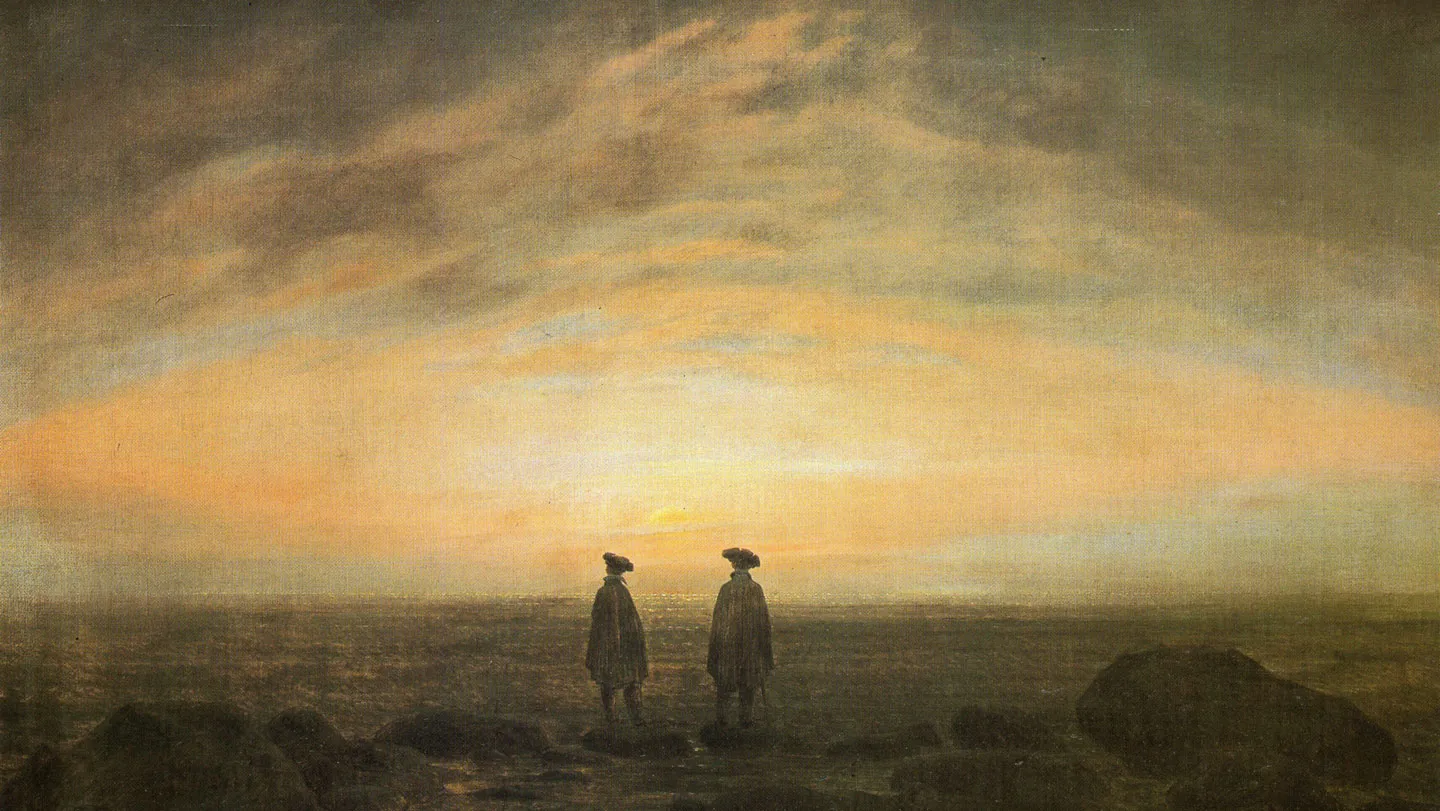
“The bright sun was extinguish’d … and the icy earth swung blind and blackening in the moonless air.” These words from Lord Byron’s 1816 poem Darkness evoke a hellish apocalypse. But Byron may have been inspired by the fallout of a real cataclysm — one that happened half a world away.
Mount Tambora, in present-day Indonesia, blew its top in 1815. More than 71,000 people in the vicinity died. And climate-cooling aerosols from the eruption ushered in extreme weather the following years in far-flung places. Cold weather in the summer of 1816, sometimes with frosts and snow, destroyed corn in New England, rice and buckwheat in China and wheat, oats and potatoes in Ireland. In some places, the rising cost of bread sparked protests and riots. The circumstances may have helped spread typhus. Some called 1816 “the year without a summer,” others “the year of the beggars.”
Like Tambora, volcanoes, and the cooling they cause, may be an underappreciated geologic force at times moving behind the scenes of human history.
“These climatic impacts of the Tambora eruption were recorded without any knowledge that this had anything to do with an eruption,” says Clive Oppenheimer, a volcanologist at the University of Cambridge.
While Tambora is the most well-studied eruption in history, others have also rattled the planet. Oppenheimer and his colleagues analyzed 38 large eruptions in the 2026 Annual Review of Earth and Planetary Sciences. Their work pulled together studies linking the geologic events and their effects on climate with their potential societal fallout in food systems, the economy, unrest, culture and religion. The locations and exact timing of the eruptions that spurred some notable cold spurts aren’t known. But understanding how the events impacted the climate, environment and society can offer clues to the past, including how people coped with climate stress.
“Volcanic eruptions, they are kind of this like hammer blow to the climate system,” says Heli Huhtamaa, a climate and environmental historian at the University of Bern in Switzerland. Volcanoes may offer lessons about resilience for modern societies in a warming world, she says.
Volcanic gases create a chilling effect
Volcanoes spew sulfur-containing gases. Over weeks, those gases react in the atmosphere to form particles that block sunlight. The particles can stay aloft for many months, riding jet streams to encircle the globe. Paintings from years after eruptions show bloodred sunsets or landscapes shrouded by hazy skies.
Because no two eruptions are exactly alike, it takes work to grasp each one’s impacts on weather and climate. “If we understand the climate response of one [eruption], that does not mean that we understand the climate response of another,” says Ulf Büntgen, a paleoclimatologist at the University of Cambridge.
Researchers find the traces of past eruptions in ice cores from Greenland and Antarctica. Scientists try to nail down the date on a sulfur-loaded ice core layer and compare it with tree ring data, a logbook of sorts for summer growing conditions since temperatures impact how trees lay down their wood each year. Scientists can pull together tree ring records from far-flung places and use statistics to work out annual temperatures in a hemisphere.
Cold spells sometimes jump out from tree ring records. For years when cool summers impeded the final stages of wood formation, a chemical method used to estimate temperatures turns wood layers blue. Büntgen and colleagues saw two blue rings around 1345. “And that is very rare. We never saw that two years in a row,” he says. The rings coincided with the timing of the Black Death’s spread in Europe, the team reported in 2025 in Communications Earth & Environment. The researchers traced the connections between chilly summers, poor grain harvests in the Mediterranean and shipping records showing how Italian city states imported flea-ridden grain from the Caucasus.
Oppenheimer, Büntgen and their colleagues broadened the detective work for their 2026 review. The team studied Northern Hemisphere temperature responses to the 38 largest eruptions between A.D. 1 and 1900. On average, each volcano caused about 0.5 degrees Celsius of cooling in the year after the eruption. Recovery to normal temperatures was slower for eruptions that occurred in times that were already colder on average, Büntgen says. In some periods, large or successive eruptions may lead to an elevated amounts of particles in the atmosphere for a long time. The team’s calculations show that high aerosol levels concur with some of the past two millennia’s coldest spells, such as the one preceding the Black Death.
Human agency factors into eruptions’ outcomes
Those cold snaps often had dire consequences. Out of 17 large-scale famines in Europe from 1300 to 1800, 11 followed major eruptions. In addition to faltering crops and famines, the most frequently societal responses described in studies collected by the review authors were disease outbreaks, political turmoil and migration.
The societal circumstances surrounding eruptions are as important as the amount of cooling, Huhtamaa says. She and her colleagues studied crop failures and farmstead desertion in three different volcanic eruptions that impacted Ostrobothnia, in what is now Finland. During the 17th century, Ostrobothnia experienced cooling from three sets of eruptions at different time periods.
Although the latest eruption event, in 1695, was the coldest of all, peasants fared better than they had after eruptions earlier in the century, Huhtamaa and colleagues reported in 2022 in Climate of the Past. Though people still starved, only around 7 percent of peasants lost their farmland, compared with 20 percent in the other periods. This was because the crown provided tax relief, Huhtamaa says. This wasn’t humanitarian aid, as it was meant to preserve the tax base and prevent possibly decades of lost revenue.
“When there is a climatic shock, it doesn’t matter if it’s 0.5 or 1.5 degrees cooler, because what really matters is the societal vulnerability,” Huhtamaa says.
Studies like Huhtamaa’s reveal how societies can tick on in spite of climate disasters. But historians haven’t always been keen to look to climate for clues to explain history. Human agency has often been considered the only reasonable explanation for human affairs, Huhtamaa says. “And climate explanations sounded lazy.”
Investigating societies’ preconditions and responses to the climate change caused by volcanoes could help people prepare for a now warming world. A recent report from the United Nations’ Intergovernmental Panel on Climate Change, noted that not enough research had been done on responses, Huhtamaa says. Researchers could examine one place’s response to different events, as in Huhtamaa’s work on Ostrobothnia, or parse different locales’ responses to the same event. Meanwhile, greater use of insights from ecology, agronomy and economics, for instance, can help with this detective work that reveals how humans respond to climatic events beyond their control.

Those responses appear in religion, too. For instance, lines in the famed 10th century poem Vǫluspá seem to reference the 939 eruption of Iceland’s Eldgjá volcano, with high-flying flames and blackened sun beams. “It’s like an eyewitness description of a phenomenal lava flood,” Oppenheimer says. The poem foretells a fiery end to pagan gods, such as Odin, who are replaced by one god. Vǫluspá, which explained the eruption in terms of divine displeasure,may have contributed to the island’s Christianization around 1000, Oppenheimer and colleagues suggest.
Famines, riots, disease, migration. The widespread climatic effects of volcanoes across the ages may be subtler than the hellscapes conjured by poets but more tangible in the marks they’ve left on history.
