


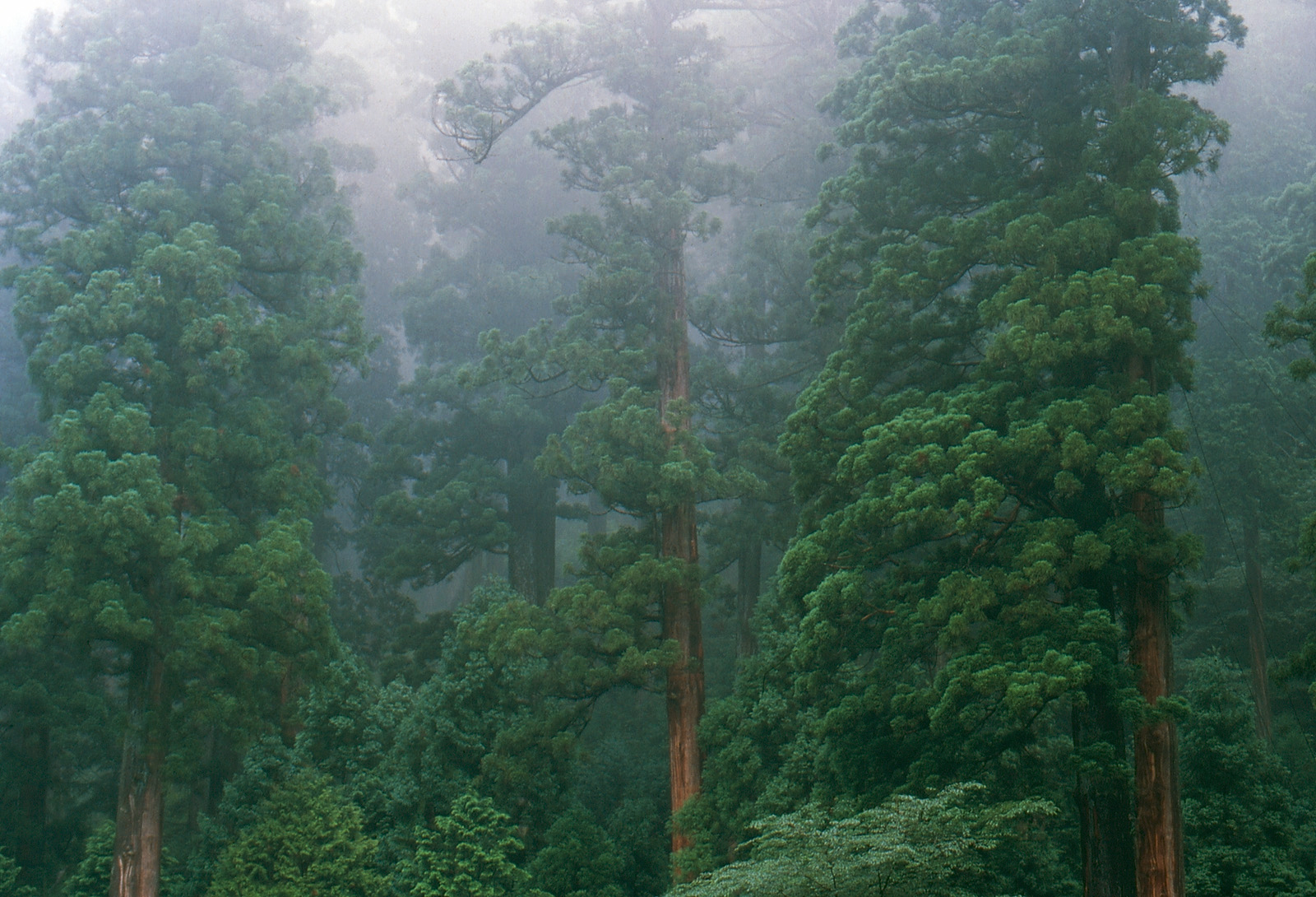
Two species of trees helped Japan build millions of homes after World War II. However, pollen from those same trees has also fueled a nationwide hay fever allergy.
More than 40% of Japan’s population now suffers from hay fever, locally called kafunsho. That’s nearly double the rate in the U.S., reports contributor Jonathan Vit for Mongabay.
“Right after the New Year in January, my nose starts to get a little itchy,” Mariko Aoki, who works as a secretary at the National Diet, Japan’s legislature, told Mongabay. “It peaks in March, and the sneezing, runny nose, itchy throat and itchy eyes are really bad. It lasts all the way until just before Golden Week,” which runs from April 29 to May 5.
Two tree species are largely to blame: sugi (Cryptomeria japonica) and hinoki (Chamaecyparis obtusa). Both are fast-growing trees that were widely planted for timber after bombing during the war left Japan in need of millions of homes.
Today, forests cover roughly 70% of Japan, and 41% of those forests are planted. Sugi trees account for roughly 40% of planted forests, while hinoki accounts for another 25%. That means two-thirds of the nation’s cultivated forests are planted with trees that can make people sick.
Climate change has made things worse: warming has driven sugi trees to release pollen earlier than they used to, making country’s annual pollen season longer and more severe.
To solve its hay fever crisis, the Japanese government announced a plan in 2023 to cut down 20% of sugi trees planted across 4.3 million hectares (10.6 million acres) of forest by 2033. Nearly all of Japan’s planted sugi trees are more than 20 years old, large enough to be used in the timber industry.
“The plan is to start cutting down the trees as they become usable — starting with those that are ready for use as lumber,” said Makoto Nakamura, the assistant director of the wood industry division at the Ministry of Agriculture, Forestry and Fisheries.
Sugi trees cut on mountain slopes or deep inside forests will be replaced with other species of local trees. Those felled closer to the roadside or timber facilities will be replaced with new strains of sugi that produce little to no pollen.
Japanese researchers have successfully developed more than 30 such strains. Toyama prefecture, on the west coast, planted around 100,000 no-pollen saplings in a single year.
However, producing the new strains at scale and planting them in the wild, which requires a significant amount of labor, remains challenging as Japan’s forestry industry struggles with severe labor shortages.
Another challenge is that the Japanese home construction industry is in major decline. That’s left the forestry ministry looking for a new market for the timber.
Read the full story by Jonathan Vit here.
Banner image: Sugi trees at Nikkō Tōshō-gū, a Shinto shrine in Japan. Image by Miguel Vieira via Wikimedia Commons (CC BY 2.0).
