


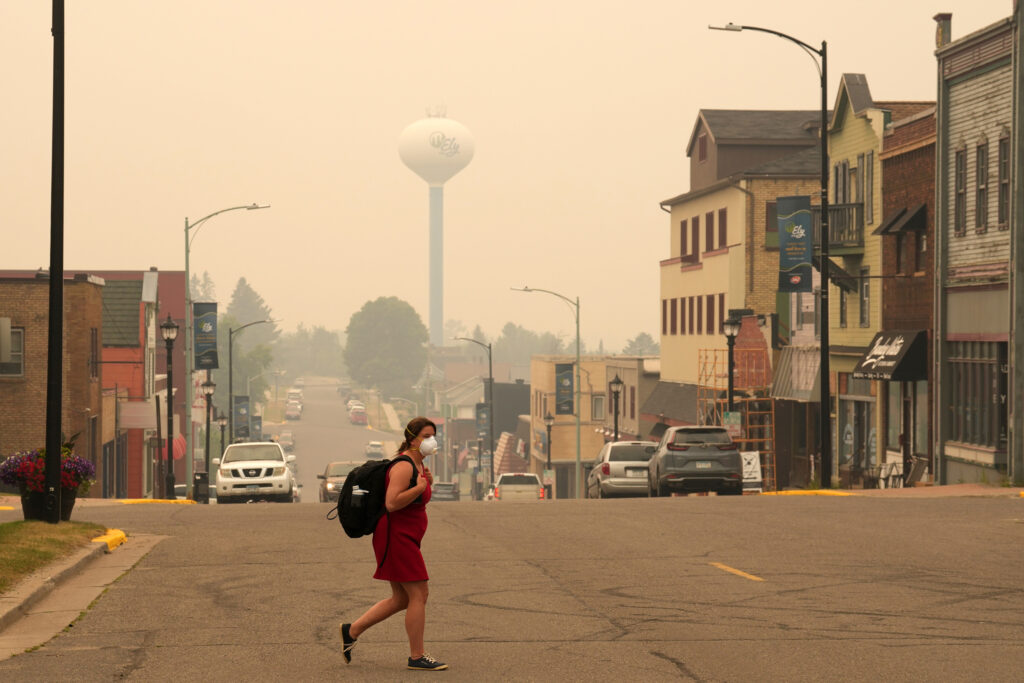
On the night of July 6, a storm moved over northern Minnesota near the Boundary Waters Canoe Area Wilderness. The boreal forest there, composed of species like balsam fir, spruce and pine, was extremely dry after a flash drought and unusually warm temperatures sapped the trees of their moisture.
As the storm blew across the sky, rain didn’t even reach the ground. Many of the 700 lightning strikes did.
“Coniferous boreal forest is one of the most flammable vegetation types on the planet,” said Lee Frelich, director of the University of Minnesota Center for Forest Ecology. “It just exploded into fire with those ignitions.”
The flames raged for two months, eventually scorching 64,000 acres of northern Minnesota’s forest. Some are still smoldering. Further north, fires burned even more land in Canada’s boreal forest, consuming 730,000 acres in what people called the 300-mile wall of fire.
“The Western U.S. has always been notorious for wildfires,” said Eric Evenson, a meteorologist and science communications specialist at the North Atlantic Fire Science Exchange. “However, we’re seeing it flaring up in other parts of the country due to these extremes as the climate changes.”
Human-caused global warming is amping up extreme weather conditions that led to this summer’s Minnesota and Canadian fires. Fires in the boreal forest happen more often, and when they do, they burn more acreage than they did in the late 20th century, an accelerating pattern that picked up even more speed in the past five years.
Trends are clear in Canada, where there is more forested land. But the same could happen in Minnesota and other areas of the Midwest as climate change alters forest types and conditions. Nearly 91 million acres of forest covers swaths of the Midwest, according to the U.S. Forest Service.
Researchers and government climate reports expect wildfire risk to increase in Midwestern forests. Multiple changes feed into that: Warmer conditions stretch across more months of the year. Temperatures climb ever higher. Stronger storms release more rain over shorter periods of time, spurring plant growth, but sudden droughts occur more often as well, drying out the plants to provide more fuel for fire. The swing from one condition to the other now has a name: hydroclimate whiplash. More lightning streaks across the sky and electrifies the ground thanks to a warmer atmosphere that holds more moisture and strengthens storms, which often blow down trees, material susceptible to burning.
“The definition of fire season is something that’s shifting,” said Julia DeFeo, a forest and fire ecologist at Ohio State University. “We more often have the conditions that are conducive to wildfire outside of what would historically have been considered the normal timeframes.”
Changing Forests
Before colonization in Minnesota and parts of Wisconsin and Michigan, Indigenous people managed the coniferous forests with fire. Tree ring data from 1600 on, information cataloged by a Minnesota fire ecologist and kept up to date, show burns during wet years when they were less likely to get out of control.
When Europeans settled the region, they cut down large sections of forest, created fire exclusion zones and suppressed fire. Aspen and birch, two tree species that hold more moisture, grew in place of the conifers, leading to an abnormally low amount of fire. In the 1990s, more flammable conifers began to replace the aspen and birch as part of the forest’s natural succession, and the number of fires increased again.
“We’ve returned to what I view as a normal fire frequency in northern Minnesota,” said Frelich. “Now the question is, will that continue to increase and go beyond the historical normal because of climate change?”
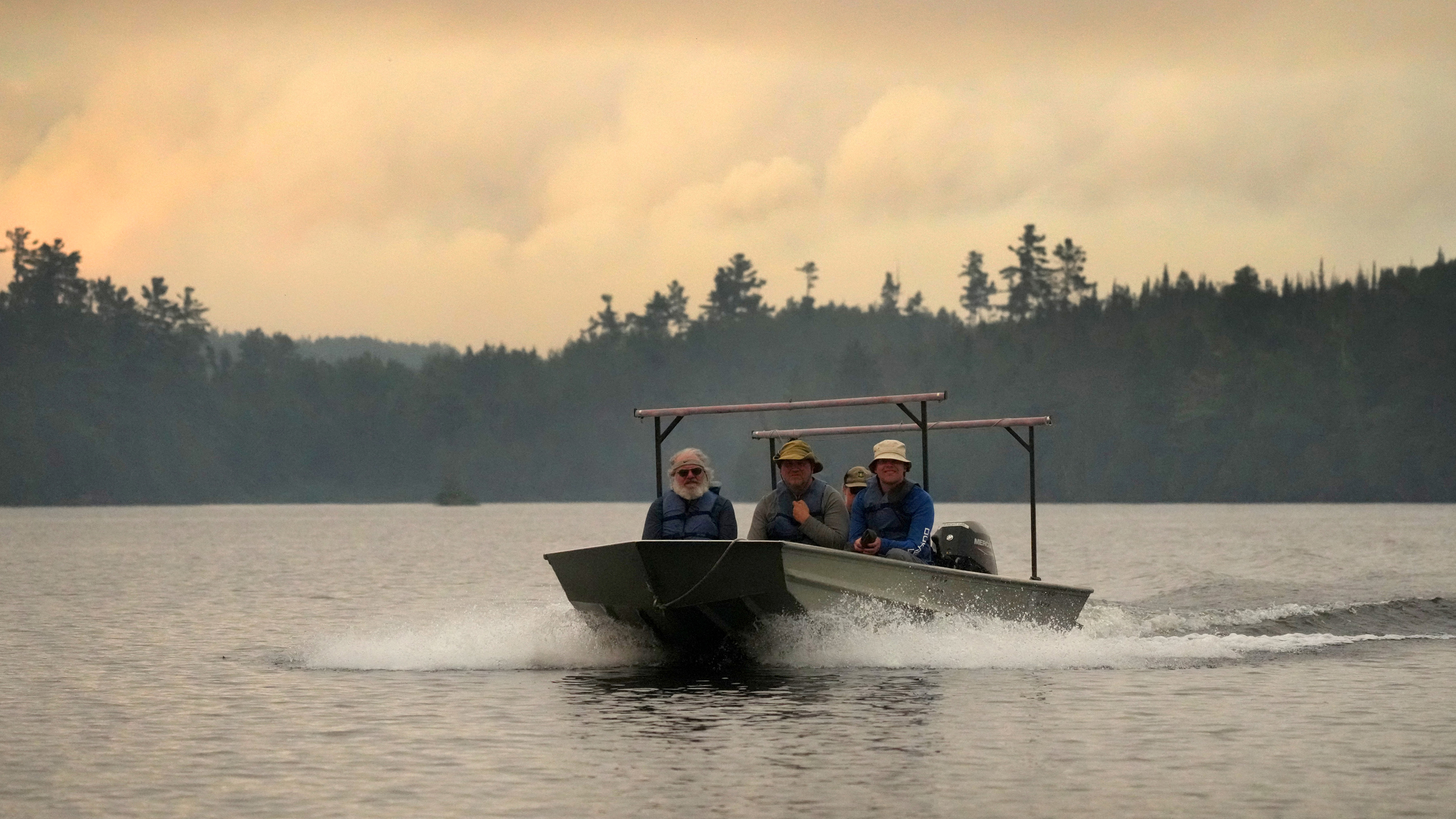
The story is a bit different further south in Iowa, Illinois, Indiana and Ohio. Deciduous trees such as red oak, hemlock and beech grew more abundantly there. But without fire, red maples encroached, slowly taking over the oak forests around the mid-19th century. Unlike oaks, whose leaves curl and aerate the ground, maples’ flat leaves lock in moisture when they fall and make the ground wetter and harder to ignite.
Hotter, arid conditions could change that.
“When things do get sufficiently dry,” said DeFeo, “then it’s a tinderbox.”
A History of Infernos
Though people don’t historically think of the Midwest as a wildfire hotspot, two of the largest conflagrations in U.S. history occurred in the region. In October 1871, it was gripped by drought. Logging companies in northeastern Wisconsin near a town called Peshtigo left branches and felled trees on the land, and farmers clearing properties to grow crops burned debris. When winds gusted through the area, fire quickly spread, scorching 1.2 million acres and killing hundreds, if not thousands, of people.
At the same time, the Great Chicago Fire overtook the city, killing 300 people and turning buildings to ash. Other fires collectively known as the Great Michigan Fire occurred on the same night, incinerating 2.5 million acres.
It’s unlikely that a similar situation would occur today. Drought and fuel monitoring and newer communication technologies keep us better informed about potential threats, said Evenson. Yet fire managers see the need to mitigate risk by building with fire-safe materials and identifying vulnerable structures where human development meets or intermingles with unoccupied areas covered with vegetation, spaces known as the wildland-urban interface.
This story is funded by readers like you.
Our nonprofit newsroom provides award-winning climate coverage free of charge and advertising. We rely on donations from readers like you to keep going. Please donate now to support our work.
“I think there is a greater recognition that we need to act in a variety of ways, and that would potentially help us never be in a situation where something like the Peshtigo Fire happens again,” said Evenson. “All of those pieces working in concert can help.”
A growing number of prescribed burn associations are now forming that work with local or state agencies and fire practitioners to conduct intentional, low-intensity burns. Those reduce the risk that big fires burn out of control and damage buildings and infrastructure.
“We’re not going to prescribe-burn our way out of these problems,” said DeFeo. “But we can manage for more resilient systems moving forward.”
Those prescribed burns could also help forests adapt to climate change. Fires have a sanitizing effect, wiping out some pests that thrive in warmer conditions, like ticks, spruce budworm and dwarf mistletoe, which harms black spruce.
In the southern stretches of the Midwest, climate change could stress maples and eventually allow fire-adapted oaks to move back in. That could in turn create more favorable prescribed-burn conditions for land managers and decrease the likelihood of big, high-intensity burns.
But in some places, like Minnesota’s boreal region, where the blazes occurred this summer, larger, more frequent burns may continue year after year as the climate warms.
Frelich “had a front-row seat” for a big boreal forest fire. In 2007, he and two friends were reporting a story in the Boundary Waters wilderness about the effects of climate change when an unattended campfire ignited nearby trees. High winds whipped embers from one section of drought-stricken forest to the next.
The fire roared directly toward the trio, so they quickly moved to the north side of Seagull Lake. Flames penned them in, and they had no idea how large the fire was or when they would be able to get out. To better assess the situation, they climbed a nearby cliff and looked out over patches of forest glowing with fire. After three days, the wind stilled and they escaped down the river.
Though the U.S. Forest Service fought the fire, suppression did little to keep the flames from tearing through the forest. The fire scorched 75,000 acres.
If that happens more often than every 20 years or so, he said, the coniferous forest could again turn to a landscape filled with aspen and birch trees.
“We’ve returned at least to the pre-European settlement condition in northern Minnesota,” he said. “Maybe we’re on our way to a much higher frequency of fire.”
About This Story
Perhaps you noticed: This story, like all the news we publish, is free to read. That’s because Inside Climate News is a 501c3 nonprofit organization. We do not charge a subscription fee, lock our news behind a paywall, or clutter our website with ads. We make our news on climate and the environment freely available to you and anyone who wants it.
That’s not all. We also share our news for free with scores of other media organizations around the country. Many of them can’t afford to do environmental journalism of their own. We’ve built bureaus from coast to coast to report local stories, collaborate with local newsrooms and co-publish articles so that this vital work is shared as widely as possible.
Two of us launched ICN in 2007. Six years later we earned a Pulitzer Prize for National Reporting, and now we run the oldest and largest dedicated climate newsroom in the nation. We tell the story in all its complexity. We hold polluters accountable. We expose environmental injustice. We debunk misinformation. We scrutinize solutions and inspire action.
Donations from readers like you fund every aspect of what we do. If you don’t already, will you support our ongoing work, our reporting on the biggest crisis facing our planet, and help us reach even more readers in more places?
Please take a moment to make a tax-deductible donation. Every one of them makes a difference.
Thank you,

Contributor
Susan Cosier is an award-winning freelance journalist who writes about science and the environment from her home base in Chicago. She covers scientific subjects ranging from the environmental effects of data centers to threats to endangered birds and fish. You can read her work in a variety of publications.
