

Close Menu
NCIJ Network NCIJ Network
    What's Hot

    A Carcinogenic Pesticide ‘No One Needs’ Is Found in Dangerous Quantities in a Quarter of US Rivers

    October 17, 2026

    Waymo’s robotaxis are headed to Canada

    October 17, 2026

    MALFEX npm Package ‘imgdecode’ Hides Shellcode Loader in Windows Native Addon

    October 17, 2026
    Facebook X (Twitter) Instagram
    Trending
    • A Carcinogenic Pesticide ‘No One Needs’ Is Found in Dangerous Quantities in a Quarter of US Rivers
    • Waymo’s robotaxis are headed to Canada
    • MALFEX npm Package ‘imgdecode’ Hides Shellcode Loader in Windows Native Addon
    • New drug reverses severe fatty liver disease by repairing the gut
    • How the Climate Crisis Fueled the Youth Protests Roiling France
    • EPA proposes shifting oversight of coal ash landfills in Wisconsin to state regulators
    • Rare pink diamond goes on display in France 100 years after amateur heist
    • The Best LED Grow Lights for Houseplants This Winter (2026)
    • About
      • Our Team
      • Editorial Policy
      • Editorial Independence
      • International Support
    • Trust & Standards
      • AI Usage Policy
      • Conflict of Interest Policy
      • Corrections Policy
      • Ethics Policy
      • Fact-Checking Policy
      • Source Protection
    • Get Involved
      • Guide for Sources
      • Support Independent Journalism
    • Legal
      • Cookie Policy
      • Privacy Policy
      • Terms of Use
    Facebook X (Twitter) Instagram
    NCIJ Network NCIJ Network
    Saturday, October 17
    • Home
    • World
    • Ai
    • Business
    • Politics
    • Health
    • Crypto
    • Science
    • Technology
    • Cybersecurity
    • Defense & Security
    • Economy
    • Energy
    • Europe
    • More
      • Fact Check
      • Investigations
      • Opinion & Analysis
      • Environment
    NCIJ Network NCIJ Network
    Home»Science

    Interstellar comet 3I/ATLAS is bursting with methanol

    NCIJ NETWNCIJ NETWORKBy NCIJ NETWNCIJ NETWORKSeptember 9, 2026 Science No Comments3 Mins Read
    Share
    Facebook Twitter LinkedIn Pinterest Email

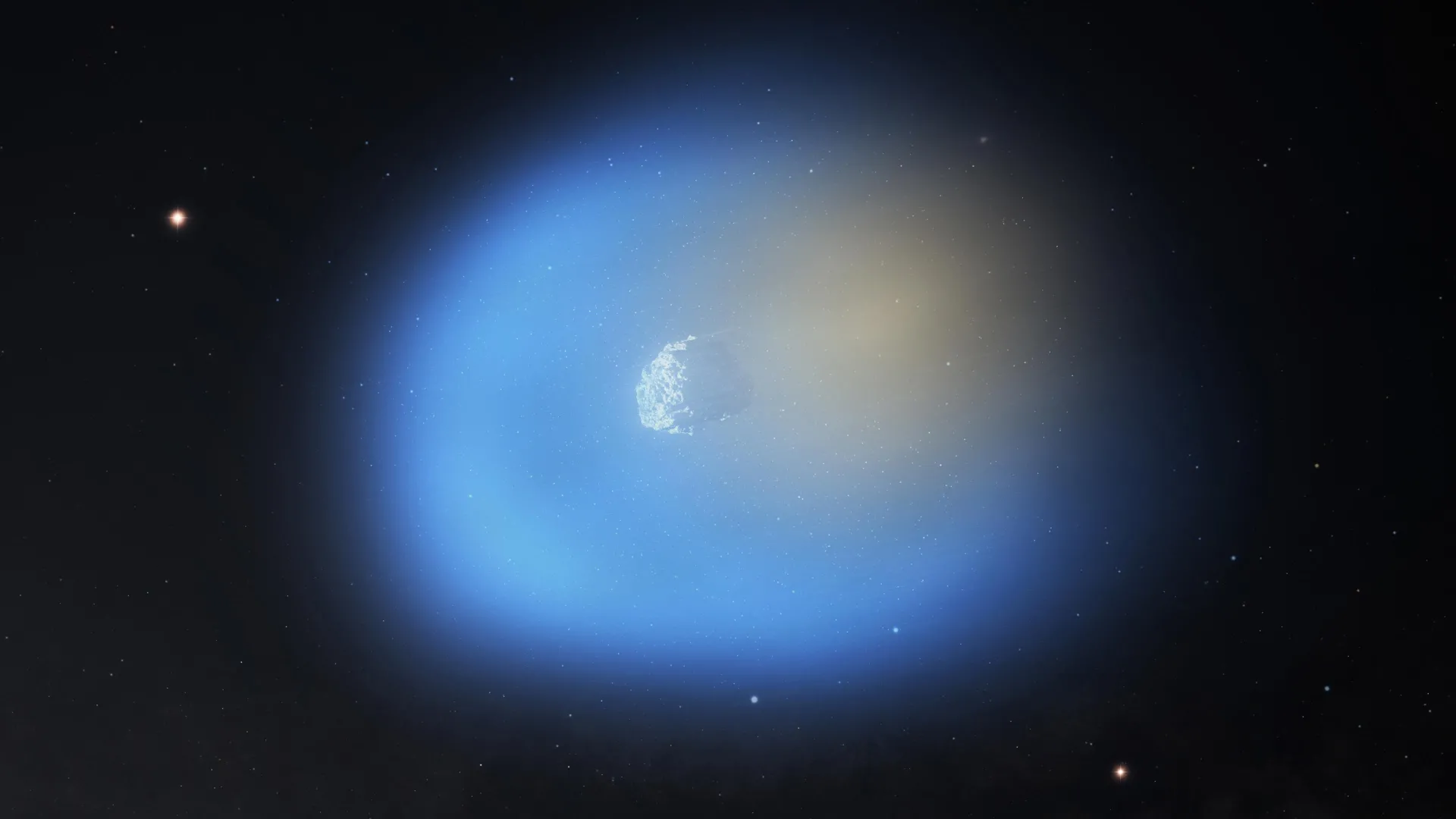
    Comet 3I/ATLAS is continuing to surprise astronomers. New observations from the Atacama Large Millimeter/submillimeter Array (ALMA), of which the U.S. National Science Foundation National Radio Astronomy Observatory (NSF NRAO) is a partner, show that the interstellar visitor contains an unusually large amount of methanol. In fact, its methanol abundance exceeds that seen in almost all known comets from our own solar system.

    “Observing 3I/ATLAS is like taking a fingerprint from another solar system,” shares Nathan Roth, lead author on this research, and a professor with American University, “The details reveal what it’s made of, and it’s bursting with methanol in a way we just don’t usually see in comets in our own solar system.”

    A Chemical Fingerprint From Another Solar System

    The research team used ALMA’s Atacama Compact Array in Chile to observe 3I/ATLAS on several dates in late 2025 as it moved closer to the Sun. As sunlight heated the comet’s icy surface, gas and dust escaped and created a bright cloud (or coma) around its core.

    By studying the molecules in this coma, astronomers could identify the chemical makeup of material carried by the comet. Because 3I/ATLAS originated outside our solar system, those measurements provide a rare opportunity to investigate how small icy bodies may form in another planetary system without traveling beyond our own.

    The scientists concentrated on the faint submillimeter signatures of two molecules: methanol (CH3OH), a type of alcohol, and hydrogen cyanide (HCN), a nitrogen-bearing organic molecule commonly seen in comets.

    ALMA revealed that 3I/ATLAS contains an unusually high amount of methanol relative to hydrogen cyanide. On two observation dates, researchers measured methanol-to-HCN ratios of roughly 70 and 120. Those values place 3I/ATLAS among the most methanol-rich solar system comets ever studied.

    Unusual Chemistry Points to Different Origins

    The measurements suggest that the ice inside 3I/ATLAS formed under, or was later exposed to, conditions very different from those experienced by most comets in our solar system.

    Earlier observations with the James Webb Space Telescope found that 3I/ATLAS had a coma dominated by carbon dioxide while it was still far from the Sun. The new ALMA measurements now add abundant methanol to the growing list of unusual features in the comet’s chemical makeup.

    ALMA’s high resolution for imaging also allowed astronomers to track how different molecules are released and travel away from the comet. The observations revealed a striking contrast between methanol and hydrogen cyanide.

    Hydrogen cyanide appears to originate mostly from the comet’s central body, or nucleus. That behavior is common among comets in our solar system. Methanol, however, appears to come from both the nucleus AND from ice particles floating within the coma.

    Tiny Ice Grains Act Like Mini-Comets

    These small icy grains effectively behave like miniature comets. As 3I/ATLAS approaches the Sun and temperatures rise, ice within the grains turns into gas and releases additional methanol into the surrounding coma.

    Astronomers have seen similar behavior in some comets from our own solar system. However, this is the first time researchers have traced the detailed physics of this type of outgassing in an object that originated in interstellar space.

    Comet 3I/ATLAS is only the third confirmed object ever observed entering our solar system from interstellar space, following 1I/’Oumuamua and 2I/Borisov. Studies of those earlier visitors also uncovered unusual characteristics.

    As astronomers find and examine more interstellar objects, each one offers another opportunity to compare our solar system with planetary systems elsewhere in the galaxy. The unusual chemistry of 3I/ATLAS is adding another intriguing piece to the broader picture of how planets, comets, and other small bodies form around distant stars.

    3IATLAS bursting comet interstellar Methanol
    NCIJ NETWNCIJ NETWORK
    • Website

    Keep Reading

    New drug reverses severe fatty liver disease by repairing the gut

    Antarctica’s sea ice has undergone a stunning reversal

    “Crawzilla” was huge. Then scientists found an even bigger crayfish

    A quantum highway just one atom high could transform superconductors

    APOD: 2026 October 17 – 3D 67P

    A protein that fuels cancer could also be the key to fighting it

    Add A Comment
    Leave A Reply Cancel Reply

    Editors Picks

    A Carcinogenic Pesticide ‘No One Needs’ Is Found in Dangerous Quantities in a Quarter of US Rivers

    October 17, 2026

    Waymo’s robotaxis are headed to Canada

    October 17, 2026

    MALFEX npm Package ‘imgdecode’ Hides Shellcode Loader in Windows Native Addon

    October 17, 2026

    New drug reverses severe fatty liver disease by repairing the gut

    October 17, 2026
    Latest Posts

    The Guardian view on Japan’s yen: Trump wants to keep the easy-money machine running | Editorial

    August 12, 2026

    Minesto reshapes organization to drive commercial expansion of tidal technology

    August 12, 2026

    Corpus Christi Puts Industrial Water Charge on November Ballot

    August 12, 2026

    Subscribe to News

    Get the latest sports news from NewsSite about world, sports and politics.

    NCIJ Network is an independent digital news platform delivering trusted investigative journalism, European and global news, in-depth analysis, and fact-based reporting with accuracy, transparency, and integrity.

    Facebook X (Twitter) Instagram Pinterest YouTube

    A Carcinogenic Pesticide ‘No One Needs’ Is Found in Dangerous Quantities in a Quarter of US Rivers

    October 17, 2026

    Waymo’s robotaxis are headed to Canada

    October 17, 2026

    MALFEX npm Package ‘imgdecode’ Hides Shellcode Loader in Windows Native Addon

    October 17, 2026

    Subscribe to Updates

    Get the latest creative news from FooBar about art, design and business.

    Type above and press Enter to search. Press Esc to cancel.