

Close Menu
NCIJ Network NCIJ Network
    What's Hot

    The hill I will die on: Questions can go unanswered. Stop pulling out your phone | Helene Rosenthal

    August 14, 2026

    Zambia election: Vote counting suspended over alleged attacks on polling staff

    August 14, 2026

    Benjamin Netanyahu describes UK as ‘first Islamic republic to get a nuclear weapon’ | Benjamin Netanyahu

    August 14, 2026
    Facebook X (Twitter) Instagram
    Trending
    • The hill I will die on: Questions can go unanswered. Stop pulling out your phone | Helene Rosenthal
    • Zambia election: Vote counting suspended over alleged attacks on polling staff
    • Benjamin Netanyahu describes UK as ‘first Islamic republic to get a nuclear weapon’ | Benjamin Netanyahu
    • Disability campaigners call for Burnham to delay assisted dying bill
    • Best Wireless Chargers (2026): My Picks After Testing 100+
    • In Other News: Rapid7 Layoffs, Hacking a Boeing 737, Refrigeration System Vulnerabilities
    • Bitcoin Eyes New August Lows As Binance Longs Face A ‘Cleanout’
    • Infrastructure and land use behind devastating India monsoon floods
    • About
      • Our Team
      • Editorial Policy
      • Editorial Independence
      • International Support
    • Trust & Standards
      • AI Usage Policy
      • Conflict of Interest Policy
      • Corrections Policy
      • Ethics Policy
      • Fact-Checking Policy
      • Source Protection
    • Get Involved
      • Guide for Sources
      • Support Independent Journalism
    • Legal
      • Cookie Policy
      • Privacy Policy
      • Terms of Use
    Facebook X (Twitter) Instagram
    NCIJ Network NCIJ Network
    Friday, August 14
    • Home
    • World
    • Ai
    • Business
    • Politics
    • Health
    • Crypto
    • Science
    • Technology
    • Cybersecurity
    • Defense & Security
    • Economy
    • Energy
    • Europe
    • More
      • Fact Check
      • Investigations
      • Opinion & Analysis
      • Environment
    NCIJ Network NCIJ Network
    Home»Environment

    Infrastructure and land use behind devastating India monsoon floods

    NCIJ NETWNCIJ NETWORKBy NCIJ NETWNCIJ NETWORKAugust 14, 2026 Environment No Comments3 Mins Read
    Share
    Facebook Twitter LinkedIn Pinterest Email

    Widespread flooding in northeastern India that affected more than 500,000 people and claimed at least 99 lives between June and August 2026 was primarily driven by human factors like rapid urbanization, deforestation, and destruction of wetlands, new research says. It also points to structural failures rather than climate change.

    The findings were published by World Weather Attribution (WWA), a global network of researchers who analyze the influence of climate change in extreme weather events.

    Floods hit India’s Assam state nearly every monsoon as the Brahmaputra River and its tributaries overflow, often submerging the surrounding landscapes.

    “We decided to focus on the upper Assam, both because of the significant socio-economic and environmental damage reported in the region, and the sheer collective damage of catastrophic floods in the region year on year,” research co-author Arpita Mondal, from the Indian Institute of Technology Bombay (IIT Bombay), said at a press briefing.

    The scientists analyzed historical weather records and climate models to determine the likelihood of the extreme rainfall that occurred over a three-day period (June 26-29), as well over a 30-day period (June 20 to July 19).

    They found the heavy rainfall observed in 2026 wasn’t exceptional, recurring every one to two years.

    The team also found no clear link to human-induced rise in global temperatures.

    “When we combine the observational results with the climate models, we again found no detectable climate change signal in either type of events,” co-author Mariam Zachariah, from Imperial College London, said at the briefing.

    Instead, the study found the main drivers of this year’s catastrophic floods were land-use changes, sedimentation, and structural vulnerability.

    The Brahmaputra River itself carries large amounts of sediments every monsoon that raises its riverbed, reducing channel capacity, meaning water flows out. This season’s flooding was, however, worsened by unplanned urbanization and deforestation that has degraded wetlands and disrupted natural drainage.

    Sneha Ganguly, study co-author from the Red Cross Red Crescent Climate Centre, said at the briefing that evidence from a review of 35 studies suggested “unplanned urbanization, deforestation, poor drainage, inadequate structural flood management measures, and other anthropogenic changes now outweigh natural rainfall variability in explaining flood frequency.”

    The report also highlights historical roots of vulnerability: Colonial land appropriation for tea plantations forced Indigenous communities onto marginal, highly flood-prone riverbanks and sandbars (char areas), creating systemic patterns of exposure that persist today.

    While Assam has built extensive concrete embankments, the report warns that heavy reliance on rigid infrastructure can actually worsen flooding by trapping silt and increasing the risk of breaches.

    “Future adaptation will therefore need to focus less on controlling rivers and maybe more on working with them to combine targeted engineering with floodplain restoration, wetland conservation, reducing development in floodplains, improved drainage, and community preparedness,” Ganguly said.

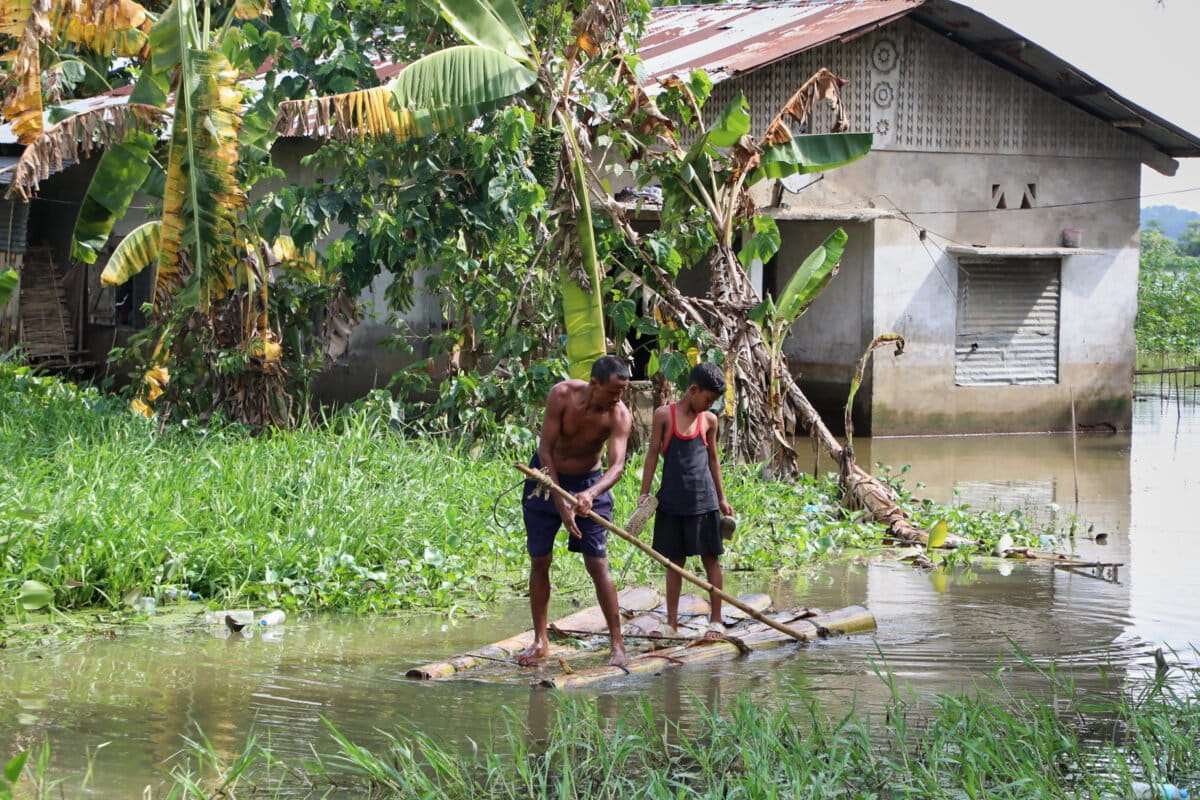
    Banner image: A villager rows a makeshift banana raft to cross floodwaters near his submerged house in Alengmora village in Jorhat, India, on Aug. 10. Image by AP Photo/Parikhit Saikia.


    devastating floods India infrastructure land monsoon
    NCIJ NETWNCIJ NETWORK
    • Website

    Keep Reading

    The Data Center Industry’s PR Blitz Is Backfiring

    Rescued from traffickers, reintroduced orangutan becomes mother in the wild

    A mine polluted a Zambian river in 2025: Residents continue to live with the impacts

    Dark bordered beauty moth found in Northumberland after 70 years

    From one deer’s DNA, a road map emerges to save an endangered Philippine species

    More people, farms, and drought could mean more elephant conflict in Southern Africa

    Add A Comment
    Leave A Reply Cancel Reply

    Editors Picks

    The hill I will die on: Questions can go unanswered. Stop pulling out your phone | Helene Rosenthal

    August 14, 2026

    Zambia election: Vote counting suspended over alleged attacks on polling staff

    August 14, 2026

    Benjamin Netanyahu describes UK as ‘first Islamic republic to get a nuclear weapon’ | Benjamin Netanyahu

    August 14, 2026

    Disability campaigners call for Burnham to delay assisted dying bill

    August 14, 2026
    Latest Posts

    Evacuated villagers in Cairngorms allowed home after wildfire threat lifts | Wildfires

    July 25, 2026

    The Fraternal Order Of Police Supports The Clarity Act.

    July 25, 2026

    How Synthetic Identity Fraud is Coming for Machine Identities

    July 25, 2026

    Subscribe to News

    Get the latest sports news from NewsSite about world, sports and politics.

    NCIJ Network is an independent digital news platform delivering trusted investigative journalism, European and global news, in-depth analysis, and fact-based reporting with accuracy, transparency, and integrity.

    Facebook X (Twitter) Instagram Pinterest YouTube

    The hill I will die on: Questions can go unanswered. Stop pulling out your phone | Helene Rosenthal

    August 14, 2026

    Zambia election: Vote counting suspended over alleged attacks on polling staff

    August 14, 2026

    Benjamin Netanyahu describes UK as ‘first Islamic republic to get a nuclear weapon’ | Benjamin Netanyahu

    August 14, 2026

    Subscribe to Updates

    Get the latest creative news from FooBar about art, design and business.

    Type above and press Enter to search. Press Esc to cancel.