


Indigenous activist and filmmaker Kynan Tegar joins the Mongabay Newscast this week to discuss the impacts of the fires devastating Kalimantan, the Indonesian portion of the island of Borneo. Some 48,000 hectares (about 119,000 acres) of land have burned so far this year; Kynan says these fires are intentional on the part of agricultural corporations.
“The process that has gotten us to this point right now, where fires are raging through the island, it’s a process that started maybe you can draw the line up to the 1970s, which was around the time where the Indonesian New Order period regime of Suharto was leasing out a lot of lands as concessions to companies,” she says.
“A lot of times it’s logging, it’s palm oil concessions, it’s also gold mines.”
Corporations have drained more than 1 million hectares (2.5 million acres) of peatland, she says. But the impact, she says, that isn’t receiving as much attention is the decreased access to freshwater for Indigenous and local communities, which both climate change and El Niño are making worse.
“It’s quite an ironic thing. Like, it’s one of the world’s biggest rainforest[s], and a lot of the people there are struggling for water. So that, on top of the conditions created by the massive wildfires that has been happening since July … has put a lot of the people there in strain,” she says.
Kynan released a spoken-word music video in 2024 to dramatize and tell the story of her community, Sungai Utik, and the people who have defended the land for more than 100 years. She explains the filmmaking process behind the video, Earth Defender, and how she created the narrative, which states that every 48 hours, an Earth defender loses their life protecting their land, protecting their forests, protecting their ecosystems, their families.
“It’s this very real story of heading off excavators using our bodies, of a relative being lost, only a machete or just a few objects of them being left behind. That’s a very real story that’s happened in far too many places,” she says.
Kynan is also a transgender woman. In light of the Indonesian president’s decision to designate the “dissemination of Lesbian, Gay, Bisexual, Transgender, and Queer (LGBTQ) culture” as a nonmilitary state threat, she explains how this impacts her advocacy.
“How free we can really be in this country? It made me second-guess on how much I … can actually speak up on the kinds of issues that I have always spoken up for.”
She further reflects on what she feels is a lack of solidarity.
“Being queer and being Indigenous, it’s not that far removed. It’s a lot of the same, layers of oppression culturally, economically, socially. And I suppose that’s where I really had hoped for there to be more solidarity between these movements because of all of those similarities. But I think that’s still something that we collectively need to work on.”
Kynan also shares her thoughts on the long-delayed Indigenous People’s Bill, which promises to grant legal recognition to customary lands, but has hung in parliamentary limbo for 16 years.
“I don’t see elements within it that will redress the historic inequality that we have faced. I think that’s still a massive problem that needs more than just a legal solution.”
When asked what she hopes to see for the future of Indonesia’s Indigenous population, she says, “I don’t think I can accurately represent all Indigenous youths of Indonesia. But for me personally, the kind of future that I want to imagine is a future that exists.”
Kynan is one of 50 Indigenous filmmakers behind the movie A Day on Earth, which was filmed simultaneously on Earth Day 2025 around the world and set for release in 2027. It aims to show what the planet means for each of them as the effects of the climate crisis have become a more present existential threat.
“For the context of Indonesia, we have a lot of work to do. There’s a lot of dimensions to Indigenous peoples, the issues that we face, and the issues that our environment faces,” Kynan says. “And I think one realization that I’ve had recently is that we’re not acting quite so radically enough in how we organize and in how we take action.”
Mike DiGirolamo is the host & producer for the Mongabay Newscast based in Sydney. Find him on LinkedIn and Bluesky.
Basten Gokkon is a Jakarta-based staff writer for Mongabay with interests in wildlife conservation, renewable energy, and Indigenous communities. Follow him on Twitter to see his latest thoughts via @bgokkon.
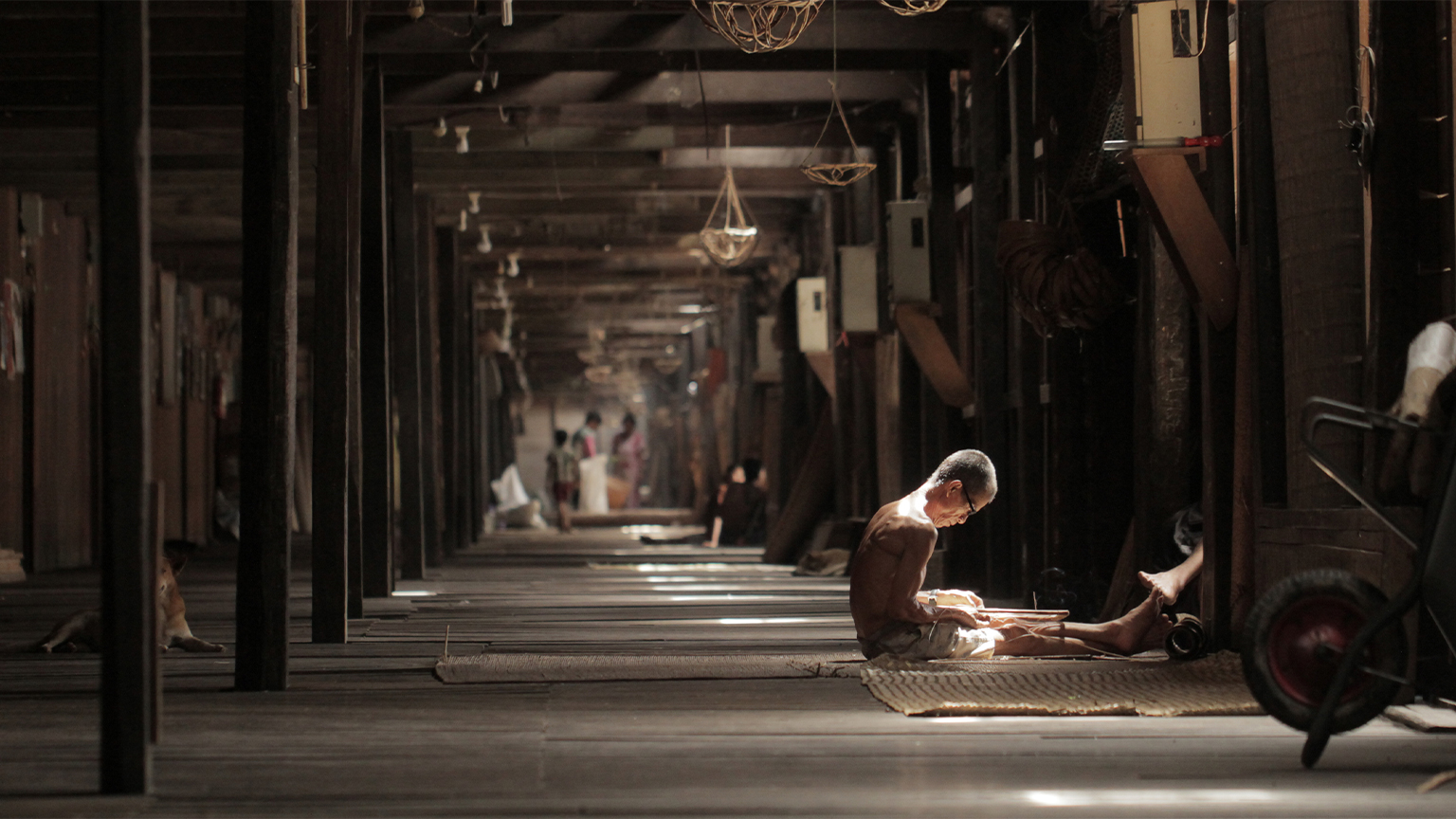
Banner image: A customary longhouse in Sungai Utik. The community elders make sure everyone complies strictly with the law, as this serves as a model for the young generation to follow in their footsteps and lead the path to community conservation. Image by Indai Apai Darah, Kynan Tegar / Wayfinders Circle.
Related listening: Activist Carlos Zorilla details 30 years of fending off mining companies in Ecuador
Notice: Transcripts are machine and human generated and lightly edited for accuracy. They may contain errors.
Kynan Tegar: I don’t think I can accurately represent all Indigenous youths of Indonesia. But for me personally, the kind of future that I want to imagine is a future that exists. I think right now that’s as far as the imagination goes to, because even for us, it’s still quite a struggle to be able to have ideas of what the future could look like in our individual communities. Indigenous people still prove to be the best stewards of the land. When you look at, for example, fire hotspot maps of the fires currently happening throughout Indonesia, what you’ll see is that in places, in areas where the rights of Indigenous peoples are recognized, there are basically no fires, and there’s almost a direct correlation between that. And that just goes to show the worth of recognizing rights when it comes to the environment.
Mike DiGirolamo: Welcome to the Mongabay Newscast. I’m your host, Mike DiGirolamo, bringing you weekly conversations with experts, authors, scientists, and activists working on the front lines of conservation, shining a light on some of the most pressing issues facing our planet, and holding people in power to account. This podcast is edited on Gadigal land. Today on the newscast, we speak with Kynan Tegar, an Indigenous activist and filmmaker from the community of Sungai Utik, West Kalimantan. For this episode, I’m joined by my colleague and staff writer, Basten Gokkon. We speak with Tegar about the fires that are occurring in Kalimantan right now. She describes how these fires are intentional, started by and for corporations that drain peatlands with canals that sometimes stretch hundreds of kilometers. El Nino and climate change are exacerbating the impacts on these forests, and access to water for Indigenous and local communities is becoming increasingly difficult. Tegar details the history behind the destruction in Kalimantan, which goes back decades. She brings this history to the screen in her acclaimed music video, Earth Defender, and she describes the process behind making this film, the stories behind it, and what she wants the world to know about Indigenous communities in Indonesia. As a transgender woman, Tegar shares her thoughts on Indonesia’s labeling of transgender people as a non-military threat to the nation and how she feels this impacts her advocacy. She also shares her thoughts on the long-delayed Indigenous Peoples Bill, which grants legal recognition to customary lands, and the future she hopes to see for Indigenous people in Indonesia.
Kynan Tegar, welcome to the Mongabay Newscast. It’s a pleasure to have you with us.
Kynan: Great to be here as well.
Mike: First, can you tell us what is happening in Kalimantan right now, uh, in regards to the fires?
Kynan: There’s quite a lot happening in Kalimantan, that’s for sure. And the fires are one thing, but I think another issue that a lot of- not a lot of people have talked about is the issue of the water crisis, and it’s quite an ironic thing. Like, it’s one of the world’s biggest rainforest, and a lot of the people there are struggling for water. So that on top of the conditions created by the massive wildfires that has been happening since July, so it’s been three months now, has put a lot of the people there in strain, really. Lots of lives are forced to be changed in rare instances, people are displaced, and, like, especially when it comes to water, a lot of them see a very uncertain future ahead as the current phenomenon that is happening, El Niño, made worse by climate change, is likely to happen again in the near future.
Mike: And you say that there are more than one million hectares of dried peatlands, and that these fires are intentional, is what I heard you say on Instagram. But by whom?
Kynan: Yes. So the fires themselves, they’ve begun the process that has gotten us to this point right now where fires are raging through the island. It’s a process that started maybe you can draw the line up to the 1970s, which was- around the time where the Indonesian New Order period, regime of Suharto was leasing out a lot of lands as concessions to companies. This gave a lot of them pretty much free will to alter the land as they see fit for a lot of times, it’s logging, it’s palm oil concessions, it’s also gold mines. More directly, you can pull the string of offense to 1995, which was when a one-million-hectare program to convert the peatlands of Central Kalimantan near Palangkaraya into rice cultivation. It’s the food estate project, but more than 30 years ago now. That’s what was underway. The program itself didn’t come into fruition. I believe only around 4,000 hectares of rice was actually planted in that program in the two years that it ran before the financial crisis, the 1997 financial crisis, and then the 1998 regime change happened. They were only able to plant around 4,000 hectares of rice, but they had already dried out, created canals going through the one million hectares of peatland.
Mike: Basten, did you have any follow-up questions?
Basten Gokkon: I think you mentioned that climate change also added more severeness to this catastrophe. Can you maybe explain a little bit more on that?
Kynan: Yeah, that’s one thing that I realized the more I delved deeper into this issue, fires in Kalimantan, right? There is, of course, that element of massive terraforming and then the preceding land mismanagement. But then it’s also this, the general globalized climate change that we’re dealing with right now, that a lot of people are facing with right now. And it’s especially … It makes worse years such as this when El Nino is in full swing, combined with the temperature increases, that was diff- driven by human-caused climate change. It’s put a lot of ecosystems in strain. And it’s, of course, not a phenomenon that’s limited to just Kalimantan alone. Even other places throughout Indonesia are experiencing fires in places where they have not. And for instance, in the case of southern Papua, the province of South Papua, Selatan, it’s of course also that element of humans, of the government creating a new national strategic project there, but it’s also at the same time made worse by climate change, by the temperatures. Maybe speaking more concretely in Kalimantan, what we have been seeing the past two, three months is just the lack of rain. So I come from this part of West Kalimantan that’s called Kapuas Hulu, and there we have this massive wetlands ecosystem called the Danau Sentarum National Park. It’s usually … I believe it’s, like, one of the biggest floodplains in the entire world, but occasionally it would dry to very low levels, where it’s no longer a lake, but it’s a river. It’s like a string of rivers. But this year, rain didn’t fall on this area for more than two months already, I believe. And because of that, all of the water sources for it has dissipated, and all of the water that was on it has evaporated, leaving this lake looking like a desert. And of course, it also has impacts on the people, of course, right? For instance, in my home village of Sungai Utik, we’re swidden agricultures, right? So we farm rice, and we would first, like, pound the earth with these wooden rods to create holes in it where we would put in paddy seeds. But because there has been so little rain, the dirt, the land has gotten so dry that it has become compacted. And so much so to the point that you’re unable to cultivate it. And so a lot of us are facing the predicament of, like, what do we do when we are unable to grow our crops, when we’re unable to look for water in places where we used to be able to?
Basten: Without all these disaster happening, can you tell us a little bit more about your community, Sungai Utik? You know-
Kynan: Mm-hmm
Basten: without these drought, without these fires, can you tell a, a little bit more about that? Sure. Sure. Just to, just for the listeners to understand, like, what is it like a normal life in Sungai Utik.
Kynan: Yeah. So Sungai Utik is this small village of around 300-ish people situated in Kapuas Hulu Regency, and all 300 of us live in this one singular structure called the long house. It’s this massive, long house stretching more than 200 meters, and surrounding it is our, river, the Utik River, which is the namesake of Sungai Utik. Translated roughly, it means the land where the river runs clear. And it was our elders who were able to help keep it that way. Like I mentioned earlier, in the 1970s, it was a massive period of neoliberal expansion of agro businesses into Kalimantan, right? And our region was also under a lot of threat at this, at the time. In the beginning of the ’70s, my grandpa tells stories of how they came in bringing money by the boxes full, just asking for our permission to clear the land, and oftentimes they wouldn’t take no for an answer. My grandparents’ generation at the time, they would be the ones on the very frontline of putting their bodies up as a shield to protect the land, and that’s been the ongoing story really because it’s, it didn’t just happen that one time. It happened again and again and again. And that’s mostly because our people, the Iban people of Sungai Utik, even though we were Indigenous, even though we’ve lived where we have lived for more than 100 years now, our rights at that time weren’t recognized by the national government. In their eye, we didn’t exist. In their eye, this was empty land where they were able to designate as a concession, for instance, as a palm oil concession, for instance. And so that’s the right that my grandfather’s generation and my dad’s generation fought for really for more than, I think they begun participative mapping of the customary territory in the ’90s, but only in the year 2020 were we able to finally get the land rights recognition. Pengakuan hutan adat is what it is in Indonesian, recognition of our customary forests and our rights over the almost 9,480 hectares that comprised our territory
Mike: Kynan, at the end of your film, Earth Defender, you mention words about being able to be unapologetically us Indigenous- Mm-hmm … and to decide what development you need on your own terms. Can you share more about what that means to you?
Kynan: Yeah, of course. There is this really widespread perhaps, but misleading image of Indigenous peoples as anti-development, and I think that’s something that needs to be straightened out a lot of the times. It’s not that we oppose these developmental programs that the government has, it’s just that most of the time the terms are not set by us. We are not the ones who are at the steering wheel to determine what kind of development exactly it is that we need. Now that we, as a people in Suma Utik have rights to our land, our land rights recognized, we’ve come to the question of what then? Because the realization is that even though a lot of the things inside of our village are unchanged, the world around us is changing. There are so many needs in our daily lives that we need money for. For instance, education, for instance, healthcare. Those are very basic things that require, whether we like it or not, money, right? And so I think that’s what been one of the biggest focus going forward for our community, is how to sustainably generate income with the forest that we now have to be able to ensure the future of the younger generations, like my generations. For, for me, I was able to go to university. I’m able to speak to you now in the language that you hear through the education that I received, and that’s what we want. That’s what we want for us, for, for our people back home.
Basten: Speaking of future, your, yourself are a young Indigenous advocate still doing undergraduate studies, and in your work you’ve highlighted about imagined futures, right? What kind of futures that you yourself and maybe your friends in college, your friends in Suma Utik that you talk about, and maybe perhaps for the rest of Indonesia’s Indigenous peoples and, yeah, maybe other communities in the rest of the world sharing similar situations?
Kynan: Going straight to the big questions, huh? That’s difficult. I don’t think I can, accurately represent all Indigenous youths of Indonesia. But for me personally, the kind of future that I want to imagine is a future that exists. I think right now that’s as far as the imagination goes to, because even for us, it’s still quite a struggle to be able to have ideas of what the future could look like in our individual communities. Because I think the biggest obstacle to this is access, accessibility of information, accessibility of transportation also is one of the biggest thing. Maybe speaking more about that, like when I was in Kalimantan just last month, I spent entire month traveling from the very end of West Kalimantan in Ketapang all the way to the other end in Kapuas Hulu, and that journey took me more than three days of just traveling in the back of a car seat. That’s the kind of accessibility issues that we still face today. And I think those are the very real, very concrete things that we need to address to ensure that Indigenous youth, or just youths in general, are able to have a broader vision of what the future could look like within our respective places.
Mike: Hello listeners, and thank you for tuning in. As I always like to mention, Mongabay is a nonprofit news organization, which means we rely on funding from our listeners, our readers. And many of you have donated to this podcast, and I would just like to say thank you so much. If you’re listening right now and you want to become a sponsor of this show, head to patreon.com/mongabay to become a monthly donor of the Mongabay Newscast. If you want to find Tegar’s work or watch Earth Defender, you can find a link in the show notes.
Kynan, I was wondering if you could answer a question for me about your film Earth Defender. You said that in capturing the nuance of the story, you actually had to go back and rewrite it. And I just wanted to know, can you explain to our listeners why, and how was that filmmaking process for you?
Kynan: Yeah. So to give a little bit of context, Earth Defender was a music video that I did along with Studio Birthplace and the musician Novo Amor. And the premise of the video itself is that we begun from a statistic that says that every 48 hours an earth defender loses their lives protecting their land, protecting their forests, protecting their ecosystems, their families, and we wanted it to not just be a statistic. So what we did was we tried to portray the fullness of that life, the nuance within that one singular number, that one life that is lost. And for us, that’s for– at least for me growing up, I heard a lot of stories to that same effect, people giving up their lives, sacrificing it for their land, for their families, for their livelihoods, really for their futures. And so we really wanted to do it justice, but we realized that there is a certain legibility that needed– that we needed to convey. There is a process of translation between the deedsack stories that my grandparents’ generations, for example, told to the current medium that we’re trying to do, which is film. So there was a bit of creative liberty definitely taken throughout this process to make that more legible, to make it more clear. But I think for the most part, it’s this very real story of heading off excavators using our bodies, of a relative being lost, only a machete or just a few objects of them being left behind. That’s a very real story that’s happened in far too many places.
Mike: And I’m, curious to know, Kynan, what has been the response to this film internationally, and how has this impacted your community?
Kynan: Internationally, it’s– I believe that it has touched a lot of people just because it’s a music video, right? It doesn’t have any particular lyrics. It doesn’t focus on that. It just focuses on the evocative portrayal of a relationship between a father and his child And the father’s eventual sacrifice, and that was able to connect through a lot of people beyond language, beyond cultures. And I was really h- happy also to hear that there were screening with- screenings with communities who are unable to hear, and they were able to also appreciate the message of the film. But one thing that I’ll admit is still lacking from that film is the impact side of it itself. That’s one thing that we’re still trying to work on, how to bridge between that emotion, the emotions felt when you watch these films, the message within it, and how to turn that into actual measurable, meaningful action. I think that’s our homework going forward.
Basten: You mentioned that your future is simply just to exist. That’s so beautiful, by the way. But also in Earth Defender, in the narrative, you mention about the passing into law of the Indigenous Peoples Bill, right? Which has been in the legal limbo forever. But can you maybe tell us and the listeners how is this bill going to support the communities in Indonesia, and specifically reduce the harm against it? You mentioned that there’s a lot of misconceptions about Indigenous people as well. And why do you think this bill remains unapproved for so many years?
Kynan: Okay, there’s a lot of dimensions to that question. I think, like you said, it’s been in legal limbo since the early 2010s, I believe, so it’s been more than a dozen years now. And the reason that it hasn’t moved forward is definitely a political one, where when it comes to Indigenous peoples in general, it seems there’s a lot of interests at play, economic interests usually that keeps these kinds of bills in the system, that keeps them unenacted upon. And it’s of course a sy- it’s a systemic problem, but with what’s been happening right now with seeing the progress and seeing how it’s, how it might actually come into passing in the near future, I still do worry about how big of an impact that it’ll actually have. Because the few things that I am certain is that it will give Indigenous peoples more legal rights, more liberty in some ways, but I don’t see elements within it that will redress the historic inequality that we have faced. I think that’s still a, a massive problem that needs more than just a legal solution. You need a very holistic solution to be able to tackle an issue that big because it’s economical, it’s social, it’s also cultural, and what it’s definitely not is simply legal.
Basten: It’s gonna be a hard question … but I hope you can answer this. We learned that you are also a trans person. And in Indonesia, and a few months ago, the president included LGBTQ+ community in the national non-military, military threat.
Kynan: Mm-hmm …
Basten: How do you process that, if you don’t mind us asking?
Kynan: Okay. How do I process that? How do I process being legally categorized as a non-military threat? It’s quite an absurd, absurd question, but like, yeah, it is. It is the reality, isn’t it? I think for me it was, a lot of it, a lot of the processing was sent by- Reading the news of the bill, reading of the bill being passed that legalized that, but it was mostly seeing the effects of it underway. I remember there was attacks on trans women in very near to where I live. I lived in Depok at the time, which was, like, just a few, like, 30 minutes away from Bogor where those attacks happened, and it’s, it brings with it a lot of re-questioning, I would say- of how free we can really be in this country. It made me second-guess on how much I can, of how much I can actually speak up on the kinds of issues that I have always spoken up for. Like, I’ve been talking about Indigenous rights since I was, like, 14, 15, which is already six years now, and it definitely adds another dimension on how-
Basten: Mm-hmm …
Kynan: the government can very easily use it as an, as a, I don’t know if it’s, if excuse is the right term for it, or maybe, like, justification of hatred, of persecution even, right? But I don’t know. I think it’s also in that very moment that I realized that being queer and being Indigenous, it’s not that far removed. It’s a lot of the same layers, of oppression culturally, economically, socially, and I suppose that’s where I, really had hoped for there to be more solidarity in between these movements because of all of those similarities. But I think that’s still something that we collectively need to work on.
Mike: I’ve often heard it said by other people I’ve had on the show that human rights and the environment are directly interlinked, particularly women’s rights, and I just, wanted to know what are your thoughts on that, and how do you see that, that intersection in Indonesia?
Kynan: That’s … Yeah, that’s really interesting. I, think my experience, especially last month being in Kalimantan, I was helping out with water distribution in places that has had a lot of their water sources dried out. So most of the time, the people that came to the places where we’re distributing water was, of course, the women. They were the ones tasked with this, very domestic task of providing water for their families. They were the ones carrying water jugs for kilometers and kilometers, and that’s one of the easiest ways that you can see that there’s, like, a gender aspect to the climate crisis, for instance, or the environment more generally. And I think in that context, it’s a really important dimension to look at because I think, for instance, when it comes to reportings about Kalimantan recently, most of it has been very masculine in that it focuses on the fires themselves and the firefighters on the ground fighting these fires, when most of the burden that is felt during these types of events is to daily lives. And so often, almost always, it’s the women who are helping to sustain these families through the worst of times, and that’s one aspect that is so often ignored. And I think, for myself as a storyteller, that’s one dimension that even I myself ironically realize is missing from my own work. And so that’s gonna be, like, a reminder to myself in the future
Basten: You have an upcoming movie, A Day on Earth, in 2027. That’s also the year of the 32nd COP. That is still the planet’s governing platform for addressing the climate crisis, right? But last year in Bella, Indigenous groups also staged protests for the COP’s lack of progress in climate negotiations, and they also demanded stronger recognition for Indigenous rights, right? Would you mind sharing some of the messages in your movie, your upcoming movie, that you’d like to convey, and maybe also, like, specifically for Indigenous advocacy in Indonesia?
Kynan: So the film, A Day on Earth, is, it’s a very unique film in that it’s, it was filmed on one day, one singular day, by I think more than 50 filmmakers throughout the world. So, like, 50 Indigenous filmmakers throughout the world picked up the camera and recorded whatever happened on that specific day, Earth Day of 2025. And the message, really, there’s not a singular message to the film, I would say. It’s the portrait of what life currently looks like on Earth. It’s a portrait of what exactly we are fighting for, right? And it’s a reminder to, what for me personally, what I want is for it to serve as a reminder for the people who are working on these issues of land rights, of environmental rights, that this is what we are protecting, the forests, the rivers, the lakes. And showing for each of us, the however many filmmakers that were involved in the process, what the Earth individually means for us. And for the context of Indonesia itself, like I said earlier, we have a lot of work to do. There’s a lot of dimensions to Indigenous peoples, to the issues that we face, the issues that our environment currently face. And I think one realization that I’ve had recently is that we’re not acting quite so quite radically enough in how we organize and how we take action. What I’m also realizing, especially this year, 2026, with the El Niño and everything that is happening in Kalimantan, is that, as cliché as it may sound, is that climate change is a very, real existential threat to people, to humans, and of course, also to Indigenous peoples. For my people, the people of Sunayutik, even though we’ve protected our 10,000 hectares of forest for the past more than 100 years, doesn’t mean that we are free from the effects of climate change. We see the same thing with what’s happening in Nepal. They contribute 0.01% of the global climate emissions, and yet they’ve just had that disaster happen, taking thousands of lives away from their country. It’s that very same kind of inequality that we, I feel collectively should be more angry about, that we should recognize, of course, and that we should act on. There’s also a realization That the systems such as the COPs, such as the bilateral meetings, the regional forums, that they’re not quite adequate to handle the tasks that we need them to do, especially when it comes to perhaps to cases like what’s happening in Kalimantan right now, right? There is a lack of emergency responses. There is a lack of funding. There is just a lack of general resources. And of course, to remedy the situation, we need massive systemic changes in policies when it comes to land management, when it comes to peatland handling. But also at the same time, we need mechanisms in the short term to help the people there, my families, our communities, to be able to make it through what we’re currently facing, right? There needs to be this simultaneous movement of both short-term and long-term of organizing grassroots movements on the ground whilst also advocating for long-term change on the policy, on the structural level.
Basten: What do you wish for more people would know around the world about Indonesia’s Indigenous communities?
Kynan: Oh, okay. That’s a very general question.
Basten: Yeah.
Kynan: Huh. I think, like in the global context, uh, Indonesia’s Indigenous peoples are at a relatively ambiguous situation when it comes to determining who is Indigenous versus who is not. And, that’s left a lot of implications as well- which is interesting. But right now we’re seeing how, like be that as it may, Indigenous peoples still prove to be the best stewards of the land. When you look at, for example, fire hotspot maps of the fires currently happening throughout Indonesia, what you’ll see is that in places, in areas where the rights of Indigenous peoples are recognized, there are basically no fires, and there’s almost a direct correlation between that. And that just goes to show the worth of recognizing rights when it comes to the environment.
Basten: Kynan, can you tell us and the listeners where we can follow you to learn more about your work?
Kynan: Yeah. I’m most active on my Instagram. It’s just my name, Kynan Tegar. And I also have a website if you would like to contact me for anything, to ask questions. If you would like to visit Sungai Utik, we are very open to that. And yeah, I think that’s it.
Basten: Kynan, thank you so much again for your time, your refreshing takes. I really enjoyed our conversation. Thank you so much.
Kynan: It was a pleasure, Basten. Thank you as well.
Mike: As always, if you’re enjoying the Mongabay Newscast or any of our podcast content and you want to help us out, we encourage you to spread the word about the work that we’re doing by telling a friend and leaving a review. Word of mouth is the best way to help expand our reach. But you can also support us by becoming a monthly sponsor by going to our Patreon page at patreon.com/mongabay. As I mentioned, Mongabay is a non-profit news outlet, and even pledging a dollar per month makes a very big difference and helps us offset costs. You can also read our news and inspiration from Nature’s Frontline at mongabay.com or follow us on social media. Find Mongabay on LinkedIn at Mongabay News and on Instagram, Threads, Blue Sky, Mastodon, Facebook, and TikTok, where our handle is at mongabay or on YouTube at Mongabay TV. Thank you as always for listening.
