


Conservation biologist and founder of the nonprofit Wildlife Conservation Action, Moreangels Mbizah joins the Mongabay Newscast this week to detail her work helping reduce human-wildlife conflict between African lions and communities in Zimbabwe.
The group began working only six years ago in two wards of Nyaminyami rural district, and since then has recorded a 98% reduction in conflict incidents there. Across the districts of Mbire and Binga, conflict has decreased by 53%.
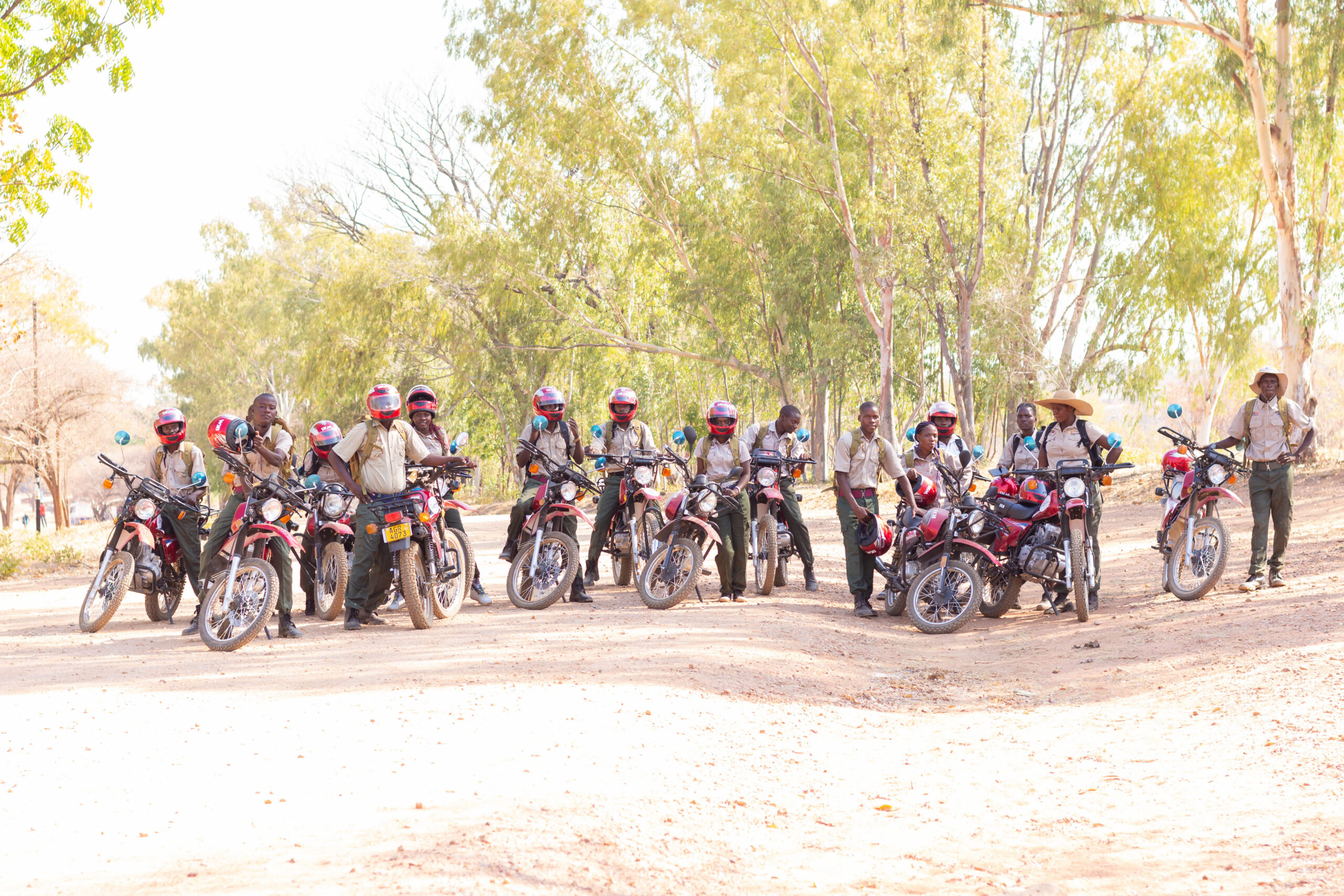
To accomplish this, WCA has pioneered a “community guardian” model. Known as “Batabilili,” these guardians are trained by the organization and implement a range of mitigation measures, including helping farmers secure livestock in above-ground kraals, monitoring lion movement, and conducting community meetings.
“They are trusted because they come from these communities, and they are their children, their brothers and sisters,” Mbizah says. “They are part of the community fabric, so that makes it really important in terms of the buy-in and the ideas and the decisions that are being made when it comes to lion conservation.”
She says this has also helped reduce retaliatory killings of lions for preying on livestock, because community members’ concerns are directly addressed by a trusted member.
“There’s no one that is supporting them when they incur these losses. No one comes to see and to support, to provide … emotional or psychological support when a conflict incident happen[s]. So we wanted to change that,” Mbizah says.
“They always felt that [the] wildlife authority, they care about wildlife and they don’t care about the people living alongside wildlife, and we are showing that we care about them.”
Mbizah also discusses her work mentoring the next generation of conservationists through a mentorship program she offers to female university students. She says this is partly inspired by the challenges she faced in her own journey as a conservationist.
“Being one of the few Black Zimbabwean women within conservation at the time when I started, I felt that the space didn’t have opportunities for young Black women that wanted to be part of this profession,” she says. “And I also struggled to get mentorship. I struggled to get role models in my early years of the conservation career. And so I’ve always wanted to start a program that would change that.”
Mbizah’s work was recognized this year by the U.K. charity the Whitley Fund for Nature, which awarded her a Whitley Award, often referred to as the “Green Oscar,” for her efforts.
Mike DiGirolamo is the host & producer for the Mongabay Newscast based in Sydney. Find him on LinkedIn and Bluesky.
Banner image: Community guardians from Nyaminyami posing with their motorbikes. Image courtesy of Wildlife Conservation Action.
Notice: Transcripts are machine and human generated and lightly edited for accuracy. They may contain errors.
Moreangles Mbizah: We realized that what is also escalating the conflict or the retaliatory killing is that the communities feel that they are not being heard. There’s no one that is supporting them when they incur these losses. No one comes to stay and to support, to provide even like, emotional or psychological support when a conflict incident happened. So we wanted to change that. We wanted to, through our community guardians, to show that there is somebody who cares about them, because they always felt that people, Wildlife Authority, they care about wildlife, and they don’t care about the people living alongside wildlife, and we are showing that we care about them.
Mike: Welcome to the Mongabay Newscast. I’m your host, Mike DiGirolamo, bringing you weekly conversations with experts, authors, scientists, and activists working on the front lines of conservation, shining a light on some of the most pressing issues facing our planet and holding people in power to account. This podcast is edited on Gadigal land. Today on the newscast, we speak with Moreangels Mbizah, a conservation biologist and founder and director of the nonprofit Wildlife Conservation Action. Mbizah is known for her work on protecting African lions in Zimbabwe. But about a decade into her career, she says she noticed a gap in bringing together the communities that live around lions and giving them an active role in reducing human-wildlife conflict. She explains how her nonprofit trains what she calls community guardians. These are people from the community that are selected to help manage and prevent wildlife conflict in the community before it starts. The solutions are diverse, ranging from implementing tracking collars to providing on-the-ground psychological support, using various techniques to protect livestock from predation, and teaching the next generation through school programs. Mbizah started this work in two wards in Zimbabwe six years ago. In over five years, she tells me they have achieved a ninety-eight percent reduction in conflict incidents. The UK charity, the Whitley Fund for Nature, recognized Mbizah this year with a Whitley Award for these efforts. I talk with Mbizah about her hopes for the future, how she plans to help scale the community guardian model, which she tells me other organizations from neighboring countries are already speaking with her about, and the mentorship program she provides for female university students, which she describes as something that inspires her to keep going and change conservation. We also talk about how the field of conservation itself looks different today than when she first started, including more than just scientists or ecologists and stretching to artists, media, and other domains. Previously on the newscast, I spoke with a social scientist about how Europe can adapt to its rising wolf populations. And while Mbizah agrees that the situation is quite different from Zimbabwe’s, she believes the continent can learn lessons from how Zimbabweans live with lions.
Moreangles Mbizah, welcome to the Mongabay Newscast. It’s great to have you with us.
Moreangles: Thank you for having me.
Mike: So you’ve been working on reducing human-wildlife conflict for, quite a while now, and notably with lion conservation in Zimbabwe. Can you tell our listeners what prompted you to work on this?
Moreangles: Yeah. So my career as a conservationist has mainly centered around large carnivore conservation, so that has been my interest, and I’ve been doing a lot of research, starting with the African wild dogs, and then eventually I studied lions. Even for my PhD, I was looking at lion ecology and behavior. But during the course of my career, I think 10 years into my career, I realized that the work that I was doing, although it was contributing to lion conservation, there was still a gap around what can be done and how we can help reduce the loss of lions across their range. And so from my experience working in Hwange National Park and with communities around, around the park, I realized that we needed to do more around bringing the communities into conservation and also reducing the impacts of lions on their lives and livelihoods. So that prompted me to start my organization that I’m leading now called Wildlife Conservation Action, which is a local NGO. So our work now is focused around finding solutions for people and lions and other wildlife to coexist together in, in these shared landscapes.
Mike: And I’d like to talk about what some of those solutions are. So you have developed… And to prevent livestock conflict with lions specifically, you’ve developed something called Community Guardians. Can you tell me about what Community Guardians are and how this helps reduce conflict between lions and livestock?
Moreangles: Yeah, I always felt and I always believed that when you are faced with a challenge, when somebody is faced with a challenge or a problem, they are the ones that are best positioned to solve this problem. So with our community guardian model, we realized that because the communities are the ones that are facing these challenges from living alongside lions, then it meant they have to be the ones that are involved in solving this challenge. And with the community guardians, these are young men and women that are living in these communities. They face these challenges, and we, we recruit them from the communities, then we train them, and they become the foot soldiers. So they become the boots on the ground for human lion conflict mitigation. These community guardians are, we would describe them as the foundation of our organization because that’s where all the work happens. They are the ones that are in the communities every day. They interact with the communities. They find solutions together with the communities and help apply those solutions to ensure that the livestock are protected, the people are protected, and that their livestock are thriving, and that they are also thriving, as well as protecting the lions from being killed in retaliation by the communities or the wildlife authority. So they are trusted because they come from these communities, and they are their children, their brothers and sisters. They are part of the community fabric, so that makes it really important in terms of the buy-in and the ideas and the decisions that are being made when it comes to lion conservation because they are being made by the people who are facing the problem and not by somebody who’s coming from the outside and trying to solve this problem for the communities
Mike: And so what are some of the actual actions that community guardians might take preemptively to either communicate with their community or on the side while observing and trying to mitigate the conflict on the ground?
Moreangles: Their role as community guardian is, pretty wide. So one of the things that they do, that they are responsible for, is to monitor the movement of lions and other wildlife species within the communities. Because where when they do that, when they know where the lions are, then they can help inform the community about that impending danger, and the community can take action. They can avoid moving in those areas or taking their livestock to those areas where the lions are. So by just doing that, by just monitoring the movement, monitoring the situations on a daily basis, that prevents a lot of conflict from happening. And the other thing that they do is when a conflict does happen, then they are the first responders. So they are the ones that are on the ground to assess the situation. They collect data around the conflict incident. So for example, if a lion comes to a homestead and kills a cow outside of the kraal because the farmer did not put his cow inside the kraal at night, then they can assess the situation, collect all the data And also give tailored advice to the farmer. So they assess what caused the problem, what caused the killing of this cow, and then they can tell them how they can prevent that from happening again. So if it’s because the farmer did not put his cow inside the kraal, then they can give them advice around the fact that they have to do that to prevent the lion having access to the cow. So depending on the situation of the conflict, then they can give advice that is tailored to that situation. So we have seen that for incidents that have happened and the farmer gets advice, they don’t incur another incident. So they take that advice and implement it, and then they don’t incur any other losses. So from just that act, then the community guardians are preventing further losses for these farmers. And then when it comes to mitigation measures, so there are mitigation measures which are ways that a farmer can implement to avoid the attack of his cattle by lions or his goats by lions. So there are various types of mitigation measures, and the community guardians are there to provide this information to the communities. They are there to discuss and look at this toolbox of the various mitigation measures and see what suits the farmer the best. And then they also play an important role in, terms of awareness. They have meetings with the community members. They train the community members. They give them information around coexisting with lions, how to avoid attacks, and they also just are there to support the community. So just their presence, we have seen that it plays an important role even in community cohesion, bringing everyone together and bring the community together in solving this challenge that they are facing from living with lions
Mike: And so can you talk about the reduction in conflict that people experience and also retaliatory killings? Can you talk about the decrease you’ve seen? What kind of results have you seen?
Moreangles: Yeah. We have seen that where when communities are empowered, when they are given the resources, the knowledge to solve human-wildlife conflict, then you can start now to see a change in the conflict incidents, which is a huge indicator when it comes to human-wildlife conflict mitigation. That’s one of the most important indicators to see whether whatever is happening is working, you have to look at the number of conflict incidences, whether they are decreasing or increasing the number of retaliatory killings. That is when, where, when the lions are killed because they’ve killed somebody or they’ve killed a livestock. So from our work, we have two wards that we started working in about six years ago, and over the years we have seen like a steady decline in the number of conflict incidences that we have been recording. And within a five-year period, the conflict incidents has declined by 98%. So it, showed that there is a chance for people and wildlife, for people and lions to coexist. It can happen, but it needs a lot of work, it needs a lot of trust, it needs a lot of communities taking the initiative and taking the lead in the work on the ground. So we have also seen that it’s not only the conflict incidents that are declining, but the retaliatory killing of lions is also declining. Because our other objective is to ensure that the lion population is thriving, is increasing across the landscape, because we, at, at the moment, we are losing lions at a, at an alarming rate, and we might not have them in the next 50 years or less. So it’s important for us to protect each and every lion. And so when the conflict incidences are reducing, then it means the retaliatory killing of lions also reduce. But what we have also seen, what has been important is just a change in behavior, a change in attitudes toward lion conservation by the communities. When we started working in these areas, they didn’t want to hear about lions. They didn’t want to be involved in anything related to lions because of the losses that they have been incurring from these lions. But now, like six years down the line, their attitudes have changed. They have seen that they can coexist with lions, and they are also directly in benefiting from the coexistence, so that has also been a contributing factor to the impact that we have achieved
Mike: Can you talk more about how communities are directly benefiting from their coexistence?
Moreangles: Yeah. They are indirectly benefiting from coexistence because where– when we started the work we are doing now, we were focused more on the conflict side, on reducing the cost that communities are incurring from living with wildlife. When we managed to reduce the cost, then we realized that we also need to increase the benefits so that we can tip the scale on the other side. Because when we started the work, the benefits were low, the costs were high. So now we, we are reducing the cost, then we also need to increase the benefits. So that was the goal. So from looking at that, the options that we saw that would increase the benefits for communities from coexisting with lions was to look at some of the nature-based solutions that can contribute to an improvement in the livelihoods of the communities that would lead to money on the table, food on the table for the communities. But these solutions should also contribute to the protection of nature, protection of the wildlife and lions in their landscape. So that’s why we then started working around land restoration and improving the community livelihoods. So we looked at some of the nature-based solutions such as the beekeeping. So the communities are now involved in beekeeping, and they put these beehives around the forest, around the edges of their farms, and they get honey, which they are selling at a premium price, and they also are protecting the forests, which are important for lion conservation because they are also living at the edge of these protected areas. And they are also using the beehives as a way to deter elephants to get into their crop fields. So looking at these solutions, we see that they provide an indirect benefit from the coexistence that they are doing with lions. So because of the behavior, because of the work and effort that they are putting into coexisting with lions, we wanted to bring an incentive to support that, to show that what they are doing is valued. And we also wanted to build resilience of the communities and their families so that they can also get extra income for their families
Mike: Hello listeners and thank you for tuning in. As I always like to mention, Mongabay is a non-profit news organization. We rely on the funding from listeners like you. So if you would like to support the podcast, go to patreon.com/mongabay to become a monthly sponsor of the show. I can’t emphasize enough that even just a dollar a month really helps us out. So if you enjoy these podcasts and you wanna help our show grow, go to patreon.com where you can sign up to become a monthly sponsor. If you want to read more about wildlife conservation action or the work of Moreangels Mbizah, I’ve included links in the show notes
So according to your website, you’ve reached over thirty thousand people with your outreach programs. I’m guessing that’s in addition to the forty thousand people that you’ve implemented the non-lethal approaches to mitigation measures. Can you talk about what you do in these outreach programs and where you’re planning on expanding next?
Moreangles: Yes. With the outreach programs, we work with schools and then with communities as well. Because with schools, uh, we work with the primary and secondary schools in these communities that we are working in because we want these kids to be environmental stewards because they are the future. They are going to be the ones to take over and continue to live in the areas that we are working in. And we wanted to catch them young. We wanted to provide them with the information around protecting nature, around protecting lions and coexisting with lions while they are still young, so that they can start to assimilate that and use that in their day-to-day. So we have, with the schools, we have environmental clubs that we work with. So each school has an environmental club, and then the club has maybe 20, 30 kids in that club, and they have a structured program that they do, and every week they meet once a week. Then one of the school teachers becomes the patron of that environmental club. So we train the teacher. We give them the material that they use in the environmental clubs that will touch on several topics, including lion conservation, including land restoration and other things. And we also do seminars, bring the different schools together. We also take these kids to the protected areas in national parks so that they can have a positive interaction with wildlife, unlike what they experience in their villages, where their interactions are always negative because it’s where conflict happens. So we want them to experience that positive interaction in the natural habitat of these wildlife species. And then on the community side, the community guardians are always, are interacting with the communities, and they have trainings that they do around livestock management, around crop management, around human-wildlife conflict mitigation. So they train the communities, they exchange information with them. They look even at the traditional ecological knowledge and see how that can also be incorporated into the solutions that are there. So they are always interacting with the community so that the community would feel that they have the support, they have somebody that is working alongside them. Because from our baseline survey that we did many years back, we realized that what is also escalating the conflict or the retaliatory killing is that the communities feel that they are not being heard. There’s no one that is supporting them. When they incur these losses, no one comes to see and to support, to provide even like- emotional or psychological support when a conflict incident happened. So we wanted to change that. We wanted to, through our community guardians, to show that there is somebody who cares about them, because they always felt that people, Wildlife Authority, they care about wildlife, and they don’t care about the people living alongside wildlife, and we are showing that we care about them.
Mike: Yeah, I wanted to ask you because, you know, you’ve been working on lion conservation for a long time. How have you seen the attitude about lions shift in Zimbabwe since you were younger, before you even began training to be a conservationist to now today? What are the biggest shifts that you’ve noticed?
Moreangles: Yeah, I think some of the biggest shifts are just the, the awareness, like the information getting to the public, to the communities. Because when I was young, I grew up in a small town, but we were about 100 kilometers from the closest national park, which is our second largest in Zimbabwe, Gonarezhou National Park. But I didn’t have any opportunity to go into the park to see lions. I didn’t know anything about lions when I was growing up. So now we want that connection between the communities, the public with lions to be there because you cannot protect something that you don’t have a connection to or something that you don’t appreciate. So that has been something that has been shifting over the years. People are starting to be aware of lions, lion conservation, and reconnecting to lions because we, we always had that connection, but now we want it to be stronger so that everyone can feel that they are responsible and that they have a role to play in protecting lions. And then the, the other thing that has also shifted, especially around the communities living with lions, is the attitudes and their perceptions around lion conservation. So we did this baseline survey that I talked about. We also looked at how important lion conservation is to them, and we also looked at whether they wanted lions to be within their landscapes, whether how they see lions, like whether they want them to be destroyed or they want them to be there, a-and whether they like lions or dislike lions. So before we started working in these areas, we noticed that their attitudes were very negative towards lions. They did not want to see lions, and it was mainly because of the negative impact that lions had on their lives and livelihoods. So when you take that negative aspect and you turn it into positive, then also their attitudes change and they become positive. So we have seen that shift. We have seen even a shift in behavior in terms of the effort that communities are putting into coexistence. So simple things like herding their livestock so that they don’t get attacked by lions was something that they were not doing initially. But because now they realize the importance of herding, they realize the importance of having lions in their landscapes, then they have changed that, their behavior. So there has been a shift over the years in how people, the public, the general public, and also the communities living with lions see and value the lions. Yes.
Mike: Now you’ve mentioned, you know, you, you began your work in, I believe, just a couple of wards. Do you have plans to expand to the rest of Zimbabwe or even beyond?
Moreangles: Yes. We intentionally like started in a small area because we wanted to, pilot the idea of this community garden model. And so over the years, we learnt a lot of lessons. we did a lot of mistakes, and then we got other things right. And from those lessons, then we saw the potential of this model working to reduce the conflict. And so we started scaling now and expanding into other wards. So in NyamiNyami, where we started with two wards, we are now working in 10 wards of NyamiNyami District. Then from there, we expanded to Mbire District and then expanded to Binga District, and we are now expanding into Hwange District. So all these areas are along the Zambezi Valley, and they are across three transfrontier conservation areas. So these are areas where there’s cross-border conservation, so between Zimbabwe and, and other countries, and they are some of the most biodiverse landscapes in the world, and they are important to biodiversity conservation, lion conservation. But these landscapes also have people, so people are sharing the same landscapes with lions. So it was important for us to work in these landscapes and ensure that people and lions can coexist together. So we now have a model that is working, and we are expanding slowly across the country. But what we have also realized is that we might not be able to scale at the rate that we want ourselves, but we can scale the idea to other areas. So we have organizations coming from other parts of Zimbabwe, coming to learn from us, from the work we are doing, from how we are implementing, and they also are a-adopting and adapting this community garden model to their work. We have also had people from organizations from other countries like Botswana, Kenya, coming in to see the work that we are doing, and that is also now one way we are scaling up this model, is people adopting it and then adapting it to their situations in their countries.
Mike: Have you gotten any sort of response from the government about your work at all, either positive or negative?
Moreangles: We are working closely with the government of Zimbabwe through the Zimbabwe Wild- Parks and Wildlife Management Authority, which are the authority that are managing wildlife in Zimbabwe. We are also working with closely with the Ministry of Environment, Climate and Wildlife, so they are also the ministry that is in charge of wildlife and conservation. So we have seen, the importance of partnering with these institutions because the work we are doing on the ground can be great and we can have impact, but we can also have greater impact when the policies are aligning with the needs of the communities and with the needs that are on the ground. And so through these partnerships, we are now working on a national human-wildlife conflict and coexistence strategy. So we did a workshop in July together with the Ministry of Environment, Climate and Wildlife and Zimparks. So we brought together various stakeholders from across the country, from across areas which are conflict hotspots, and we have now started the process of developing this national strategy. So it will be part of the strategies that are informing the wildlife management policies that we have in the country. So we are working with the government, and we have seen that working with the government will accelerate the impact that we have on the ground and aligning the policies with action.
Mike: Now, I know we haven’t talked about this, but it’s quite important. How does poaching impact the work you do? How does WCA view the problem of poaching, and what are your, if at all, what are you working on to help, mitigate or address the problem?
Moreangles: The poaching has a lot of impact on human-wildlife conflict because sometimes when these animals are wounded or they have snares, then they become agitated and movements become sporadic and their behavior as well. So we have seen cases where wounded elephants or other species would come into the communities and cause problems. We have also seen that where when there’s poaching, it contributes to a decline in… I-i-if it’s subsistence poaching, for example, then it leads to a decline in the herbivores, the small antelopes, which are important for the carnivores as part of their prey base. And when the carnivores don’t have prey, when they can’t find prey inside protected areas, then they are going to move out of the protected areas and into the communities where they can now find easy prey. So- So the goats or the livestock will be easier prey for them, and then you now escalate the conflict because they keep coming back to this easy prey that they find. So the poaching affects the conflict in that way. But what we have also seen, and from our work, we are also trying to indirectly address the problem of poaching, because one of the contributing factors is, just a lack of income or diversified income, like the poor livelihoods options that are there for the communities. So from our work, we are helping build resilience. We are helping improve the livelihoods and also the economic situation in these communities from the various projects that they are doing that is bringing them money from the protection of their crops and their livestock, which they can now sell to get money for their families. So because of that, because we are addressing one of the root causes of poaching, which is the need for food, to put food on the table, to have money to buy food, we are contributing to a reduction in the poaching incidences
Mike: So I had a researcher on the show recently to talk about the rise in wolf populations in Europe, and obviously these are very different contexts, very different species. But something we touched upon was this, this researcher said that she feels that there needs to be a shift from moving from wildlife versus livestock to livestock with wildlife. And it seems like to me that you’ve already implemented or built that foundation in where you work in Zimbabwe. So what are your thoughts on the situation that Europe is facing in terms of increasing wolf populations? Are there any lessons that you think they, they might be able to implement to help their farmers and their livestock coexist with wolves better?
Moreangles: Yes. Yeah, I think the, the Europe situation is a bit different, but there are definitely lessons that they can take from the work we are doing from how Africa has always coexisted with its predators. I think the challenge with Europe i- is that the connection is gone, so now it’s trying to rebuild that connection because the wolves have been absent for many years in some areas, or the population has been very low that they were not causing any problems for them. So for us, because these lions have always been there and for many generations, we have adapted to living with them and to coexisting with them, and we have a relationship. Even like culturally, we have a relationship with the lions. And so we, we have managed to coexist and not get to a point where, where all the lions are disappear from our forest And I think the challenge that we face now in Africa is the increase in population and also the expansion of agricultural lands into wildlife corridors. So because of that, the, the problem we have been having with lions has sort of shifted. When the population has been low, the area that lions occupy, the landscape was connected, but now we have fragmentation as well. We have people living in wildlife corridors, so that situation has changed a bit and brought its own problems and escalated the conflict. But we have always been living with the lions. So now for us it’s about finding a new way of living with lions, and I think Europe can take those lessons as well from us in this new way that we are trying to find to live with the lions. They can also find this new way of living with this increasing population of wolves, and one of the most important things, I guess, is trying to see how coexistence can happen. As you said, how livestock can still thrive in those landscapes where wolves are now occupying, how the losses the farmers are incurring from wolves can be reduced so that they can tolerate the presence of these wolves. We have seen that where when the costs are reduced, when the losses are reduced, then people can tolerate, the farmers can tolerate better these predators. So the same things applies to the situation with wolves. The costs need to be reduced so that the farmers can tolerate the presence of wolves
Mike: Yeah, the model that you’ve implemented seems to, I think, elevate conservation more as a profession. And so I’m interested to hear about your perspective about how the perception of conservation as a profession has changed from when you started to now. Can you talk about that evolution?
Moreangles: Yes, conservation has changed a lot over the years. When I started, which was nearly maybe 18, 18 years ago, 20 years ago perhaps, conservation was mainly about protecting wildlife. So that was one thing. The focus was on the species. How do you protect the species? And the people that were involved in conservation at that time were mostly like ecologists, people trained wildlife managers, people who are trained in that space and trained to be conservationist. But over the years, we have seen that conservation is now becoming broad. it’s now about finding holistic solutions, so not just focusing on the species, but also focusing on the landscapes, focusing on the economy, on the communities. So because of that broad involvement of different focuses, it also means that the people that are doing conservation have to be from the different expertise and even fields and interests. And so I always see conservation as a space where Everyone can contribute something despite your training. So you can be an engineer, you can be an artist, you can be a social scientist or whatever profession or training you got, you can still contribute to conservation. So we have people that are working around technology, bringing in new technology to help support conservation. We have people that are, are doing art to bring awareness to conservation issues. So yeah, it now feels like it’s a profession where everyone can contribute to protecting nature. And even through this podcast, for example, maybe you are trained as a journalist, but you can still contribute to conservation by bringing awareness to important issues. So that’s how I have seen the profession change over the years.
Mike: I also wanted to highlight that, you know, you’ve given 432 female university students training in conservation, mentorship, or work experience. Can you talk about that and the opportunities that you’re providing?
Moreangles: Yeah, that is one of the things or initiative that is closest to my heart. And this is also because of my experience within the conservation sector and being, you know, one of the few, Black Zimbabwean women within conservation at the time when I started. I felt that the space didn’t have opportunities for, for young Black w- women that wanted to be part of this profession, and I also struggled to get mentorship. I struggled to get role models in my early years of the conservation career. And so I’ve always wanted to start a program that would change that would provide a different opportunity for the young women that are coming up now. And so we started that Conservation Sisters program. So it provides mentorship for female students that are studying towards a conservation degree. We have also paired them with mentors. The mentors are the female conservationists that are already established in the field. And then the other aspect is we provide one-year fellowships for recent graduates so that they can get into the employment scene. They get employed for one year. We provide their stipends, we provide the support, and we place them at some of the leading conservation organizations in Zimbabwe so that they can get the experience. Because we found that it’s difficult for recent graduates, especially women, to get that break and get that opportunity to, to start working. So when we provide that, then it means they, now they have an, a working experience and they have exposure, and they have a network. So moving forwards, then it becomes easier for them to get employment or even to stay at that organization, because some of the fellows that we have placed, the organizations that they are at are really pleased with them, and they are looking into employing them after the fellowship ends. Some of the fellows are looking into going to do their master’s degrees because now they are motivated, they are inspired, they are seeing the opportunities that are around them. And yeah, this is really something that is giving me so much joy, and it inspires me as well to, to keep going and to try and change how conservation has been done Over the years, bring more women into conservation, bring that sisterhood and a support system for the women that are in conservation. Yeah, because we definitely have our own challenges i- in this space, and we can overcome that when we come together and support each other.
Mike: Is there anything else that, about your work that we haven’t talked about that you’d like our listeners to know?
Moreangles: I think one of the aspects of our work that I haven’t touched on is around the research that we do. All the work that we are doing involves collecting data, it involves analyzing data, and it’s also, like, one of the important aspects because we use the science to inform the decision-making and the interventions that we bring. So we, we don’t just think about things and then start doing them. We look at the data, we look at the patterns, we look at where the conflicts are, we map them, we see where interventions should go. We use technology. We have GPS collars on lions and elephants, and we use that to understand their movement patterns, to identify wildlife corridors so that these can be protected. We, use them as an ear- early warning system for human-wildlife conflict mitigation. So if a collared lion starts moving into the communities, we can alert the communities, and the community guardians will rally the communities and then chase that lion back into the protected area and prevent the conflict. We also use camera trapping as a way of understanding ecology, uh, distribution of wildlife species, of lions and elephants, and using that information to, to protect them. And we also share that with the Wildlife Management Authority, and they use that information to manage the protected areas and the populations. So yeah, I think that’s one aspect that we do that is also important to the work.
Mike: Well, Moreangles Mbizah, I think we are just about out of time, but it has been wonderful chatting with you, and thank you so much for joining me today.
Moreangles: No, it was a pleasure. Thank you so much for having me.
Mike: As always, if you’re enjoying the Mongabay Newscast and you want to help us out, we encourage you to spread the word about the work that we’re doing by telling a friend and leaving a review. Word of mouth is among the best ways to help expand our reach. But as I mentioned earlier, you can also support us by becoming a monthly sponsor by going to our Patreon page at patreon.com/mongabay. We are a non-profit news outlet, so when you pledge a dollar per month, makes a very big difference to us. I also encourage you to read our news and inspiration from Nature’s Frontline at mongabay.com, or you can follow us on social media. Find Mongabay on LinkedIn at Mongabay News and on Instagram, Threads, Blue Sky, Mastodon, and Facebook, where our handle is at Mongabay, and on YouTube at Mongabay TV. Thank you as always for listening
