


In December 2018, as defence minister, I inadvertently misled parliament. Asked whether blood samples had been taken from service personnel for radiological monitoring during the nuclear bomb tests, I relayed the line provided to me by the Ministry of Defence: it was “unable to locate any information” suggesting blood samples had been taken for radiological monitoring at the tests.
I now know the reality was very different – these samples were taken across the armed services branches. But those veterans seeking compensation for serious illnesses developed after radiation exposure have been unable to access them. This is among the greatest scandals in Britain, and it must be addressed.
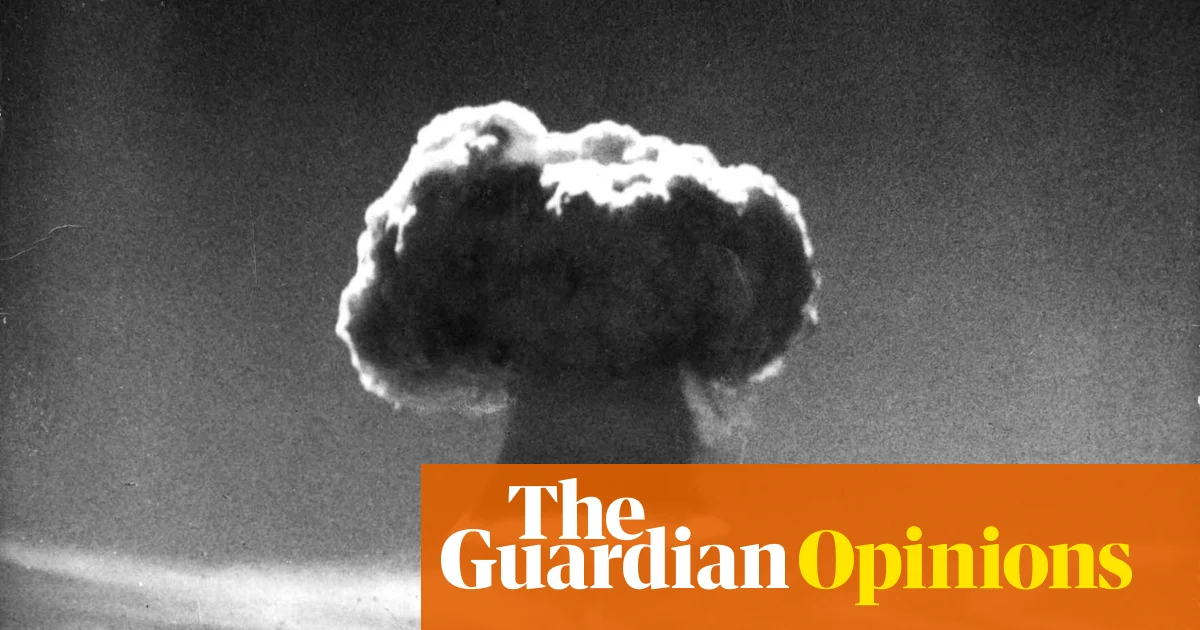
More than 20,000 armed forces personnel took part in dozens of nuclear tests and nearly 600 radiation experiments, the majority between 1952 and 1967. This was for the entirety of the cold war. The science was deemed necessary. How effective were our own bombs and, just as importantly, how well could our military function if the Soviet Union used theirs against us? Test after test was conducted in the Australian desert, at Christmas Island in the Pacific, and we also sent service personnel into the atomic clouds of allies and enemies. Yet their medical records for the period are missing.
Other nuclear nations, such as the US, France and the Soviet Union, did the same. Yet they acknowledged that it happened and created dedicated compensation schemes for nuclear test veterans who subsequently developed serious illnesses. Britain stands apart here. In Britain, the burden was placed on veterans to prove their case. But how do you claim what happened decades earlier when potentially vital records are missing or inaccessible?
In 2007, about 1,000 nuclear test veterans and families took the MoD to court seeking compensation. Pilots had been instructed to fly through mushroom clouds. Service personnel sailed and crawled through fallout. Others witnessed nuclear explosions, in some cases just two miles from ground zero. Surely our service personnel deserved better?
This is where the scandal turns ugly. To deal with the veterans’ litigation, the MoD instructed the Atomic Weapons Establishment (AWE) to collate relevant documentation into a searchable database called Merlin. More than 28,000 documents were eventually assembled, covering radiation, precautions, health monitoring and what was known about the possible biological effects of the tests. Yet the veterans’ lawyers had no practical access to this vast archive. Thanks to the extraordinary investigative journalism of Susie Boniface, historical documents began emerging referring to blood and urine testing.
When I saw the evidence, I raised it in November 2022 as chair of the defence committee. The MoD finally acknowledged that the AWE held copies of blood-test results and urine-radioactivity measurements for “a small number of individuals”. That took me straight back to my parliamentary answer four years earlier.
I challenged the then defence secretary, Ben Wallace. If this information existed within the MoD, why had ministers not been given the full picture? He agreed that withholding relevant medical information would be “deeply wrong” and undertook to investigate.
The dam was beginning to burst. Searches of Merlin for “blood” and “urine” subsequently identified 151 documents. Then another extraordinary twist. A software change meant the AWE could no longer provide a historical audit trail showing who had accessed Merlin.
after newsletter promotion
In 2024 (after the general election), the government finally ordered a discovery exercise into what blood and urine testing had taken place. Its findings, published this July, are damning. Evidence indicates that medical examinations or blood testing were required for “the majority, if not all” of Britain’s nuclear-testing period, across all three armed services. Bizarrely, the review says it found no evidence of intentional concealment.
But after seven decades of incomplete answers and ministers kept in the dark, this cannot be where the story ends. Had veterans and their doctors known the full picture decades ago, cancers and other illnesses could have been diagnosed earlier. Lives could have been saved.
Merlin is now being transferred to the National Archives. But declassifying 28,000 documents into the public domain will take time and is not the same as giving veterans answers. Many are now in their 80s and 90s.
Given the numbers of veterans involved and the decades this has been allowed to drag on, this is arguably one of Britain’s biggest scandals – alongside infected blood, Windrush and the Post Office. It demands an apology to the nation from the prime minister, an independent tribunal to establish the truth, and a compensation scheme for veterans and widows similar to that provided in the US.
These men served their country. Their country failed them. Seventy years on, veterans should not still be fighting their own government for the truth.
