


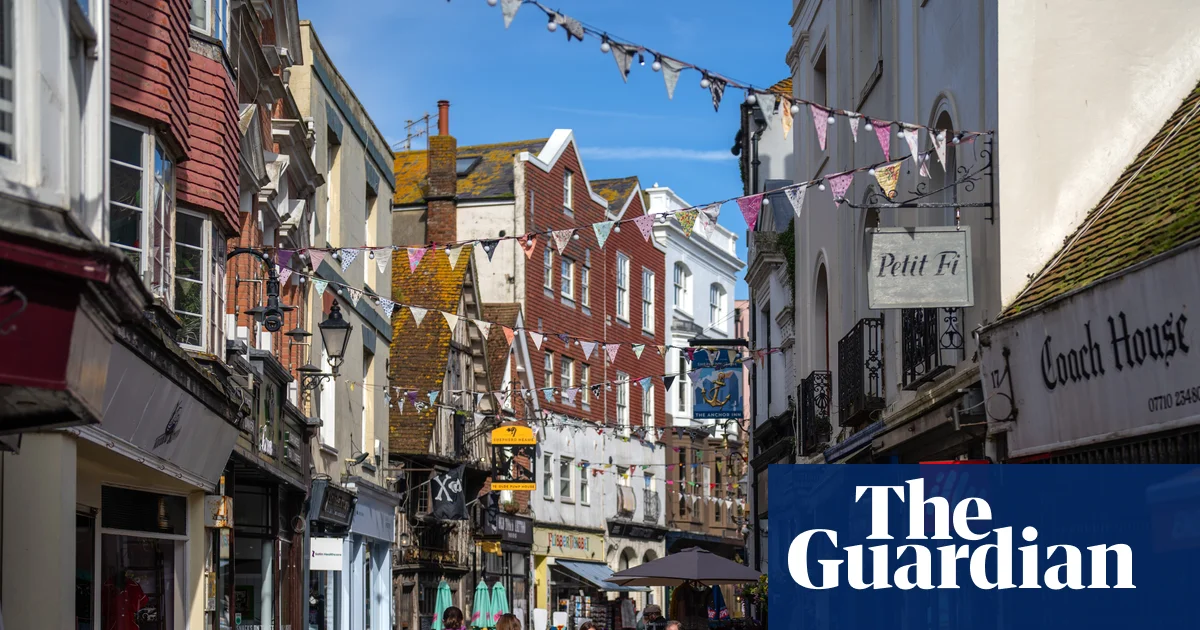
Sammy Gecsoyler’s report from Rotherham (‘It’s just vape shops, nail shops, charity shops’: can anything save the British high street?, 4 November) tells the story in its dates. One out-of-town retail park in Britain in 1981; 385 by 1996. Parkgate opened in 1987 and MPs warned that it would disembowel towns and villages. It did. Rotherham town centre is now 24% vacant, while retail park vacancy nationally sits at 4.8%. That is not a mystery. It is 40 years of planning policy.
We have since gone one step further by making home delivery cheaper than retail parks. Up to 3bn parcels a year now land on British doorsteps and not one of them passes through a town centre.
Andy Burnham’s £210m for high streets is welcome, but is a one-off against a structural problem. What a town centre needs is a reason for people to walk into it again, every week, without being told to.
So here is a proposal, given in written evidence to an inquiry by the Commons housing, communities and local government committee into revitalising high streets. Put £1 on every parcel delivered to a residential address. Charge nothing if it is collected from a shop, locker or pickup point in town. Ringfence the money by law and return it to the council area that the parcel landed in – 60% to transport and 40% to markets and high streets.
The pound is not the point; the exemption is. The cheapest way to receive a parcel would involve walking into a town centre. That would do more for Rotherham than any grant.
Dan Johnson
Co-founder, Crafty Vintage, Whalley, Lancashire
I run the Grumpy Cook, a community-focused cafe in Hastings. I’ve seen first-hand how difficult it is for independent businesses to survive, particularly in communities where disposable income is already stretched. That’s why I recently launched My Local First, a loyalty and rewards platform to bring independent businesses together. Customers earn rewards for spending locally, discover other independent businesses and have a reason to return. Businesses can participate for just £10 a month, without paying commission on their sales to the platform.
But high streets cannot thrive if the people living around them cannot afford to participate in their local economy. That’s why we’re also developing ways to connect affordable food and discreet community support.
We cannot expect councils or government grants alone to regenerate town centres. Nor can we expect individual businesses to compete with multinational corporations on their own. We need to start working collectively. My Local First won’t solve every problem facing Britain’s high streets. But it represents something I believe we’ve lost sight of: communities taking responsibility for their own local economies. Perhaps the answer isn’t simply saving our high streets. Perhaps it’s giving people a reason to believe in them again.
Barry Ashley
Hastings, East Sussex
As someone who grew up locally, I recognise the challenges in Rotherham. The new government strategy, Hope on the High Street, has some ideas – including a number of community-led schemes that we helped support at the Architectural Heritage Fund. Projects like High Street West in Sunderland – a mixed-use approach to derelict shops that delivered a cafe, music venue and workspaces. Or Valley Heritage’s development in Bacup, Lancashire, where a Grade II former bank has been split into co-working space and affordable housing.
Equally importantly, it’s about empowering these communities as they are passionate about their environment. Although there are many challenging town centres, a growing number offer a more positive future and could be replicated elsewhere.
Matthew Mckeague
CEO, Architectural Heritage Fund
Saving the British high street means accepting that retail can no longer be its primary purpose. Councils should acquire vacant or persistently underused sites and, where appropriate, replace poor-quality empty buildings with well-insulated, low-rise homes for renters and young professionals. New developments could be designed from the outset so that extra floors or modular homes can be added later as demand grows. That would cost more initially, but could reduce the disruption and expense of future expansion.
Housing alone, however, will not make a thriving neighbourhood. It should be interspersed with services and spaces that people genuinely need: walk-in health and mental health support, childcare, community and arts spaces, and other local amenities. There is a strong case for locating services closer to the communities they serve, rather than expecting people to travel elsewhere to find support. High streets should also include more and better green spaces, with trees, planting and small parks that give people somewhere pleasant to spend time, while at the same time responding to the challenge of climate change and air pollution.
Bring people back to the high street and businesses will have a reason to return too: cafes, hairdressers, independent shops and other everyday services. Councils should use planning and licensing powers carefully to encourage a balanced mix of businesses and avoid excessive concentrations of premises that can undermine the health and character of an area. The high street will not be saved by restoring the past. Its future could lie in becoming a place to live, meet, access services and build community, with retail as one part of a much broader purpose.
Helen Roberts
Sheffield
