


For 80 years, the United States styled itself as a defender of human rights and freedom on the global stage. While its record was never pure, the language of values cut across Republican and Democratic administrations, lending credibility and distinctiveness to Washington’s global leadership. Even routine charges of hypocrisy underscored that there were certain principles that Washington purported to stand for, though they might too often be honored in the breach.
Of the many pillars of U.S. foreign policy that President Donald Trump’s administration has sent tumbling down, values-based leadership may be among the toughest to erect anew. That’s because it is premised on firm ideals and commitments. While U.S. partners have come to expect a certain amount of wavering, fundamental betrayals are hard to overcome. By the end of Trump’s second term—12 years after he first came to power—younger generations will have little lived memory of values-based U.S. leadership. Already, when surveyed, people under 35 in traditional U.S. allied countries are especially likely to say U.S. democracy has never been a model worth following. After Trump, observers will be primed to view U.S. values as empty.
For 80 years, the United States styled itself as a defender of human rights and freedom on the global stage. While its record was never pure, the language of values cut across Republican and Democratic administrations, lending credibility and distinctiveness to Washington’s global leadership. Even routine charges of hypocrisy underscored that there were certain principles that Washington purported to stand for, though they might too often be honored in the breach.
Of the many pillars of U.S. foreign policy that President Donald Trump’s administration has sent tumbling down, values-based leadership may be among the toughest to erect anew. That’s because it is premised on firm ideals and commitments. While U.S. partners have come to expect a certain amount of wavering, fundamental betrayals are hard to overcome. By the end of Trump’s second term—12 years after he first came to power—younger generations will have little lived memory of values-based U.S. leadership. Already, when surveyed, people under 35 in traditional U.S. allied countries are especially likely to say U.S. democracy has never been a model worth following. After Trump, observers will be primed to view U.S. values as empty.
Future U.S. administrations will have to build on this cracked foundation. There will be no return to the era when the United States could plausibly cast itself as a standard-bearer for democracy and human rights. But Washington can still painstakingly earn back credibility by demonstrating sincerity, engaging partners, and delivering on commitments. Perhaps the best place to start is by rededicating the country to what it has long been known for: civic pluralism, including respect for ethnic and religious differences. By turning pluralism into a practical foreign-policy agenda, Washington can reestablish the standing it needs to lead again on democracy and human rights.
The notion that values should guide U.S. foreign policy goes back at least as far as Woodrow Wilson’s presidency. It ran through Franklin D. Roosevelt’s and Harry Truman’s efforts in establishing the United Nations to Jimmy Carter’s elevation of human rights as a bureaucratic and policy cornerstone to Ronald Reagan’s invocation of freedom as a Cold War rallying cry. Over the decades, Washington built an expansive global democracy and rights infrastructure, encompassing the U.S. Agency for International Development (USAID) and myriad State Department offices and emissaries focused on religious freedom, LGBTQ+ rights, international justice, and more.
By the early years of the 21st century, the so-called war on terrorism compromised Washington’s already checkered record on rights. As geopolitical competition intensified, values increasingly took a back seat in relations with China, Saudi Arabia, Egypt, and other countries. That trend accelerated when Trump returned for his second term in 2024.
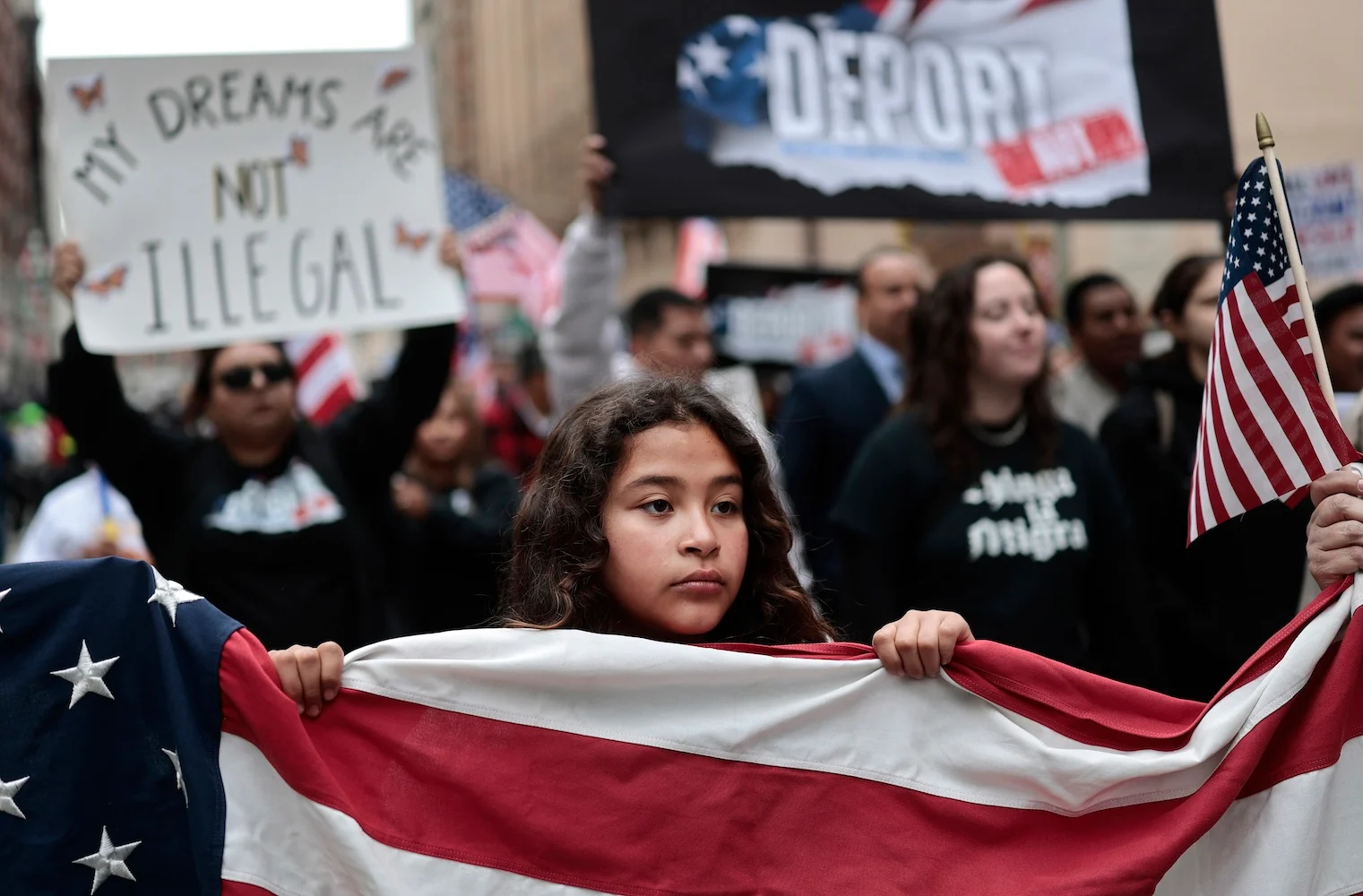
Since reentering office, Trump has torched much of the U.S. infrastructure on rights and democracy. He demolished USAID and retracted billions of dollars in U.S. funding and commitments for global rights and democracy protections, undermining decades of policy and programs worldwide that had depended on Washington’s support. Trump’s flouting of human rights norms—including through lawless strikes on alleged Caribbean drug boats, extrajudicial immigration detention and deportation, and attacks on the International Criminal Court—has evinced contempt toward a global system that the United States established less than a century before.
Now what? In many areas—democracy, international justice, anti-corruption, and digital rights, among others—it will be hard for the United States to assert strong global influence, at least for a while. Some of these issues touch domestic tripwires in the U.S. Congress, potentially sapping political capital and funding prospects. If the United States continues to face a sharply divided government, for instance, congressional support for LGBTQ+ advocacy and global reproductive rights may lag. Yet it will be vital for a new U.S. administration to assert some measure of leadership on values that contrast with Trump’s “America First” transactionalism.
Pluralism has the potential to revive values-centric U.S. leadership. The essence of civic pluralism is the idea that people with different religions, origins, convictions, cultures, and ways of life can belong equally to a shared community, respect one another’s differences, and be governed under common rules. A step beyond mere “tolerance,” pluralism demands institutions and protections that prevent any single religious, ethnic, ideological, or cultural group from using the state to subordinate others. It embodies the U.S. motto “e pluribus unum,” or “out of many, one.”
The philosophy of pluralism is more relevant than ever as the world grapples with mass migration, rapid demographic and social change, and escalating episodes of religious harassment. Countries urgently need models for societies that are hospitable to varied cultural, national, racial, and religious backgrounds as they seek to restore faith in the ability of politics to reconcile the dueling pressures of difference and homogenization, building societies that encompass both rather than being engulfed by either.
Washington is uniquely well positioned to catalyze progress in this area. Faith in pluralism is fundamental to the United States, a nation of immigrants that was founded on freedom of religion and conscience. And compared with Washington’s main global rivals, pluralism is a distinctively U.S. ethic. Both Russia and China crack down on religious and ethnic minorities, pushing conformity and a single dominant culture that buttress autocratic control.
The United States can elevate pluralism by promoting it at home and abroad. On the domestic front, this can take many forms. As alarm has risen over worsening polarization, efforts have intensified to build healthy civic culture and foster dialogue across different communities. Philanthropies, universities, and local and state governments are currently leading interventions to bring together diverse groups, and research shows that at least some of these have helped redress social divisions.
International examples include government-sponsored “Harmony Circles” in Singapore and the Council of Europe’s push to cultivate multiculturalism at the city level. In recent years, Canada has significantly expanded its use of law and public policy to protect vulnerable communities, including by creating a new security program for religious and cultural institutions at risk of hate-motivated violence. In 2026, Canada also enacted stronger hate-crime and anti-intimidation protections. Sharing such strategies across borders can reinforce these efforts.
In pursuing this agenda on the global stage, Washington can draw on past U.S. lessons dating back to the first Obama administration. In the mid-2000s, U.N. member states were sharply divided over a debate on the “defamation of religion.” Led by the Organization of the Islamic Conference (OIC), now known as the Organization of Islamic Cooperation, a majority of nations supported adopting international instruments that would ban insults to religion. The agenda was spurred by the Danish newspaper Jyllands-Posten’s publication in 2005 of a series of cartoons lampooning the Prophet Muhammad. The United States and its allies in Europe and elsewhere opposed the prohibitions on the grounds that they would infringe on free expression, legitimizing censorship and blasphemy laws. These bitter disagreements continued for years.
In 2010, the United States changed its approach. U.S. diplomats approached Pakistan, then the lead OIC member on the defamation resolution, and suggested collaboration on a global agenda to reduce religious intolerance, offering a tangible substitute for the proposed defamation ban. Their solution sought to prioritize the protection of members of religious communities rather than religions themselves. It spelled out eight concrete measures to cultivate pluralism, which included training officials in outreach to religious communities, fostering intergroup dialogue, and tracking and prosecuting hate crimes.
After months of negotiation, the Human Rights Council adopted the proposal in March 2011. The resolution launched a regular cadence of high-level meetings, initially chaired by U.S. Secretary of State Hillary Clinton and the OIC chair.
In the ensuing 15 years, the compromise has held, reinforced by national reports on the resolution’s implementation and global meetings to review progress, convened under an umbrella designated the “Istanbul Process.” This process has helped turn the resolution from a diplomatic compromise into a lasting forum for practical cooperation, leading to international models for, among other measures, specialized police training to recognize religiously motivated hate crimes and partnerships between law enforcement and community organizations that make victims more willing to report abuse. Even a fraught debate after a series of Quran burning incidents in Europe in 2023 did not derail the consensus.
Despite its success, the Istanbul Process is ripe for invigoration, as its meetings and reports have become less frequent in recent years. Yet the groundwork of an accepted global mandate, an established U.S.-OIC partnership, and a catalogue of national practices would all give a new U.S. administration a lot to work with. In the future, Washington could collaborate with its fellow conveners—Pakistan, Turkey, and the United Kingdom—to reinstate the high-level review gathering as an annual event, support countries on implementation, and find new ways to reinforce pluralism in the digital era.
The promotion of pluralism as enshrined in this framework could avoid some of the obvious pitfalls of any U.S. human rights agenda in the post-Trump era, when international partners will be wary of U.S. overreach. The agenda dovetails with universal human rights principles without being too prescriptive. It does not involve, for example, promoting electoral rules, constitutional structures, or cultural norms in other countries.
Still, any future administration must design a civic pluralism agenda carefully. Respect for racial and religious differences does not mean a free-for-all. The Istanbul framework is centered on protecting rights for people both as members of religious groups vis-à-vis the state and as individuals within their own communities. This does not allow for child marriage, the subordination of women, the persecution of LGBTQ+ individuals, and other forms of bigotry.
The elevation of civic pluralism would bring a series of other benefits to the United States. It would vest Washington in a broadly supported multilateral effort, turning back toward the U.N. system that Trump has often spurned. It would help it fortify frayed relationships with Muslim nations and the global south and provide a way to address the scourges of both Islamophobia and antisemitism as forms of bigotry rather than geopolitical side effects. It would also reinforce the United States’ dedication to its own identity as a pluralistic society, rebutting domestic political appeals to an ethnonationalism that is hostile to minorities and dissenters.
The Trump administration will cast a long shadow over the United States’ reputation, one that will be overcome only gradually and deliberately through steps that demonstrate that the country is determined to stand for something. U.S. values-based leadership should begin again by championing the contested principle that increasingly diverse societies must find ways for people who disagree profoundly to remain equal members of a shared political community. Civic pluralism offers an entry point to repair relationships, restore credibility, and demonstrate Washington’s readiness to help the world tackle common challenges, paving the way for the broader promotion of human rights and democracy across the globe.
