


Data center developers had a rough election, losing 40 of 41 ballot measures nationwide.
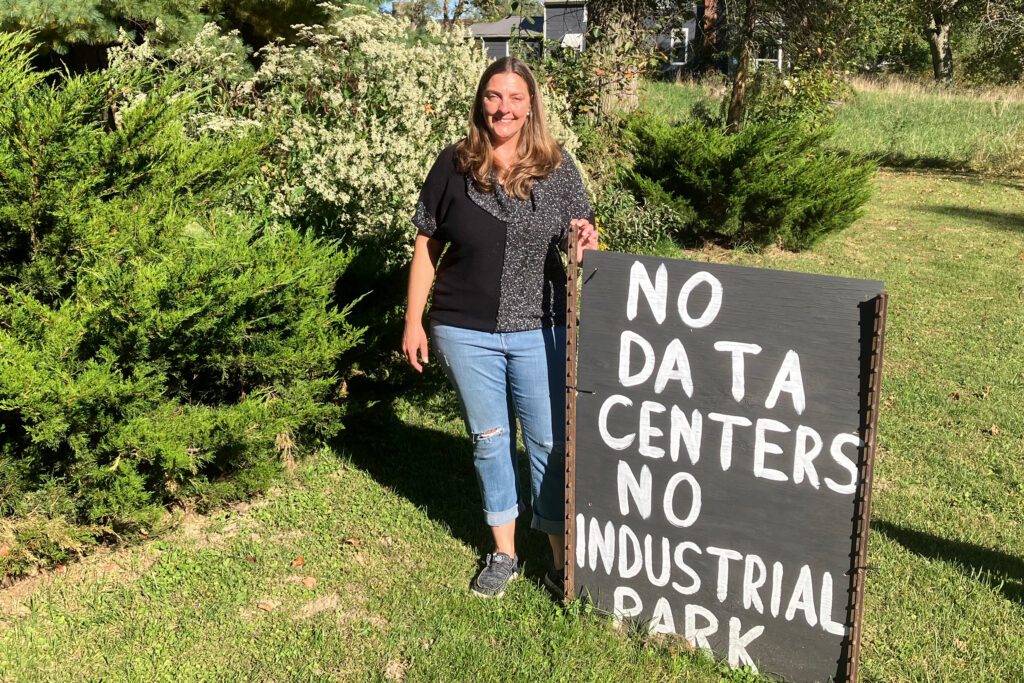
The volunteers behind one of those measures celebrated this week at Big Walnut Grill in Sunbury, Ohio, a suburb of Columbus. These were the 20 or so people who gathered signatures, delivered yard signs and knocked on doors to support a referendum to ban large data centers within city limits. They won 79 percent to 21 percent.
The campaign taught them about the power of community organizing, said Alicia Doty, one of the leaders. She lives near the proposed Amazon Web Services data center that inspired the ballot measure.
“We are much stronger together,” she said, in an interview later that evening.
Doty and her neighbors won partly because they were a movement that emerged from genuine community concerns, and if I were a data center developer, I’d be chomping on antacids right now. It is difficult to see how the data center industry—including some of the largest companies in the world—can shake off rejection in so many of the best locations for construction.
Data center opponents are apprehensive about the scale of these projects, their potential emissions and their demands for electricity and water, which could drive up costs and strain supplies for other users. Fears of artificial intelligence also play a role, since the largest data centers provide the computing power for AI systems.
It helped, Doty said, that the people campaigning for data centers hurt their own cause. The most visible local campaign against the referendum was from NetChoice, a trade group whose members include Amazon. NetChoice canvassers and printed materials sought to discredit the ballot measure as funded by “extreme California special interests,” according to a door-hanger distributed in Sunbury. That message didn’t connect with voters.
Pataskala, which is 23 miles from Sunbury, also had a data center referendum. Pataskala voters rejected data centers with a 74 percent to 26 percent vote.
In at least one case, the people handing out materials opposing the ballot measure appear to have gotten their cities mixed up. One piece distributed in Sunbury said, “PATASKALA BEWARE” and then showed a cartoon wolf holding a clipboard. “There is a California wolf at our door.”
The warning about funding from California refers to a $10,000 donation to Conserve Ohio, a statewide organization opposing data centers, from PowerSwitch Action, an Oakland, Calif.-based nonprofit that supports progressive causes. The donation was the largest of $16,356 listed in Conserve Ohio’s most recent report filed with the Ohio Secretary of State.
Conserve Ohio’s average donation was $103. Excluding PowerSwitch’s contribution, the average was $40.
Conserve Ohio provides free legal advice to groups such as the one in Sunbury. I wrote about Conserve Ohio last month, including how it began with a few volunteers in rural Adams and Brown counties.
Austin Baurichter, one of several Conserve Ohio leaders, said it’s ironic that data center developers, largely based on the West Coast, such as Amazon, would criticize his group for accepting a donation from a California organization.
“We are and will continue to be grateful for any donation help we can get from anyone,” he said.
It’s a stretch to say PowerSwitch Action was funding the Sunbury campaign. Doty’s group spent about $5,000 and raised that money largely from group members, she said.
NetChoice didn’t respond to messages seeking comment.
“We appreciate the opportunity to engage with communities on the benefits that our data center investments bring,” said an Amazon spokesperson in an email. “We remain committed to setting a high bar for responsible data center development [and] continuing to engage communities early in our development process.”
Amazon also explained its approach to data centers and responses to common objections in an Oct. 2 blog post.
The Data Center Coalition, a trade group for data center companies, had this statement:
“The data center industry is committed to engaging with residents and local leaders to understand community priorities, towards ensuring that the growth of digital infrastructure meets local standards and delivers clear benefits that communities are seeking,” said Dan Diorio, executive vice president of state policy and government affairs for the Data Center Coalition.
Diorio said communities that indicate they are “closed for business and investment” may lose opportunities, costing them high-wage jobs and tax revenue.
The election was a big win for Conserve Ohio. With a tiny budget, the group has worked with data center opposition campaigns across the state, advising residents how to get measures on their local ballots.
“I was amazed,” said Nikki Gerber, a leader of Conserve Ohio, about the election results. Voters “acted like they want democracy back, and that gave me hope.”
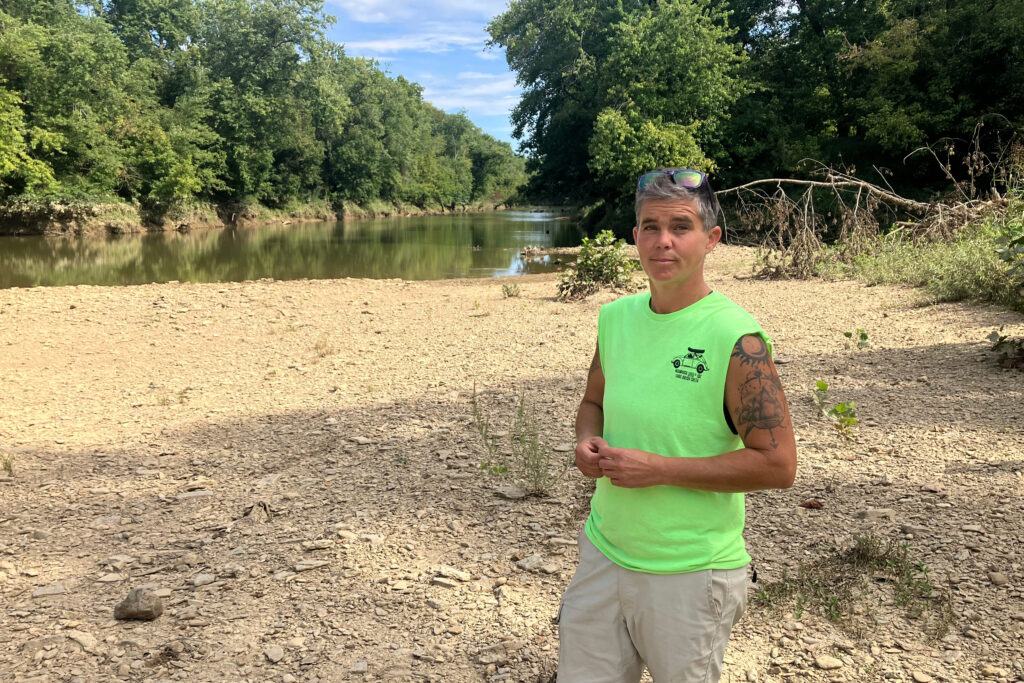
Gerber owns Moondoggie Liveree, an outdoor tourism business. She joined the push against data centers this year after Amazon Web Services proposed building a data center in her county.
Voters in Sprigg Township, which includes the project site, passed a referendum last week to establish zoning regulations that would limit data centers. But Gerber is concerned the referendum, with text revised by township officials, isn’t strong enough.
Gerber is also wary of the potential for state or local officials to find ways to push the project through, despite local opposition. I asked if she’s pleased to see Democrat Amy Acton, former director of the Ohio Department of Health, win the election for governor. Acton has said she supports a “conditional moratorium” on data center development.
“I still don’t have any faith in the government until I see the government do something for us,” Gerber said.
Nationwide, data center opponents won in 40 of the 41 local races where development was on the ballot last week, according to Ballotpedia. Ohio was the epicenter of voting on the issue, with 21 measures, followed by Illinois with four and Maine with three.
The only place data centers won was Harwood, N.D., near Fargo, which rejected a referendum that would have required additional review of proposed development, including data centers. The measure failed on a 24 percent to 76 percent vote. The regional chamber of commerce fought the referendum, saying that taxes would increase with new limits on development, as Fortune reported.
Equity analysts viewed the nationwide results, with local rejection of data centers and the election of candidates who oppose the projects, as potentially harmful to the economy.
This story is funded by readers like you.
Our nonprofit newsroom provides award-winning climate coverage free of charge and advertising. We rely on donations from readers like you to keep going. Please donate now to support our work.
Morgan Stanley, the investment bank, said the electoral success of Democrats increases the chances of restrictions on development, which could “split the country into areas that are open to new data centers and those without,” according to the Associated Press. Morgan Stanley identified Acton and Democrat Gina Hinojosa in Texas as incoming governors who could restrict data center development.
If that happens, it would be significant for the industry. Ohio and Texas are among the top U.S. markets for data center development.
Developers may hope that the backlash will lose momentum.
But Doty said the Sunbury campaign was no one-off. Organizers are prepared to challenge any effort to build a data center despite the referendum’s outcome, as well as projects in other industries that they believe are not in the community’s best interests.
“Our group is not going away,” she said.
Other stories about the energy transition to take note of this week:
Senate Advances Permitting Overhaul But Roadblocks Loom: The U.S. Senate has begun debate on the Bipartisan American Affordability and Jobs Act, or BAAJA, following a procedural vote on Monday. The 73-25 vote, with most Republicans and some Democrats on the prevailing side, indicates support for the measure, but several Democrats said the bill needs changes before they will vote for it on final passage. The debate has divided groups that are typically allies, with many environmental organizations warning that the legislation will lead to a massive buildout of natural gas power plants, as my colleague Marianne Lavelle and I report for ICN.
Why the World Is Still Running on Fossil Fuels After 30 Years of Climate Talks: The smell of fossil fuels has become a familiar part of the United Nations “Conference of the Parties” climate talks, with airplanes and buses transporting people to the talks, as my colleague Bob Berwyn reports from COP31 in Turkey. He places this year’s event in historical context, recounting decades of stalled efforts and false starts.
Cattle Could Soon Be Grazing Under Solar Panels: Christiana, Tenn., is home to the first commercial-scale solar array with cattle grazing, according to the developer, Silicon Ranch. The new project could be a significant step forward for agrivoltaics, which combines agriculture and solar power, as Julian Spector reports for Canary Media. I wrote about the potential for livestock grazing and solar last year after visiting a project in Kentucky.
Solar Power Poised for Rapid Growth, IEA Reports: Ahead of COP31, the International Energy Agency published its annual renewable energy report, forecasting the addition of 3.6 terawatts of solar power capacity by 2031, as Jonathan Touriño Jacobo reports for PV Tech. To put this in perspective, solar power growth would be the driver of global renewable electricity reaching about 45 percent market share in 2031, up from 33 percent in 2025. More than half of the growth in solar capacity would come from utility-scale projects, while the rest would come from rooftop solar and other customer-owned systems.
Inside Clean Energy is ICN’s weekly bulletin of news and analysis about the energy transition. Send news tips and questions to [email protected].
About This Story
Perhaps you noticed: This story, like all the news we publish, is free to read. That’s because Inside Climate News is a 501c3 nonprofit organization. We do not charge a subscription fee, lock our news behind a paywall, or clutter our website with ads. We make our news on climate and the environment freely available to you and anyone who wants it.
That’s not all. We also share our news for free with scores of other media organizations around the country. Many of them can’t afford to do environmental journalism of their own. We’ve built bureaus from coast to coast to report local stories, collaborate with local newsrooms and co-publish articles so that this vital work is shared as widely as possible.
Two of us launched ICN in 2007. Six years later we earned a Pulitzer Prize for National Reporting, and now we run the oldest and largest dedicated climate newsroom in the nation. We tell the story in all its complexity. We hold polluters accountable. We expose environmental injustice. We debunk misinformation. We scrutinize solutions and inspire action.
Donations from readers like you fund every aspect of what we do. If you don’t already, will you support our ongoing work, our reporting on the biggest crisis facing our planet, and help us reach even more readers in more places?
Please take a moment to make a tax-deductible donation. Every one of them makes a difference.
Thank you,

Reporter, Clean Energy
Dan Gearino covers the business and policy of renewable energy and utilities, often with an emphasis on the midwestern United States. He is the main author of ICN’s Inside Clean Energy newsletter. He came to ICN in 2018 after a nine-year tenure at The Columbus Dispatch, where he covered the business of energy. Before that, he covered politics and business in Iowa and in New Hampshire. He grew up in Warren County, Iowa, just south of Des Moines, and lives in Columbus, Ohio.
