


Toast’s repair services are free, but off-the-peg “renewed” pieces fetch higher prices than the originals to reflect their unique character.
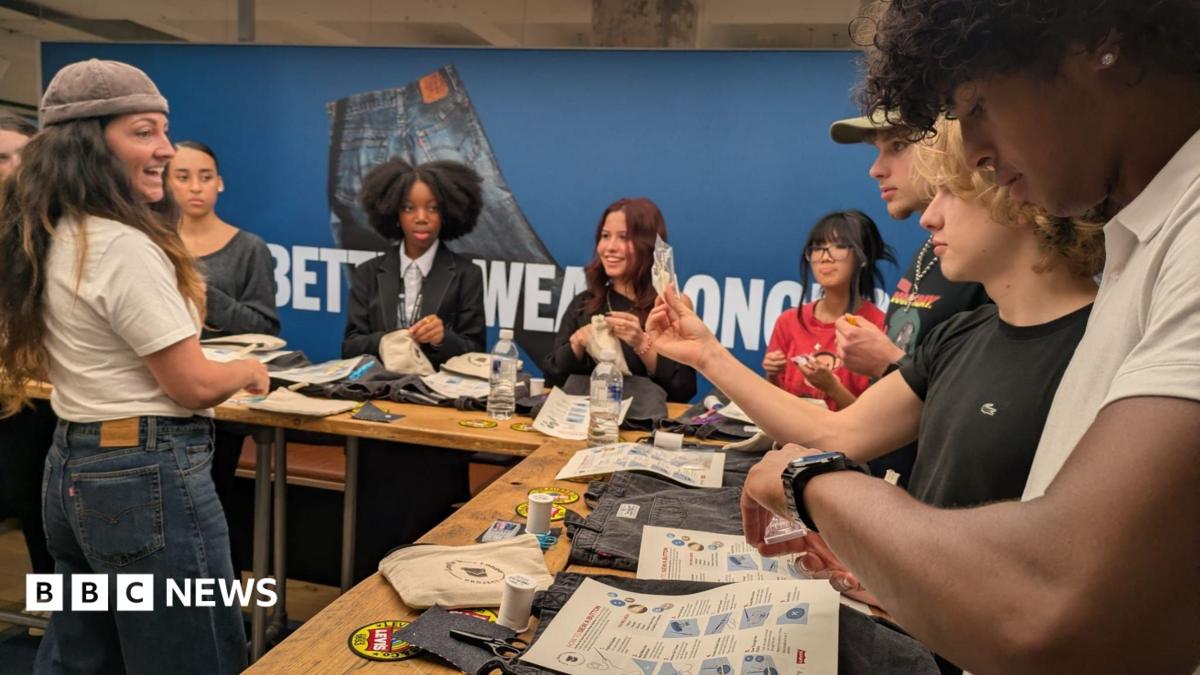
Levi’s, which boasts probably the longest tradition of being fixed up by its fans using anything from rhinestones to fringed cuffs, is rolling out a workshop programme this year.
The firm says its research shows younger customers in particular want to repair more but don’t know how.
For now, Levi’s’ workshops focus on traditional mending skills, such as sewing on a button and hemming, rather than visible mends, and at a recent launch event in London, that seemed to be what its Gen Z participants were looking for.
“I’m from East London. If you have holes in your clothes people are like ‘Ha ha! You’re poor!’,” says 16-year-old school student Bianca.
Theo, 19, says he’d rather learn how to mend without it showing.
“I would want [the jeans] to look how I originally bought them,” he says.
He has a side hustle selling clothes at car boot sales and thinks traditional repair skills would make it more lucrative.
His friend Nicholas, also 19, says most people want to look “fresh”.
“No-one wants to look like they came out of a dumpster,” he says.
Still, Paul Dillinger, Levi’s head of global design innovation, thinks more creative repairs will win them over as they pick up more skills.
“No-one has time for that perfect ‘straight from the shop’ thing. That’s not cool.
“People crave agency,” he says. “Mending is a demonstration of humanity: it’s not a mustard stain, it’s a memory of a great day in the ballpark.”
