


The countries most vulnerable to climate change are spending nearly 25 times more on repaying debt than on climate action, according to a new ActionAid report released Wednesday.
The report, “Debt Fuels the Climate Crisis: How the Finance Flows,” is “really unpacking the narrative about how the climate and debt crises are supercharging each other,” said Teresa Anderson, one of the authors and global lead on climate justice for ActionAid International, a nonprofit global federation focused on poverty eradication and social justice.
Across 65 highly climate-vulnerable countries analyzed, debt servicing is expected to consume 65 percent of government revenue in 2026. “They are only getting to keep one third of the money that they are actually raising, but that’s for climate, healthcare, education and public services,” said Anderson.
The imbalance comes as many of those countries are already struggling with both mounting debt and intensifying climate impacts. More than 93 percent of the climate-vulnerable countries are either in debt crisis or at significant risk of one, according to the report. “A lot of that debt was taken on very unfair, illegitimate terms and shouldn’t really be part of the economic picture today,” said Anderson.
Compounding the problem, much of the international funding intended to help developing countries address climate change comes in the form of loans. According to the report, two-thirds of the money labeled as climate finance by Global North countries has been provided through loans, potentially adding to countries’ existing debt burdens.
Countries in the Global South have to pay back their external debt in dollars, pounds or euros, which are stronger currencies than their own.
Countries may also pursue exports that are harmful to the environment—including fossil fuels—because they need to earn the foreign currency required to service their debts, Anderson said. In other words, fossil fuel production can become not only an energy issue but a fiscal one: exports provide the foreign currency governments need to repay creditors.
Climate disasters deepen that cycle. In the aftermath of a major flood, drought or other disaster, foreign investors may withdraw capital or become more reluctant to invest, weakening demand for the country’s currency. “When there is a decrease in demand, that makes your currency depreciate more, so you have to come up with much more local currency to pay your debts,” said Kevin Gallagher, director of the Boston University Global Development Policy Center.
Zambia offers a stark example of how that vicious cycle can play out.
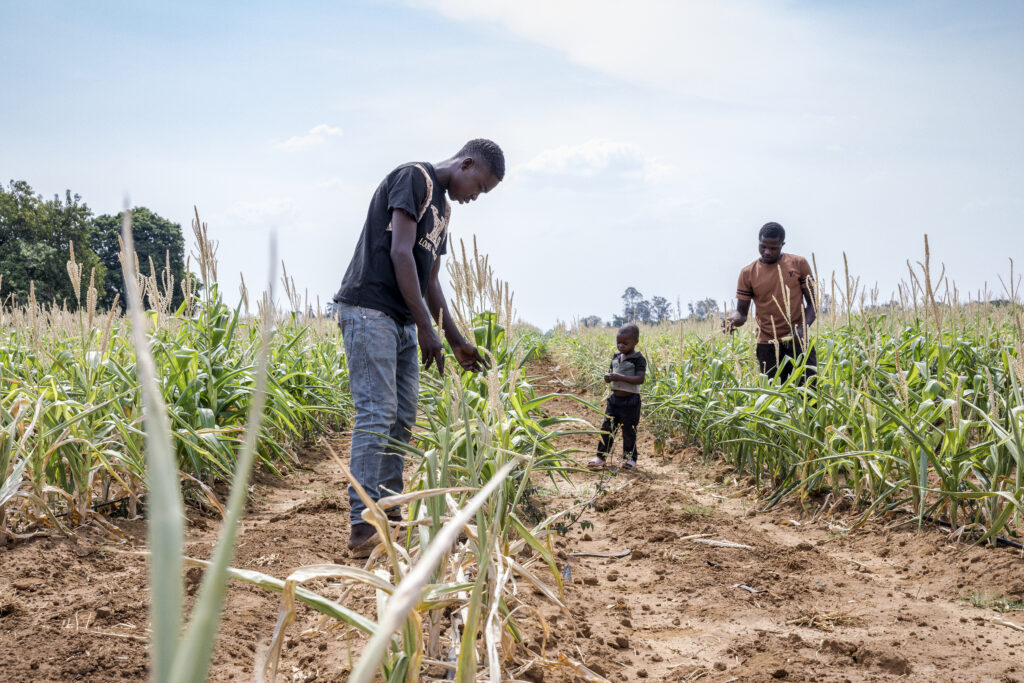
Between 2023 and 2024, an El Niño-driven drought devastated crops across the southern African country, affecting more than 9 million people and contributing to severe food and water shortages. Cereal production fell sharply, while drought-driven power shortages disrupted businesses and livelihoods.
As the crisis deepened, some families turned to increasingly desperate ways of coping. “We saw quite a number of barter exchanges happening where, for example, child marriages went up because in Zambia, when you marry a young girl, you get in return some resources,” said Michael Mwansa, ActionAid Zambia’s thematic lead on climate justice.
At the same time, Zambia has little room in its budget to prepare for the next climate shock. According to ActionAid’s analysis, the country is spending more than 60 percent of its government budget on debt repayment this year, while just 0.32 percent is budgeted for climate resilience and adaptation.
The report proposes several ways to break the cycle.
One recommendation is to cancel unpayable or unjust external debts, with the goal of ensuring that no climate-vulnerable country spends more than 10 percent of its national revenue on external debt repayments. “Is it realistic, based on current political will? No. But can you do it? Sure,” said Niranjali Amerasinghe, executive director of ActionAid USA, based in Washington, D.C.
For Zambia, Mwansa said that canceling unpayable or unjust external debts would be a real game changer. “If Zambia’s debt were to be canceled, it would have the capacity not only to respond to the current climate crisis, but also to address other social amenities,” he said. “We are talking about social protection programs, health and education.”
Gallagher cautioned that outright debt cancellation could have unintended consequences. “The majority of their debt is from multilateral development banks, such as the Asian Development Bank or the World Bank. The problem is if you just cancel that debt outright the banks will get their credit ratings downgraded and then they won’t be able to lend affordably—which might make further debt distress inevitable,” he said.
Instead, Gallagher pointed to another option, also cited in the report: renegotiating the terms of existing debt. That could include reducing the amount countries owe without eliminating the debt entirely.
The report argues that today’s crisis calls for a deep relief, exceeding the scale of the major debt-cancellation initiatives of the late 1990s and 2000s. The goal, Amerasinghe said, is to “ensure that countries are in a place where they can balance debt repayment in fair terms with what they need to spend on.”
Overall, the burden is greatest in sub-Saharan Africa, which is the region hardest hit by the cycle of climate shocks and debt distress.
Gallagher hopes that this report will be read by decision-makers in the International Monetary Fund-World Bank meeting in Bangkok next month. He is also hoping that the United Kingdom “steps back into a leadership position as they host the G20 on debt next year,” looking beyond this year’s G20 in the United States.
About This Story
Perhaps you noticed: This story, like all the news we publish, is free to read. That’s because Inside Climate News is a 501c3 nonprofit organization. We do not charge a subscription fee, lock our news behind a paywall, or clutter our website with ads. We make our news on climate and the environment freely available to you and anyone who wants it.
That’s not all. We also share our news for free with scores of other media organizations around the country. Many of them can’t afford to do environmental journalism of their own. We’ve built bureaus from coast to coast to report local stories, collaborate with local newsrooms and co-publish articles so that this vital work is shared as widely as possible.
Two of us launched ICN in 2007. Six years later we earned a Pulitzer Prize for National Reporting, and now we run the oldest and largest dedicated climate newsroom in the nation. We tell the story in all its complexity. We hold polluters accountable. We expose environmental injustice. We debunk misinformation. We scrutinize solutions and inspire action.
Donations from readers like you fund every aspect of what we do. If you don’t already, will you support our ongoing work, our reporting on the biggest crisis facing our planet, and help us reach even more readers in more places?
Please take a moment to make a tax-deductible donation. Every one of them makes a difference.
Thank you,

Fellow
Alissa de Chassey is a French journalist and a fellow at Inside Climate News. Previously, she covered science and health for Le Figaro in Paris. She is currently pursuing a master’s degree in Science, Health, and Environmental Reporting at New York University. Her work has also appeared in Nature, The Guardian, and The Transmitter.
