


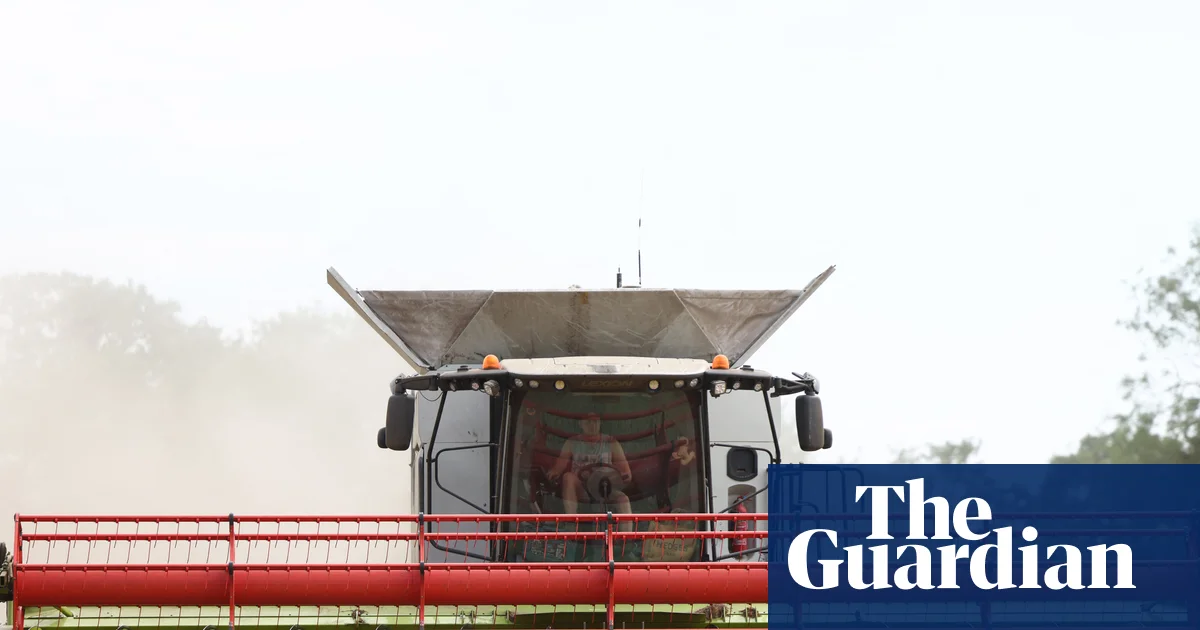
George Monbiot is right that Britain has become dangerously complacent about food security (Britain’s scorched fields mean a food crisis – and the government is ignoring the one measure that would help, 13 August). A country facing climate shocks, disrupted trade routes and increasingly volatile harvests – all of which contribute to not only the availability of food but its increased cost – cannot rely indefinitely on just-in-time supply chains and supermarket logistics.
But strategic food reserves are only part of the answer. The other underused resource is our communities themselves. Research has shown that during floods, infrastructure failures and other emergencies, local groups, charities and neighbours are often the real first responders, stepping in long before formal systems can fully mobilise. Resilience is not just about what sits in a warehouse; it is about the strength of local networks, trusted relationships and the capacity of people to act together.
That is why food security should also be seen as a question of land use and reciprocal trust. Councils, NHS bodies, universities and other public institutions hold significant areas of underused land that could support community food-growing, local skills and stronger neighbourhood connections. Brilliant organisations such as Incredible Edible have proved this model can – and does – work. This land can and should become civic infrastructure for food, nature and belonging.
The lesson of recent crises is not limited to questions about government stockpiling of food; it should also be about investing in building the long-term sustainable community capacity that helps people withstand shocks together.
Dan Farag
Director of innovation and practice, The Young Foundation
George Monbiot accuses the British government of complacency over national food security. By coincidence, on the day his article appeared, the UN publicised the recently released 86-page report Roadmap for Resilience: A UK Food Plan for 2050 by UK Research and Innovation.
This detailed document provides foresight-based assessments of the national food situation and offers a palette of solutions to the problem of food security, supported by a significant amount of research. Interestingly, it does not mention stockpiling, Monbiot’s suggested solution. Hence there seems to be a divergence of opinions on strategy.
Government bodies in the UK have been working on food security issues for decades. The silence of elected representatives is enigmatic because we don’t know whether they have shelved the problem or simply left it to civil servants and researchers to deal with. A more open debate, led by politicians, would help us assess whether the Food Plan for 2050 is wishful thinking or the answer to the problem, and whether stockpiling of food is likely to be any use.
David E Alexander
Emeritus professor of emergency planning and management, UCL
George Monbiot is right that Britain needs to take food security much more seriously, but stockpiling should be understood as part of a wider resilience strategy.
Switzerland offers a useful example. Its national economic supply system requires the private sector to maintain stocks of essential foodstuffs, amounting to several months’ supply. Crucially, it also provides for stocks of agricultural inputs, including fertilisers. This recognises that if a crisis extends from weeks into whole growing seasons, national food security depends on being able to produce the next harvest.
However, stockpiles can only go so far. A government can pre-emptively fill silos with grain and still watch its population go hungry if electricity grids collapse or fuel supplies are severed. Food security ultimately depends on the complex web of energy, transport, water, communications and other infrastructure.
Britain should therefore ask not simply how much food we should stockpile, but what capabilities we need to preserve to keep people fed when the next crisis lasts longer than expected.
Antony So
Contributor, Just in Case: Narrowing the Civil Food Resilience Gap, National Preparedness Commission
