


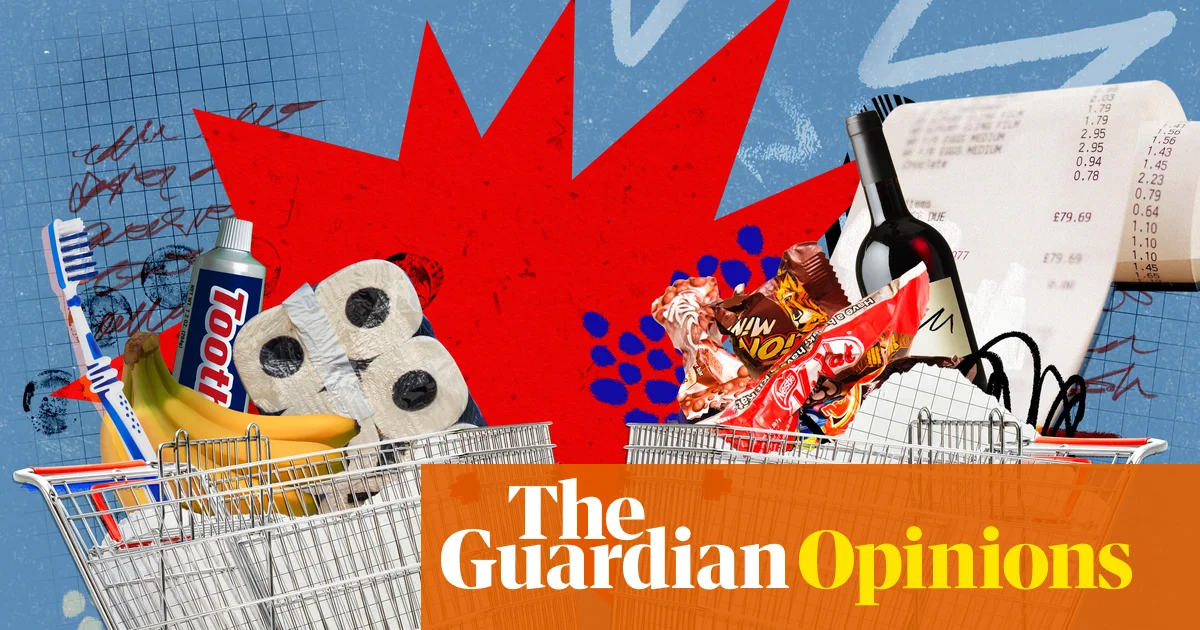
I don’t listen to Nick Ferrari on LBC very often. His antagonistic way of dealing with complex problems gets me screaming at the radio far too easily. Last month was a perfect example. Someone from the Joseph Rowntree Foundation was on discussing research showing that about 7 million people are struggling to afford basic essentials, including toothpaste and toothbrushes, because of the cost of living crisis.
This did not strike me as a controversial finding. The cost of fuel, heating, food, school, clothes – everything – has gone up, while wages and benefits have not risen enough to keep pace. Ferrari, however, latched on to the toothbrushes. I found myself listening to him talk about the price of cheap toothbrushes in pound shops and at Asda. At times, it sounded like a price-comparison advert. At other times, it sounded like lazy journalism: take a complicated issue, strip it of all context and turn it into something that will generate outrage, clicks and applause.
Had I been on the show, I would have brought both my lived experience and my academic knowledge to the argument. I would have explained why a person living in poverty might buy cheap wine instead of a cheap toothbrush.
The first thing I would have talked to Ferrari about is decision-making. How we decide what to buy, what not to buy and where to spend our money is shaped by far more than price. One of the first questions we ask, often without realising it, is whether the thing we are buying will help us now or later.
You know those people who buy 48 toilet rolls because they are on special offer? They can look ahead and think: spending more now will save me money later. Psychologists might describe this as delayed gratification. It requires the ability to resist an immediate need or reward in order to benefit in the future.
Stress makes that much harder. When people are under constant pressure, they tend to focus on the here and now. What can I fix today? What problem is shouting loudest? What can make things feel slightly better for the next few hours? A toothbrush is an investment in the future. So is going for a run. So is buying healthier food that costs more and takes longer to prepare. The benefit is delayed.
Poverty, on the other hand, creates urgent problems. The debt collector is knocking at your door for his money. The electricity is about to run out. The school is asking for payment for a trip. Your son is being bullied because he is wearing cheap trainers instead of Nikes. These things feel immediate. The possible dental problems caused by not replacing a toothbrush feel far away. That does not make the decision sensible. It makes it human.
Long-term planning becomes more difficult during periods of stress. It is also shaped by how and where you grow up. If you are raised in an environment where life feels unstable and the future feels uncertain, it can be much harder to believe that sacrificing today will bring a reward tomorrow. According to some studies, growing up poor can even affect the development of your brain – the areas associated with reward are more active than those responsible for reasonable decision-making.
That is part of the reason poverty is associated with higher levels of addiction and criminality. Not because poor people are naturally reckless or immoral, but because deprivation, stress and hopelessness shape our brains and our behaviour.
Had I been sitting opposite Ferrari, I might have asked him whether he had ever been told to change his habits. Most of us have struggled to change something about ourselves, even when we knew exactly what we were supposed to do. If making the right choice were simply a matter of knowing what was best, we would all eat the salad, go for the run, stop smoking, drink less and buy the toothbrush.
But human beings do not make decisions like machines. Our choices are influenced by stress, habit, upbringing, perceptions of self-worth, addiction, fear, exhaustion and whether we believe there is any point in planning for the future. I know this because I have made the choice not to buy toothpaste many times.
I did not do that because I was stupid or a bad person. I did it because of how I lived, how I grew up and how I felt about myself shaped what I believed was worth spending money on. My parents did not brush their teeth or ours. Looking after your teeth was not something I had been taught to value. I had such low self-worth that my own health was often the last thing on my mind.
The same was true of sanitary products. When I was living on around £35 a week benefits in the 1990s, I sometimes bought three bottles of Diamond White rather than spending 50p on tampons. You might judge me for that. But when you live in shit, when nobody seems to care about you and you have stopped caring about yourself, a few bottles can feel like an escape. It felt easier to stuff my knickers with toilet roll from the cash-in-hand job I worked and have one night away from the misery than to sit sober with the constant belief that I was failing myself and my son. At times, it felt like the choice was three bottles or dying.
after newsletter promotion
That may seem hard to understand when your life has always contained safety, options and hope. But all you have to do is ask yourself one important question – would anyone choose that type of life if they could choose another? The answer to that is simple.
I am glad I stayed alive long enough to learn that poverty is not created by the bad choices of poor people. It is created and maintained by systems that leave people without security, support or genuine options – and by powerful people who reduce those lives to lazy tropes that reinforce stereotypes about irresponsibility. You cannot call something a choice when the alternatives are not equally available.
Putting a 49p toothbrush on a supermarket shelf does not mean everyone has the money, the stability, the knowledge or the headspace to buy it. Availability is not the same as access, and access is not the same as capacity.
Of course, people should buy toothbrushes. But repeating the price of one as though it disproves poverty is not analysis. It is ignorance dressed up as common sense. Choice is far more complicated than that. I think choice is a myth for many people; it is an idea that is inflicted on poor people by people in positions of power so they don’t have to do anything to help.
-
Dr Katriona O’Sullivan is a psychologist, author and professor at Maynooth University. She is the author of the bestselling memoirs Poor and Hungry, and is a weekly columnist for the Irish Independent
-
Do you have an opinion on the issues raised in this article? If you would like to submit a response of up to 300 words by email to be considered for publication in our letters section, please click here.
