


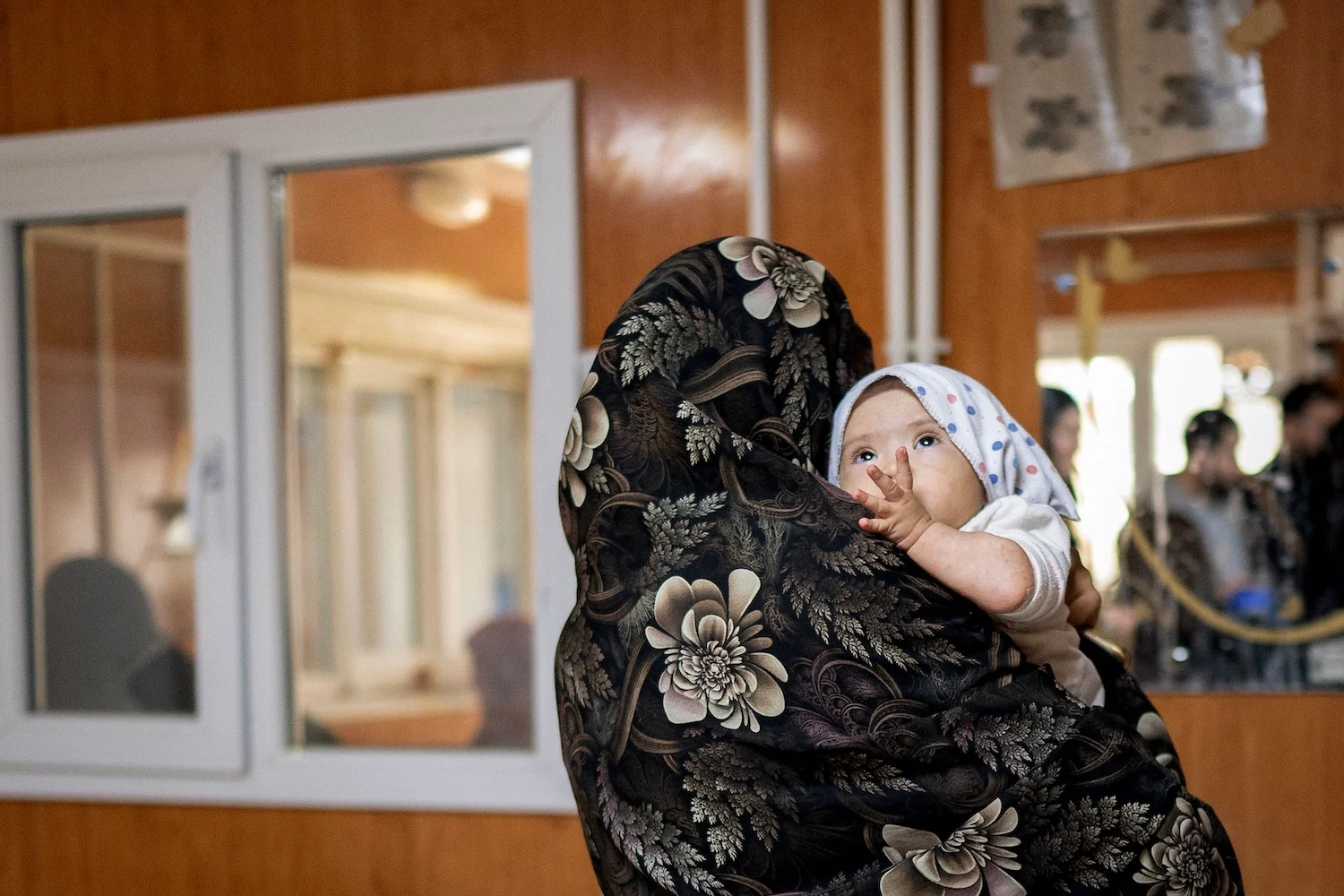
Five years ago this month, Kabul fell to the Taliban. The images from that week still define how many Americans think about Afghanistan: the crush at the airport gates, families passing infants over barbed wire, desperate men clinging to the fuselage of departing planes. It was a dramatic and high-profile failure of U.S. foreign policy. But in the following years, Washington has found new, quieter ways to fail Afghans. This time, the failure has a body count that the Trump administration has so far refused to acknowledge.
In May 2025, Secretary of State Marco Rubio dismissed concerns that the administration’s decision to gut foreign aid was killing people. No one, he said, had died because of the cuts. He went further, telling Congress, “No children are dying on my watch.” It was a remarkable claim to make, and it does not hold up under scrutiny.
Five years ago this month, Kabul fell to the Taliban. The images from that week still define how many Americans think about Afghanistan: the crush at the airport gates, families passing infants over barbed wire, desperate men clinging to the fuselage of departing planes. It was a dramatic and high-profile failure of U.S. foreign policy. But in the following years, Washington has found new, quieter ways to fail Afghans. This time, the failure has a body count that the Trump administration has so far refused to acknowledge.
In May 2025, Secretary of State Marco Rubio dismissed concerns that the administration’s decision to gut foreign aid was killing people. No one, he said, had died because of the cuts. He went further, telling Congress, “No children are dying on my watch.” It was a remarkable claim to make, and it does not hold up under scrutiny.
A six-month investigation by Refugees International tested Rubio’s claim against the reality in Afghanistan. We partnered with a network of health workers to examine the impact of the aid cuts on the ground. We surveyed 555 front-line providers across 30 of Afghanistan’s 34 provinces, nearly 70 percent of whom were practicing midwives. We also directly obtained mortality data from more than 320 hospitals and health facilities in six provinces.
Together, the survey results and facility data paint a disturbing picture of a collapsing system in which women and children are paying a particularly devastating price. Pregnant Afghan women have died because the nearest U.S.-supported health facility closed. Babies have died in the womb because mothers could not reach skilled medical care in time. Newborns and children have died without oxygen after a U.S.-funded oxygen plant stopped functioning.
In early 2025, the Trump administration terminated or froze more than $1.7 billion in assistance to the country, including roughly $736 million in humanitarian funding. This amounted to nearly half of Afghanistan’s total aid funding. By October 2025, the World Health Organization had recorded the closure or suspension of operations at more than 420 health facilities across Afghanistan, cutting off care to more than 3 million people.
Our investigation accessed public health data records on maternal and neonatal mortality from the 320 health facilities. A careful comparison of recorded deaths before the aid cuts and after revealed a sharp increase in maternal and neonatal deaths. Hospital data in Herat showed that maternal mortality had increased fivefold since 2025. In Nangarhar, neonatal mortality rose by nearly 60 percent in 2025 compared to the year before, while in Kunar, neonatal deaths due to asphyxia increased by 156 percent.
The surveys of midwives and other health workers corroborated the hospital data. Respondents documented at least 161 preventable deaths tied directly to the collapse of U.S.-funded health services: 80 mothers, 30 newborns, 14 children, and 26 adults. These are individual cases that respondents described in often excruciating detail. Two out of every five health workers surveyed reported that they personally knew someone who had died because they couldn’t reach care after the aid cuts hit. Three in five knew a patient who had suffered serious health consequences short of death. Leading public health experts who reviewed the survey results assessed that the true toll is almost certainly higher.
Front-line testimonies form midwives, doctors, and family members of those who died helped explain what lay behind these numbers. Shah Mohammad, a doctor who worked on a project in Jalalabad funded by the U.S. Agency for International Development (USAID), and other healthcare workers told us that a USAID-supported oxygen plant serving health facilities in and around Jalalabad had stopped functioning after the funding cuts. The consequences were devastating. He estimated that 3 percent to 4 percent of admitted children had since died as a direct result. Infants hospitalized with pneumonia and newborns who needed oxygen died struggling to breathe.
In Kabul, a healthcare worker described a woman in her final trimester arriving at Ahmad Shah Baba Hospital in need of emergency obstetric care. Before the cuts, its maternity unit had employed 52 midwives. Afterwards, only one or two midwives remained to manage approximately 100 births per shift. The woman had to be referred elsewhere. She died before reaching care.
In Nimroz province, a man described taking his sister, who was in labor with twins, to their nearest health center only to discover that it had closed. The family struggled to find a vehicle and then traveled for hours to reach the provincial hospital. By the time they arrived, she was critically ill, and staff shortages caused further delays in her care. She died two hours later. Her twins were stillborn.
The United States helped Afghans build much of what Trump and Rubio tore down. Over two decades, U.S. funding helped build or renovate more than 600 Afghan health facilities and trained a generation of midwives who staffed them. Washington kept that funding flowing even after the Taliban’s 2021 takeover, firewalling basic maternal and child healthcare and other forms of humanitarian aid as separate from politics. Then, last year, the Trump administration ended it.
The Trump administration has specifically defended its freeze on humanitarian aid to Afghanistan by saying that it serves to avoid legitimating the Taliban. But Rina Amiri, the former U.S. envoy for Afghan women and girls, has argued that these cuts punish Afghan women and girls far more than they punish the Taliban. Under Taliban rule, women and girls already face a system of gender apartheid. They are barred from secondary school and most employment, unable to move through public life without a male guardian.
Healthcare was one of the last sectors where Afghan women could still work. It was also one of the last where women could still be treated by providers of their own sex. When U.S. funding vanished, roughly 70 percent of the midwives we surveyed lost their jobs, thereby eliminating one of the last footholds that Afghan women had in public life. In doing so it, deepened the Taliban system of subjugation that Washington says it opposes.
These moves are part of a wider pattern of Washington abandoning the Afghans who trusted it most. The United States evacuated more than 70,000 Afghans who had worked alongside U.S. forces and diplomats, admitted them on humanitarian parole, and promised them a path to permanent status. The Trump administration has since walked that promise back, ending parole and temporary protected status for Afghans. It has gone so far as to deport Afghans to third countries and even return others into the hands of the Taliban. Cutting off the aid that was keeping Afghan women and their children alive was only the latest chapter in a longer story of national betrayal.
It is not too late to change course. Rubio could easily restore programs to train midwives, fund hospitals, and keep oxygen plants running as he has done in other crisis zones around the world. He could also allow the United Nations to use U.S. funding for relief operations in Afghanistan. Congress, in turn, could reinstate targeted humanitarian aid and health funding for Afghanistan. The State Department could also start systematically tracking mortality tied to the aid cuts.
None of this will undo the deaths already documented, but it can stop the next preventable one from happening. This is the very least that Americans owe the women and girls of Afghanistan.
