


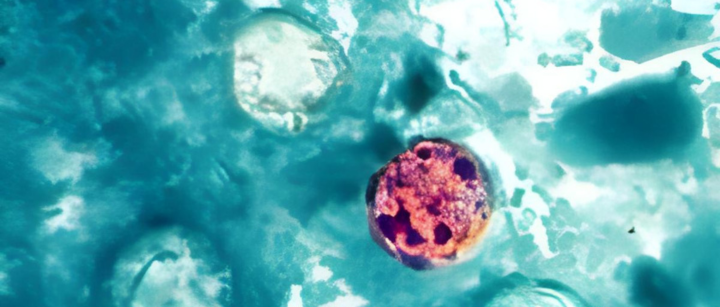
As a large outbreak of cyclospora has ravaged the Midwest, Democrats have frequently pinned blame on the Trump administration for terminating a monitoring program for the parasite. But the surveillance that ended is different from the system used to detect outbreaks.
The change to the program, called FoodNet, is unlikely to have played much of a direct role in the current outbreak, several food safety experts told us. Other staffing and funding cuts, however, likely have slowed or negatively affected the government’s response, experts say. And some pointed out that the reduction in FoodNet monitoring hinders scientists’ broader understanding of cyclospora infection in the U.S.
Since May, there has been a record number of cases of cyclosporiasis, a water- and foodborne intestinal illness caused by the cyclospora parasite, particularly in the Midwest. The Food and Drug Administration is currently investigating multiple outbreaks. While the disease is rarely life-threatening, it can lead to explosive diarrhea that can last for weeks if not treated with antibiotics.
In some states, cyclosporiasis cases are not higher than normal for this time of year, but in others, the caseload is unprecedented. As of July 20, there have been 4,173 laboratory-confirmed, domestically acquired cases of the disease across 41 states, with more than 7,400 other cases pending confirmation, according to the Centers for Disease Control and Prevention.
The federal tally has significantly lagged state reporting. Michigan alone has reported 8,176 cases and 160 hospitalizations as of July 24. The state typically records just 40 to 50 cases per year, according to the state’s health department.
The large Midwestern cluster has been linked to iceberg lettuce grown in Mexico and served at Taco Bell locations in Indiana, Illinois, Kentucky, Michigan, Ohio, Oklahoma, Pennsylvania and West Virginia. The supplier, Taylor Farms, has voluntarily recalled more of its iceberg lettuce products in 27 states.
Although a Food and Drug Administration test of a non-recalled lettuce sample from the company produced a false positive, that doesn’t change the “overwhelming epidemiological data supporting the current voluntary recall,” the agency has said.
Earlier this month, several news organizations drew attention to a July 2025 change made to the government’s Foodborne Diseases Active Surveillance Network, or FoodNet, to no longer require reporting from its 10 state partners on cyclospora or five other pathogens. Some Democrats have claimed a link between the change to FoodNet and the latest outbreak. But the 10 states in which FoodNet operates don’t include those in the Midwest experiencing the large cluster of cases.
“RFK Jr. cut parasite monitoring at the CDC. Now, Michiganders across the state are getting sick. The connection is clear,” Rep. Haley Stevens, a Democrat who serves the northwest suburbs of Detroit, wrote in a July 13 X post.
“RFK’s decision to stop monitoring cyclosporiasis has endangered Michigan families and allowed a parasite to spread across the country,” she wrote in another post two days later.
“RFK Jr. made Cyclospora tracking optional, gutting a CDC program used to detect outbreaks. Now cyclosporiasis has hit 31 states,” Democratic Sen. Chris Coons of Delaware similarly wrote on July 15. “That’s what happens when you dismantle the systems designed to keep us safe.”
The same day, Democratic Sen. Angela Alsobrooks of Maryland made a similar suggestion. “The CDC tracked Cyclospora for 28 years. RFK Jr. made that surveillance optional,” she wrote. “Now thousands of Americans are sick and we don’t know where the outbreak began.”
Several other Democrats have pointed to the same program in the wake of the outbreak news, although they have not always made concrete claims connecting the two.
FoodNet’s Function
Several food safety experts we interviewed told us that the purpose of FoodNet is misunderstood and there isn’t much of a direct link between the decision to narrow FoodNet and the current outbreak.
“FoodNet was established to provide trend analysis and allow public health officials to estimate the burden of foodborne illnesses. It was never intended to detect and investigate outbreaks,” Craig Hedberg, a professor of environmental health sciences at the University of Minnesota and co-director of the Minnesota Integrated Food Safety Center of Excellence, told us in an email.
FoodNet is unique in that it actively collects information about lab-confirmed infections, rather than relying on passive reporting about illnesses. It also conducts surveys to better estimate how many people get sick from food, since only a fraction of cases are confirmed and reported to health departments. But it covers only 16% of the population.
“Because it operates in all or parts of 10 states, relying on it to detect outbreaks would leave most of the country unprotected,” Hedberg explained. “The rest of our surveillance activities that occur in every state are intended to detect and investigate outbreaks.”
Cyclosporiasis is a nationally notifiable disease in 47 states, meaning states require their local health departments to report it to them. The states then voluntarily report cases to the CDC’s National Notifiable Diseases Surveillance System, which is the nation’s primary way of tracking outbreaks.
“FoodNet is not designed to detect outbreaks. It is designed to monitor trends,” Barbara Kowalcyk, director of George Washington University’s Institute for Food Safety and Nutrition Security, also explained in a July 16 webinar.
What will be missing without the active cyclospora tracking by FoodNet, she said, is the context “to look at how this outbreak fits within the broader trends.”
“If the outbreak happened in one of the 10 sites and they were doing active surveillance, maybe they would have picked it up sooner,” she told us, emphasizing the “maybe.” “But by and large, FoodNet isn’t designed to detect outbreaks, so it wouldn’t have played a direct role” in identifying either the outbreak or the source of contamination.
Epidemiologist Katelyn Jetelina, who writes the Your Local Epidemiologist newsletter, and the Evidence Collective, a group of scientist communicators who combat misinformation, have both said that FoodNet is not the program that should be taking the blame for the outbreak.
In a July 14 article, Semafor quoted other food safety experts as saying the impact of the change to the FoodNet program on the current outbreak is “likely limited” and not a “direct effect.”
Dr. Dan Jernigan, former director of the CDC center that covers foodborne outbreaks who resigned last summer when the agency’s director was fired, similarly told the Washington Post for a July 15 story that the change to FoodNet would have little impact on the outbreak.
“Routine outbreak investigators are the firefighters responding to a specific blaze. FoodNet is the citywide system that tracks how often fires occur and whether the overall risk is rising. Removing cyclosporiasis from FoodNet does not take the firefighters away from the current outbreak,” Jernigan said, “but it does remove part of the system that tells us how large the problem is and whether it is getting worse over time.”
A day later, in an interview with ABC News, Jernigan said “it’s a little hard to say” whether the FoodNet change is “significantly impacting” the outbreak. He said other CDC staffing and funding cuts were probably more important. “Those are things from this administration that are making it harder,” he said.
FoodNet began in 1995 and is a joint project between the CDC, FDA, the U.S. Department of Agriculture and 10 state health departments.
None of the states experiencing the major cyclospora cluster is included; the closest FoodNet locations to the original five-state outbreak are Maryland, Minnesota, Tennessee and parts of upstate New York.
Prior to last year, FoodNet tracked eight pathogens, including cyclospora starting in 1997. In July 2025, the CDC made it optional to surveil all pathogens via FoodNet except for salmonella and Shiga toxin-producing E. coli.
“Narrowing FoodNet’s reporting requirements is, in part, because the surveillance landscape has changed since the collaboration began in 1995,” the CDC’s FoodNet webpage states. “Today, other surveillance systems monitor for infection with FoodNet pathogens. Changes to the reporting requirements and associated activities allow FoodNet staff to prioritize core activities, while maintaining both the infrastructure and quality FoodNet represents.”
The page, which was last updated in April, goes on to say that FoodNet’s “active surveillance activities were not designed to detect outbreaks of foodborne illness. No recent changes have been made to how CDC and our federal, state, and local partners detect and investigate outbreaks through existing epidemiologic or laboratory systems.”
When the changes to FoodNet became public in August 2025, many food safety experts, including Kowalcyk, criticized them.
In the webinar, Kowalcyk noted that FoodNet didn’t actually have a funding cut under the Trump administration.
“The system was never funded adequately to track eight pathogens and they had to rightsize expectations for the amount of funding that they have,” she said.
She nevertheless said she thinks FoodNet is a critical part of the government’s food safety system, and that it should resume tracking all of the pathogens that were made voluntary. She also advocated increasing the CDC’s food safety budget, which she said stands at just $74 million a year, about half of which goes to states.
“That’s like a rounding error in the federal budget,” she said.
The White House has proposed a $33 million increase for the 2027 fiscal year.
When asked, the CDC directed us to a July 14 press call in which a staffer addressed the role of FoodNet.
“FoodNet is a robust program where the goal of the program is really to look at trends over time to inform our policy and prevention activities. There are only 10 participating FoodNet sites, so it doesn’t really give us the same kind of data that we have from national surveillance,” Dr. Gwen Biggerstaff, deputy director of the CDC’s division of foodborne, waterborne and environmental diseases, said. “So the data that we have for cyclosporiasis for this outbreak is the same as we’ve had for all of the other seasons. We use the same systems and the same processes.”
To support the lawmakers’ claims, spokespeople for Stevens and Coons pointed us to several instances in which news articles suggested or stated that FoodNet was or could be directly relevant to the current outbreak.
We reached out to the experts who made the clearest statements about FoodNet in those stories. Kalmia Kniel, a microbial food safety expert at the University of Delaware who studies cyclospora, told us that FoodNet’s active surveillance and data on trends are “critical,” but agreed that the changes “likely have had little direct impact to the current outbreak.” She added that FoodNet “was not designed to detect outbreaks, as other groups are involved in that.”
Dr. Jodie Guest, the senior vice chair of epidemiology at Emory University and a former CDC employee who worked on FoodNet, told us she did think changes to FoodNet played a role in the outbreak, along with “all changes to public health in the past 18 months.” Part of this was based on her understanding that FoodNet experienced a funding cut affecting staff. She said that the program “primarily” would have helped put this outbreak “in context.”
“While FoodNet is not the primary system used to detect outbreaks, reductions in funding in public health programs can still affect outbreak response,” she said. “When surveillance systems are weakened, we have less baseline data to help interpret what we are seeing in real time.”
University of South Florida environmental health microbiologist Jill Roberts told us that “outbreaks such as the Cyclospora outbreak are preventable and that the cuts to FoodNet impact these types of outbreaks.”
“FoodNet data demonstrates trends in food safety over time. The findings are not simply placed on the shelf; they are used to inform food safety policy and prevention efforts,” she told us in an email.
“We lost a year of data on Cyclospora when we already knew in 2024 that Cyclospora was increasing. We already knew Cyclospora was linked to imported foods,” she said. “This is not an issue of nobody saw this coming, we spoke out loudly against cuts to public health laboratory systems.”
Cyclospora infections have been increasing for many years, including more than 4,400 cases in 2023.
In the webinar, Hedberg said one reason why cases are likely so high in this outbreak and why they have been going up over time is the rise of newer tests that are easier to do and don’t require culturing of a pathogen, so more cases are being caught than before. But, he said, “There may well be differences that are going on with the distribution of this parasite in nature and its availability to contaminate food items.”
One thing FoodNet might have done, Kowalcyk said, is to try to better tease these influences apart, and look at how diagnostic practices for cyclospora have changed over the past year.
“We don’t know that because FoodNet’s not dealing with that anymore,” she said.
Other Changes Under Trump
Even if FoodNet is not to blame, experts have said that various changes under the Trump administration are likely playing a role in the speed and effectiveness of the government’s cyclospora response.
Joel Barratt, a molecular parasitologist at Emory University School of Medicine who previously led the CDC lab that tests samples for parasites during outbreaks, told multiple news outlets that staffing cuts to the agency have slowed investigation efforts.
“The response is being hampered by the loss of specialized staff and the loss of hands-on-deck needed to identify the source of the outbreaks,” he told CNN.
In his own unit, he told news outlets, eight staffers were cut, leaving just three. He left voluntarily in September. We reached out to Barratt for an interview but he was unavailable prior to publication.
CNN reported that the Division of Parasitic Diseases and Malaria, which included Barratt’s team, lost nearly $30 million in funding when the administration dissolved the U.S. Agency for International Development. Separate efforts prevented Barratt’s team from renewing employee contracts, the news outlet reported.
A White House spokesperson told CNN the funds did not support “domestic disease response” and that Barratt’s team wasn’t impacted by any so-called reductions in force. Experts, however, told CNN that the funding divisions are not that clean.
In the midst of the cyclospora outbreak, some Democrats have pointed to CDC staffing or other food safety funding cuts.
Sen. Amy Klobuchar of Minnesota has asked the agencies to restore funding and staffing cuts made to the USDA’s Food Safety Inspection Service, the FDA’s Food Emergency Response Network, or FERN, and the CDC’s Public Health Infrastructure Grant and Preventive Services Block Grant.
“As a currently uncontrolled large foodborne outbreak across the country continues, cuts to these programs are impacting our nation’s ability to prevent, detect, and contain foodborne illnesses and protect public health,” she wrote in a July 14 letter to the leaders of the CDC and FDA.
Hedberg said outbreak response would plausibly be affected if there were cuts to the latter two programs. “These funds provide valuable support to states for resources that can assist in outbreak investigations, even if that is not the overall intent of the funding,” he said.
“It is difficult to quantify precisely, but it is clear that the cuts to federal funding over the past year or so have reduced our capacity to respond to outbreaks like this,” Hedberg told CNBC.
As for FERN, following staffing cuts in April 2025, Reuters reported that according to an internal FDA email, the program was suspended “at least through” the end of September 2025, and that planned quality control work detecting cyclospora in spinach would be paused.
It is unclear if those tests ever resumed. The FDA did not respond to our question about FERN’s status and has also not directly answered questions about it from other reporters.
“FDA is fully equipped to investigate Cyclospora outbreaks using established epidemiologic, laboratory, and traceback tools in coordination with CDC and state partners,” HHS Press Secretary Emily Hilliard told physician and journalist Dr. Celine Gounder on July 9, who had also inquired about FERN. “Protecting the nation’s food supply remains a core FDA responsibility, and the agency has the personnel and resources to investigate foodborne illness outbreaks and act when warranted.”
Challenges of Cyclospora
Experts acknowledge that cyclospora is a difficult pathogen to trace in the best of circumstances. Not infrequently, a food or water culprit is never identified.
Some infected people don’t develop any symptoms. When they do, symptoms often take a week and sometimes two to appear. And some people may wait longer to seek medical care. Watery diarrhea is most common. Other symptoms include loss of appetite, weight loss, cramping, bloating and fatigue.
Cyclosporiasis testing isn’t always standard if someone has diarrhea; a patient or doctor may need to suspect it and specifically request a test, which is performed on stool samples. By the time someone tests positive or an investigator is able to interview a patient, that person is likely to have forgotten many of the things they ate and the food itself is likely to be long gone.
On top of that, the microscopic parasite can’t be grown in the lab, and cyclospora is more difficult than other foodborne pathogens to test for on foods and to trace genetically in outbreaks.
While cooking will kill the parasite, washing produce – even with various chemical washes – is largely ineffective. Cyclospora is also not very sensitive to chlorine.
The parasite is unlikely to spread from person to person in an outbreak because it takes one or two weeks after someone has a bowel movement to become infectious, the CDC explains, so officials are not concerned about tracking that type of spread.
Scientists don’t fully know how food or water gets contaminated with cyclospora. But humans are the parasite’s only known host, so the contamination is ultimately coming from human fecal material. An FDA document notes that produce is likely contaminated at farms or packinghouses either by sewage or contaminated water or by infected farm or produce workers.
Past cyclospora outbreaks have most commonly been tied to produce that is eaten raw, particularly raspberries, cilantro, basil, leafy greens and bagged salads.
In this year’s main cluster, one major culprit is iceberg lettuce. On July 16, the FDA announced that its investigation pointed toward iceberg lettuce sourced from Mexico and served at Taco Bell restaurants in five states.
The supplier of the lettuce, Taylor Farms, recalled all of its lettuce products sourced from central Mexico the next day. This includes chopped, shredded or bagged lettuce products sold under various brand names that had been distributed as recently as July 16. The FDA expanded its investigation of this outbreak to four more states on July 24.
In a confusing twist, the FDA said on July 19 that a non-recalled lettuce sample from the company that the agency had found to test positive for cyclospora was in fact a false positive. While the company has cast this as a mistake that would no longer implicate it — and claimed in a social media post that the FDA “apologized” to the company – agency officials said in a July 21 press call that they did not offer a formal apology and that the false positive doesn’t change the other evidence pointing to Taylor Farms.
A negative test result on a lettuce sample doesn’t negate epidemiologic and traceback investigations nor rule out prior or current contamination, Hedberg explained.
Humans are the “ultimate bioassay” for food contamination, he added. “You can’t test everything that gets eaten, but everything that gets eaten may reveal whether contamination occurred.”
Hedberg said the “bulk” of the outbreak-associated cases are “very likely” due to the recalled lettuce products, but that there are very likely other sources for the other cyclospora cases diagnosed this summer.
Even before the lettuce products were identified, he cautioned against broad recommendations to avoid fresh produce. “The vast majority of produce in the marketplace is unlikely to be contaminated, and we want to continue to encourage fresh produce as a part of a healthy diet,” he said.
Kowalcyk recommended that people who fall ill reach out to their doctors or public health departments.
“If you have symptoms, you should seek medical care,” she said, noting that cyclospora can recur and go on for weeks. “The only way to deal with that is to actually be treated.”
It’s also the only way public health officials can know about your case and count it as part of the outbreak, she said. If a physician is reluctant to test a patient, public health departments may be able to offer testing.
Editor’s note: FactCheck.org does not accept advertising. We rely on grants and individual donations from people like you. Please consider a donation. Credit card donations may be made through our “Donate” page. If you prefer to give by check, send to: FactCheck.org, Annenberg Public Policy Center, P.O. Box 58100, Philadelphia, PA 19102.
