


Nowhere was the confidence of the prime minister, Andy Burnham, shown as clearly as in his appointment of chancellor. There were weeks of speculation that this appointment was a choice between the energy secretary, Ed Miliband, and the home secretary, Shabana Mahmood, with their contrasting political economies.
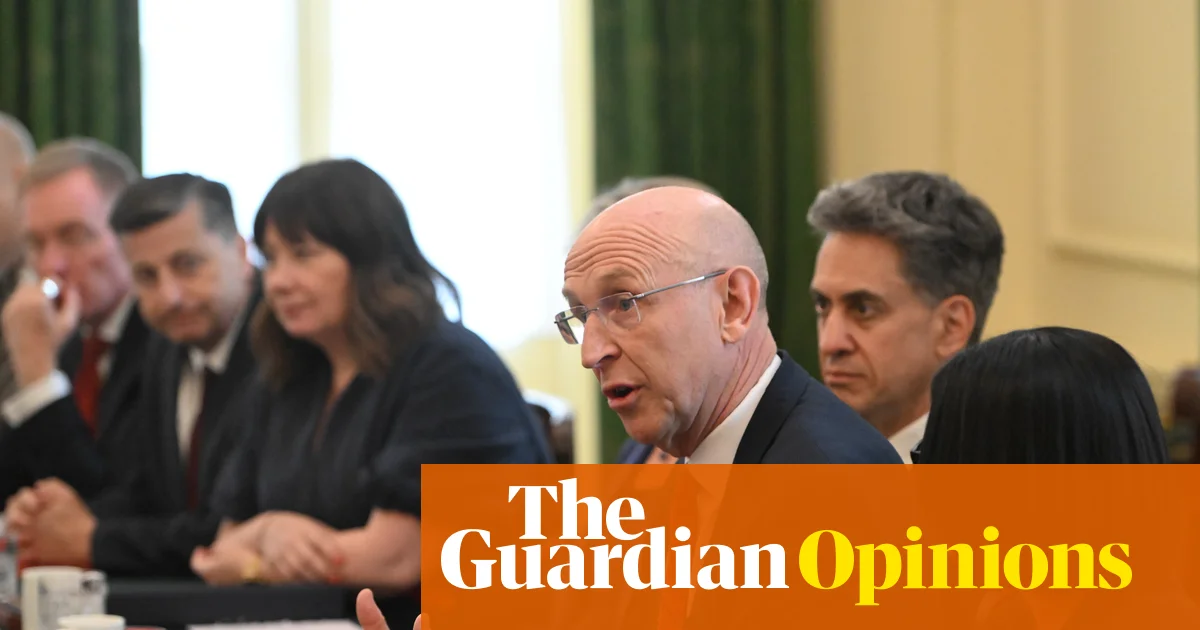
It has been a hallmark of Burnham’s politics that he and his team do not get involved in briefing wars, so it was only when former defence secretary John Healey appeared in Downing Street together with Mahmood that it was clear that the prime minister had cut the Gordian knot, reassuring the markets with a cool, calm political operator with extensive Treasury experience as chancellor. Healey’s two years in defence meant that he would know both sides of the argument when it came to one of the biggest questions of the forthcoming budget: how to meet the bold new Nato defence spending targets without derailing the social ambitions of the Burnham government.
Just last week, it was revealed that the question of getting the right balance of the competing demands of defence, social care, council housing and devolution would be deferred to a spending review next year, and that this October’s budget would be a low-key, continuity affair. That’s a good thing, because the facts about the Ministry of Defence are stark – the stridency of its claims of underfunding are only matched by its record of overspending. The National Audit Office has a series of reports detailing the failures of the MoD’s control of spending.
When I was a special adviser in the MoD during the Gordon Brown government, there was a saying that if you wanted to know what was going on in procurement you just needed to speak to BAE Systems. It was a sardonic acknowledgment of the extent of producer capture by the UK defence industries. Now, there are more elevated phrases like “sovereign capability” or references to seemingly objective measures like percentages of GDP – “3% by the next parliament and 3.5% by 2035”. But they all mean the same thing: like the Cyclops in The Odyssey, the military industrial complex is hungry.
This is one of the strongest arguments for the appointment of Wes Streeting as defence secretary. He has, it seems, tamed the NHS appetite for overspending. The Institute for Fiscal Studies reported last week that “last year the NHS saw no spending top up for frontline services from the Treasury reserve or capital budgets for the first time since 2013-14”.
Of course, geopolitics looms over the defence spending question. The godfather – in all meanings – of the Hague investment plan, which committed the US’s Nato allies to higher defence spending, was President Trump, despite his repeated threats to the territorial integrity of members of that alliance. Keir Starmer decided that a mixture of flattery in the form of a second royal visit, and subservience – embarrassedly picking up the president’s dropped papers – was the right formula. The problem is that going along with a bully just reinforces their behaviour.
The more appropriate political response is being modelled by Canada’s prime minister, Mark Carney. He sketched out a new emerging world order in a speech at Davos in January, and most Canadians support his stance since his resolute response to US trade talks and Trump’s attempted “renaming” of Lake Ontario. This led Carney to float the possibility of a deepening partnership between Canada and the European Union – an arrangement that could set a precedent for the UK to realign with the EU without rerunning the entire Brexit debate.
Political entrepreneurship on that level is already being demonstrated by Miliband, now foreign secretary, who has chosen to take the UK seat on the World Bank rather than delegating it to a junior minister. That shows an intent to shape rather than respond to the emerging international situation, and should give space for the prime minister to deal with a pressing domestic agenda.
The question that is rarely addressed in the defence debate is what kind of country we are fighting for. With his mantra of “growth in every postcode”, fixing social care, devolving power and building council houses, Burnham has laid out his programme. Simply setting out his stall has greatly increased Labour’s support. Now he has to build that better Britain – a socially democratic one in which defence spending is taken seriously but doesn’t prevent other societal needs from being fulfilled.
Of course, in politics, one of the huge advantages of having a positive vision of what you are for is that you can go negative on your opponents. Here, defence can be a huge wedge for Burnham. On the right, both the Conservative party and Reform UK were so eager to support Trump that they wanted the UK to commit to the quagmire of the Iran war. They should never be allowed to forget that they put US interests above the UK’s. On the centre-left the attack lines are easy, too. The SNP wants to be a member of an imaginary non-nuclear Nato and never address the challenge of Russian infractions into Scottish waters and airspace. Likewise, the Greens are split on whether to be in Nato and have no idea of why the UK should have defence forces.
All in all, defence is returning to the right space in UK politics. Neither an unfeasible demand on resources, nor a neglected backwater, but a positive tool for a progressive government.
