


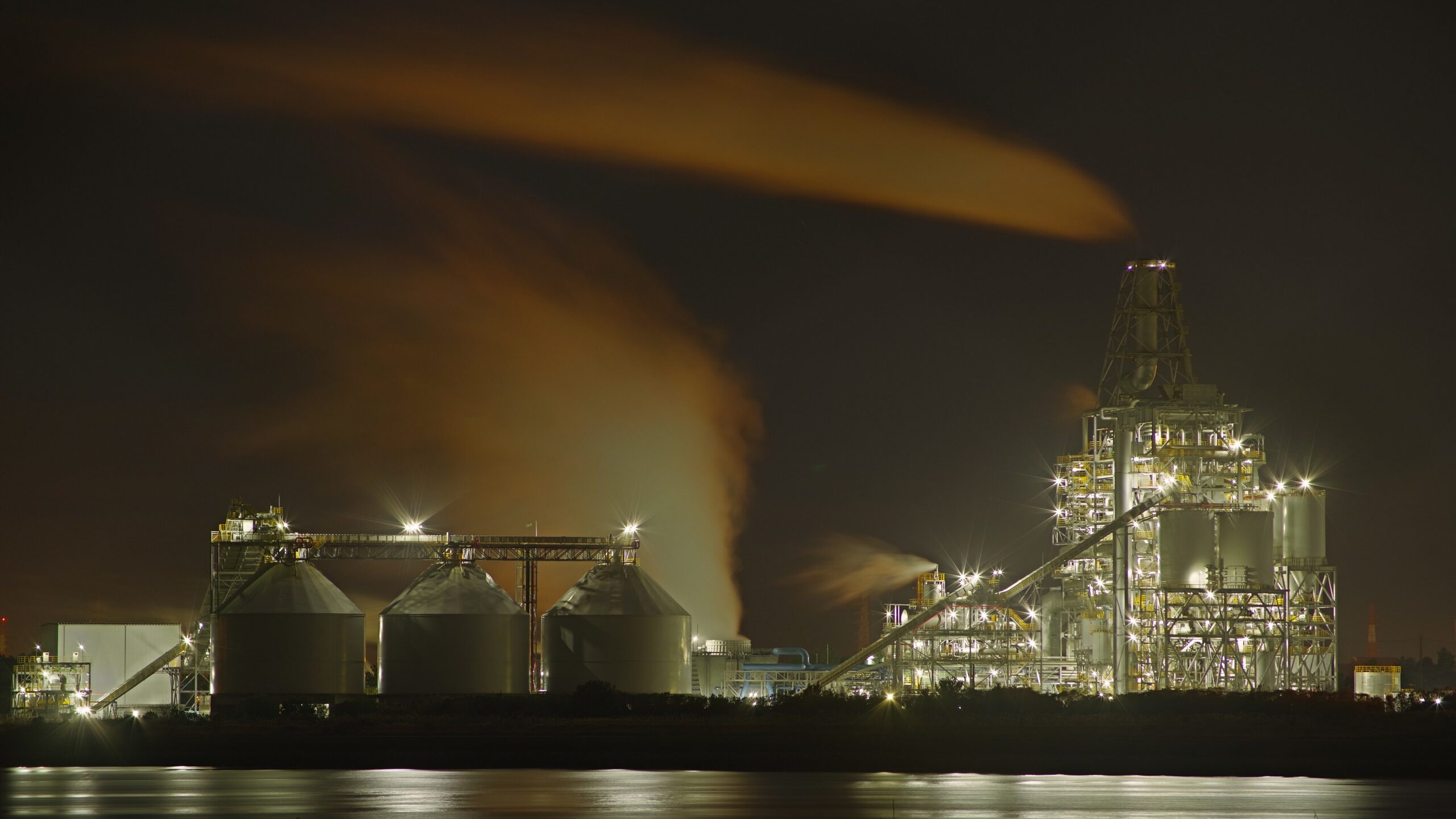
- In the past few years, there have been at least 14 fires, explosions and accidents at biomass power plants across Japan.
- Accidents, rising prices and pollution concerns have led local residents and campaigners to question the future of the country’s large biomass plants.
- Japan had expanded the use woody biomass as an alternative to coal, but operators are facing rising costs and no longer benefit from a government-backed fixed tariff to support the industry.
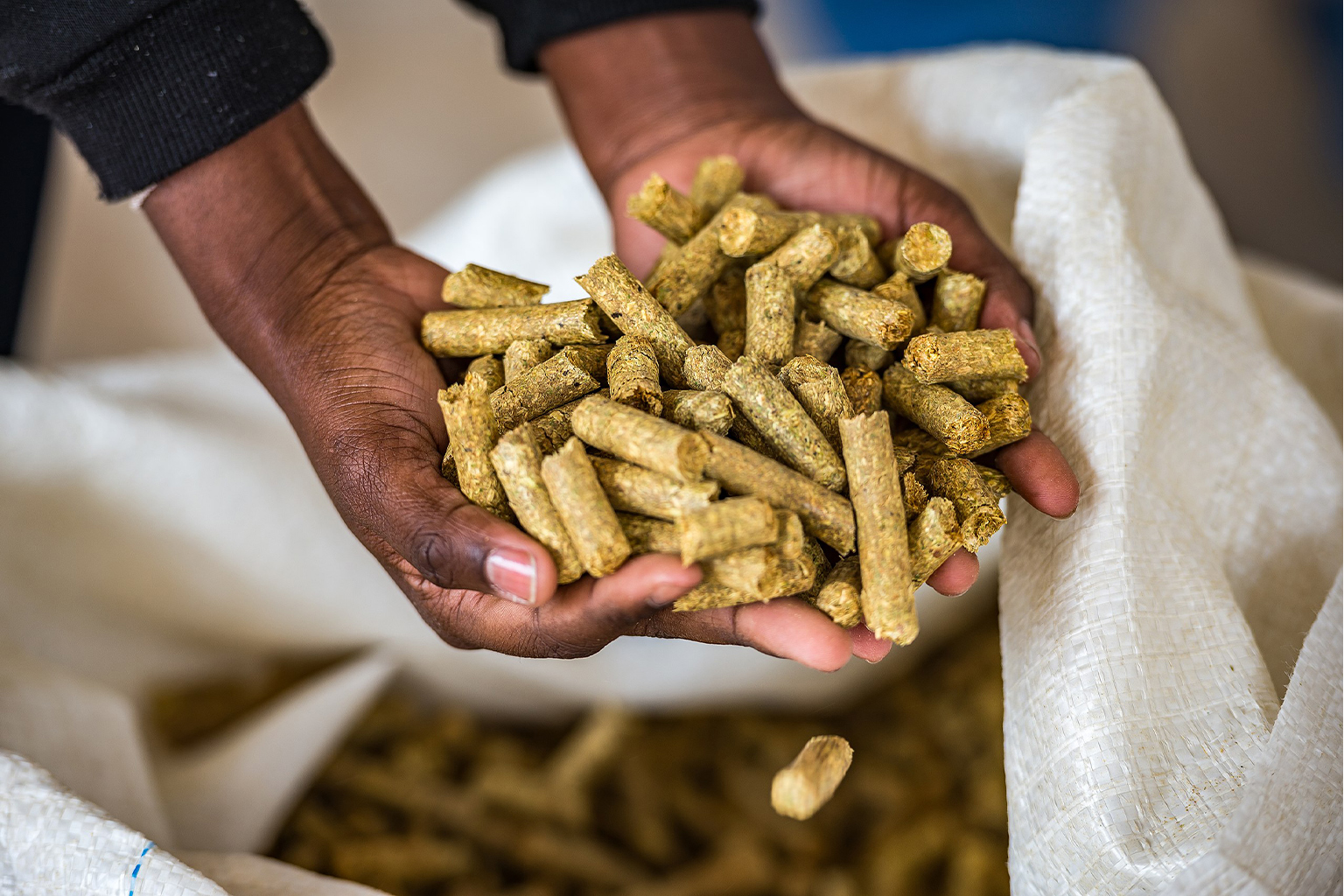
For the past decade, Japan has been expanding the use of woody biomass for power generation to replace or be mixed and burned with coal. The country is now the second-largest wood pellet consumer in the world after the U.K. But there are concerns that burning wood pellets or palm kernel shells to generate electricity might not be safe. In the past few years, there have been at least 14 fires, explosions and accidents at biomass power plants across Japan.
These incidents, combined with rising prices, pollution concerns and growing opposition are leading some to question the future of Japan’s large-scale biomass plants, an estimated 34 of which produce 3.5 gigawatts of power. For many living near the plants or pushing Japan to decarbonize, this would be welcome as accident and pollution concerns grow.
“Explosions at biomass power plants in Japan have been occurring too frequently, and despite this, regulations are being applied leniently,” An Nakane, a campaigner with Friends of the Earth Japan, told Mongabay. “The government should urge operators to formulate business plans that take into account the safety of nearby residents.”
Why Japan has so many accidents
Japan expanded the use woody biomass as an alternative to coal by including it alongside solar and wind in its clean energy feed-in-tariff program. This move came despite concerns that wood pellet production often rests on the destruction of natural forests in Southeast Asia, the U.S. and Canada.
But in the rush to expand plants, corners may have been cut, including improper construction and substandard storage and processing of wood pellets, says Roger Smith, Japan director at nonprofit Mighty Earth.
“The bulk of the cost of biomass is driven by the cost of fuel,” Smith told Mongabay. “That gives the operators a real incentive to try to do things cheaply and potentially operate power plants more cheaply. Unfortunately doing things the right, safe way can cost more money.”
Accidents have taken place at biomass plants across Japan, including at the Yonago plant in Tottori prefecture, western Japan; the Maizuru power station in Kyoto, the Sodegaura plant in Chiba, east of Tokyo; and at least four others. The most recent was a fire at the Niigata East Port biomass plant in March 2025.
While not at a biomass power plant, in May 2024, two port employees in Ishinomaki City in eastern Japan lost consciousness owing to a lack of oxygen in a cargo hold carrying palm kernel shells destined for power generation. One of the employees later died, according to reports. Decomposing biomass, possibly due to improper storage, along with a failure to monitor oxygen levels were cited as key factors.
The largest such accident took place at the Taketoyo plant in Aichi, south-central Japan, in 2024 — the third incident of this kind at the 1.07-GW plant, which opened in 2022. An explosion at the plant was so violent that people thought it might be a missile attack from North Korea, local residents told Mighty Earth. The plant was subsequently closed for several months for inspections and repairs.
“[Plant operator] JERA has not received any fines or administrative penalties resulting from the accident,” Friends of the Earth’s Nakane said. “I personally believe it should face appropriate disciplinary action.”
“If your plant has multiple accidents or explosions, that is beyond acceptable,” Smith added.
Other accidents in places like Yonago and Sodegaura have shut down plants and released dangerous dust and smoke into residential areas. Many plants are located in close proximity to residential areas, leading to increased local opposition.
After the 2023 accident at the Yonago plant, the chairman of the local neighborhood association told journalists that “we have suffered from noise at night and in the early morning … we are puzzled as to why it was built in an area with many private homes in the first place.”
“We hope that the facility will be removed in the future,” he was reported as saying.
In Taketoyo, Nakane said there have been repeated failures by JERA, the operator of the plant, to be transparent and address community concerns.
“Many local people had concerns about explosions and fires since the plant’s opening,” Nakane said, adding that JERA only held two short community sessions and limited community inputs. “JERA’s approach was unilateral, it failed to adequately address the residents’ concerns and they felt dissatisfied.”
The Taketoyo plant restarted operations in January 2025, burning only coal and not biomass, though it is planned to resume co-firing coal and biomass next year. JERA didn’t respond to Mongabay’s request for an interview, neither did plant operators Osaka Gas or Kansai Electric, nor Japan’s Biomass Power Association.
Chubu Electric Power, which operates two facilities where accidents have occurred, the Yonago plant and neighboring CEPO Handa power station, told Mongabay by email that they “deeply regret the concern and inconvenience caused to local residents” and that they “held several community briefing sessions to explain the situation directly to residents and to listen to their views and concerns.”
Another issue is transparency. According to media reports, company disclosures, and updates from Japan’s Ministry of Economy, Trade and Industry (METI), which is in charge of the electricity market, there are no public data on the cost of these incidents to companies or ratepayers. So far, METI hasn’t forced any operators to pay fines, which Nakane says she believes is due to corporate pressure.
“Regulations are being applied leniently due to a prioritization of corporate profits,” Nakane said.
METI says it has taken measures to address the issue. Its electric power safety division minister’s secretariat wrote in an email to Mongabay that “technical standards were added to the ministerial ordinance” that “address dust removal, control of ignition sources, and prevention of spontaneous ignition caused by fuel fermentation for fuel receiving, storage, and handling facilities.”
However, the ministry didn’t answer questions about why operators have not had to pay fines or provide compensation or community concerns around safety and adequate inspections and oversight.
According to Smith, making improvements has been left entirely to the companies. While the frequency of accidents has decreased since 2024, the decline is likely due to operators taking actions on their own, not because of top-down reforms or regulations, he added.
“Despite changes, there’s still, unfortunately, all the ingredients for future disasters,” Smith said.

Financial pressures
The biomass industry in Japan is heavily dependent on state support, with all plants where accidents have taken place getting support under the government’s feed-in-tariff (FiT) program, which set fixed prices for power generated from renewable energy sources to support the addition of renewable energy onto Japan’s grid.
“Our data shows that large-scale biomass projects in Japan are almost completely dependent on long-term, fixed-price subsidies,” Vanessa Levy, a senior researcher with Global Energy Monitor, told Mongabay.
Globally, woody biomass production and power generation are facing challenges owing to rising prices and growing restrictions due to climate and environmental concerns in markets such as Australia and South Korea.
The largest wood-pellet producer in the U.S., Enviva, filed for bankruptcy in 2024, and the U.K.’s largest consumer, Drax, recently saw its government subsidies cut, putting its future operation at risk.
In Japan too, financial concerns are growing as biomass power plant operators face higher costs and fixed returns and, increasingly, competition with other renewables and energy storage systems. Biomass is no longer eligible for the FiT program, and as a result, growth has stalled. According to Japan NRG, an energy think tank, there are unlikely to be any more biomass plants opening between now and 2030.
One growing concern is that higher prices for U.S. and Canadian pellets are leading Japanese buyers to source from other markets, such as Vietnam and Indonesia, possibly leading to the use of lower-quality fuel. This could increase the risk of accidents.
“One of the causes in places was a mixing of pellets with different moisture contents, which in and of itself can create disaster risks,” Smith said.
Plant operator Chubu Electric, in its response to Mongabay on cost concerns, noted that “fluctuations in fuel market conditions and foreign exchange rates are important factors in the procurement of imported biomass fuel” and that it is aiming to “limit the impact on power generation costs by combining long-term, fixed-price fuel procurement contracts with multiple suppliers and foreign exchange hedging transactions.”
What Smith, Nakane and others said they want to see is the government playing a more direct role in regulating the industry, including pellet sourcing, but also in operations and community impacts. So far, despite accidents, that isn’t happening.
“I worry that the drive to keep these plants, that are marginally operating, could lead to cutting corners and making disasters more likely,” Smith said.
For Nakane, safety concerns are just one piece of their argument that woody biomass has no space in Japan.
“The use of woody biomass fuel contributes to deforestation, greenhouse gas emissions, human rights violations in producing countries,” Nakane said. “Therefore, we believe that biomass power generation should not be promoted, not only due to safety concerns but also from environmental and social perspectives.”
Banner image: Night view of Handa biomass power plant. Image by 名古屋太郎 via Wikimedia Commons (CC BY-SA 4.0).
Biomass power grows in Japan despite new understanding of climate risks
Indonesian forests put at risk by South Korean and Japanese biomass subsidies
Cite this article
Nithin Coca (2026). Concerns grow over ‘green’ biomass power in Japan after spate of accidents. Mongabay Conservation news. DOI: https://doi.org/10.66709/news-326053

