


This story is part of an investigation conducted by an international team of journalists based at The Outlaw Ocean Project. Read the other stories here.
Xinjiang is a land of unforgiving extremes. Across its 600,000 square miles on China’s far northwest frontier, barely six inches of rain falls each year. The region’s Taklamakan Desert has buried 20 different cities over the ages and has been called by a variety of grim names. “The Land of Ruins” is one of them. “The Sea of Death” is another.
Less than 10 percent of Xinjiang has ever been fit for human habitation. Those who have eked out an existence have mostly been nomadic herdsmen, finding refuge around a modest number of oases.
But since the 1950s, Chinese authorities have reimagined Xinjiang as more than just a wild outpost or rugged strategic buffer.
The state has mounted some of the deepest drilling programs the world has ever seen and heavily engineered the Tarim River to turn hard and dry soil into farmable land. Reservoirs, diversion gates and lined canals have created a highly regulated and reliable waterway. As a result, Xinjiang now produces roughly 20 percent of the world’s cotton and is a major exporter of tomatoes, lavender and wine grapes.
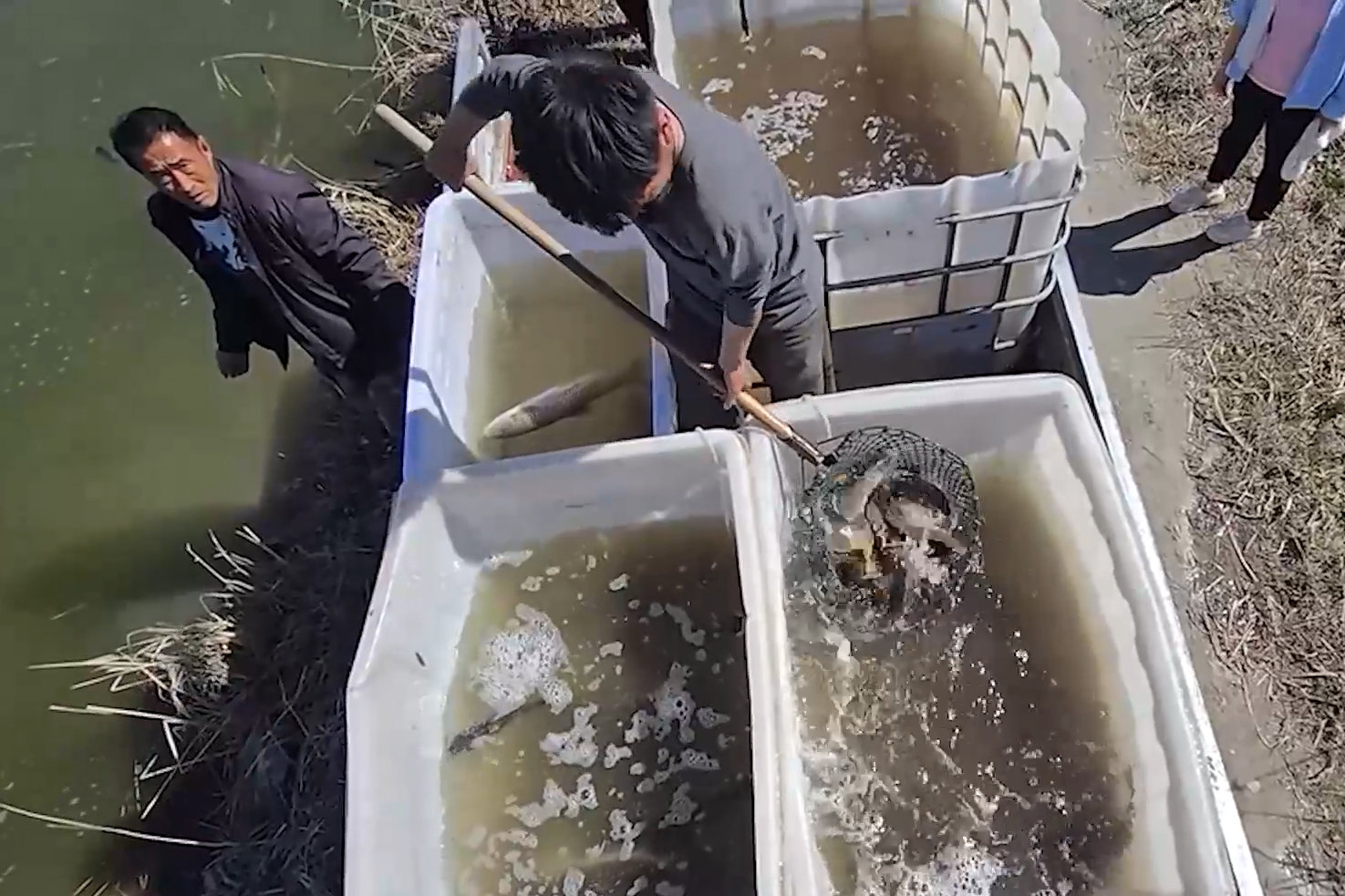
But its latest project may be even more ambitious: The Chinese are growing millions of fish in Xinjiang, a place often referred to as the most landlocked place on the planet.
Over 1,000 fish farms now dot Xinjiang, producing more than 200,000 tons of Atlantic salmon, lobster, bass, carp, crab and shrimp annually. While Chinese media calls it the “Blue Miracle,” a sweeping investigation by The Outlaw Ocean Project, a news organization in Washington, D.C., found a litany of labor abuses and environmental risks at these farms.
The reporting also mapped how Xinjiang’s state-owned paramilitary group is involved in running fish farms, and how seafood produced by forced labor is reaching the U.S., in violation of the Uyghur Forced Labor Prevention Act.
Raising Fish in the Desert
While China maintains the world’s largest fishing fleet, its own waters are deeply depleted. Throughout the 1980s and 1990s, local governments turned instead toward aquaculture, converting tidal flats and estuaries into shrimp ponds and marine cages, building hatcheries, feed mills and export infrastructure.
At first, most Chinese fish farms were concentrated along the eastern coast, particularly in Guangdong, Fujian, Zhejiang and Shandong, where sheltered bays and river deltas were rapidly transformed into aquaculture zones. By 2014, aquaculture installations dotted more than 30 percent of China’s shoreline.
Globally, over half of all seafood consumed today comes from aquaculture.
But as with many feats of human ingenuity, aquaculture is freighted with a multitude of downsides. Crowding millions of fish together produces enormous volumes of waste. In shallow coastal pens, this settles into thick sludge on the seafloor, smothering plants and animals.
A 2015 study by researchers at China’s Academy of Fishery Sciences and the Second Institute of Oceanography linked coastal aquaculture to algal blooms, nutrient depletion and the fragmentation of wetlands by disrupting tidal flows.
Indeed, an estimated 80 billion gallons of wastewater—containing feces, excess feed, dead fish and aquaculture antibiotics and sedatives—was being discharged into Chinese waters annually, according to a 2019 study by the Nanjing Institute of Environmental Sciences. Pollution degraded the Yangtze River and the Pearl River Delta, which supply freshwater to Shanghai and Hong Kong, respectively.
“While China’s fishery has made great achievements, it has also paid a great price,” the head of the fisheries authority said at a national conference in 2014, citing “unbalanced, uncoordinated and unsustainable development.”
In response, Beijing moved to restructure the aquaculture industry inland—by 2016, officials had moved roughly 300,000 coastal farming cages from coastlines to the country’s interior.
Researchers knew that Xinjiang’s Taklamakan Desert had once been entirely underwater—drilling operations regularly turned up evidence of underground aquifers and the sand and soil remain littered with ancient coral fragments.
While initial tests suggested these waters were a cruel joke—too salty to be used for farming, too bitter to be consumed by humans—Chinese scientists eventually realized they could be adjusted to mimic seawater.
In 2019, the Ministry of Agriculture and Rural Affairs issued new guidance on the “green development of aquaculture,” urging provinces to “actively develop” fish farming in places such as Xinjiang.
Bolstering Food Security
On July 25, 2021, at an outdoor theater located in northern Xinjiang, 50 villagers gathered. Officials with the Xinjiang Tianyun Organic Agriculture Co. were there to hand out cash—as much as $25,000 per village (or about $200 per household).
The company is the region’s poster child for aquaculture, owning at least half a dozen enterprises, including a breeding center, a processing plant, a cold-storage facility and multiple salmon ponds. The company sells roughly $30 million worth of seafood annually, producing more than 6,000 tons of fish a year and roughly 40 percent of China’s domestically produced salmon.
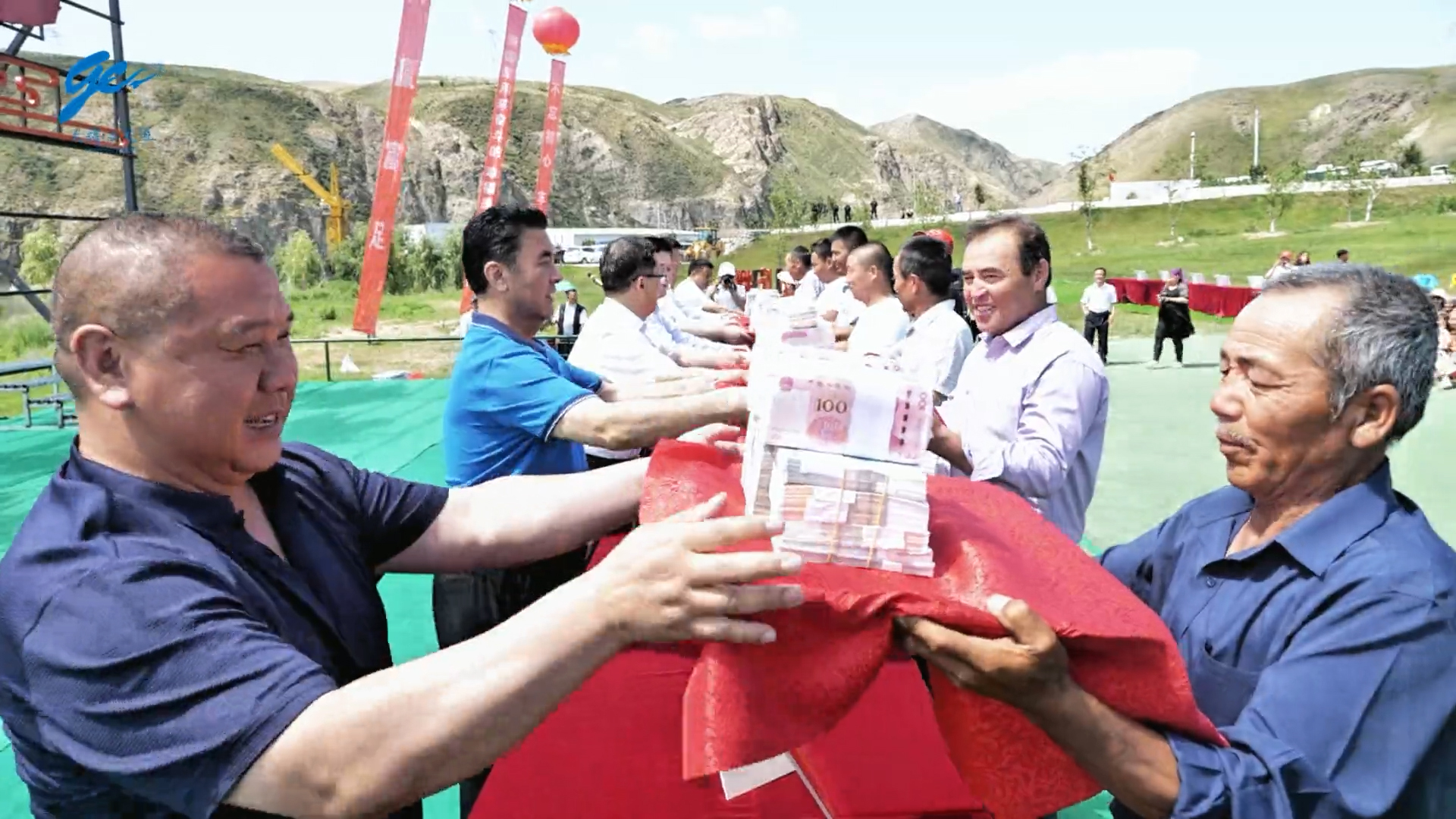
Tianyun has also become a government darling for the ways it has allegedly managed to enlist and excite a local population to the idea of raising fish in the desert. Alongside generating jobs, the company has invited workers, their families and other villagers to become shareholders in the seafood business.
The cash being handed out at the village gathering was one of the latest dividend payouts. When the first had happened four years earlier, the locals weren’t entirely sure what to make of it.
“Is this money really being given to me?” one resident asked a reporter from China Central Television. “Can I take it home?”
Converting the Indigenous populations of Xinjiang into eager and intrepid fishermen, however, required more than just financial incentives.
In the 1950s, the Xinjiang Production and Construction Corps (XPCC)—a corporate unit of the Chinese army, made up of former soldiers turned economic developers—had been sent to Xinjiang to turn herdsmen into farmers. They seized land, implemented forced training programs, launched state-backed companies and threatened the reluctant with detention. Many people were shipped out of Xinjiang to work in China’s larger eastern cities.
Beijing wrote of the alleged “idleness” of Xinjiang’s people—largely Turkic Uyghurs, Kazakhs, Mongols and Tajiks. Government officials published formal critiques that warned that if these groups were not enlisted in a structured economic enterprise, the people would spend their time gambling, holding lavish weddings or engaging in “illegal religious and feudal superstitious activities.”
The XPCC’s record of coercive tactics in Xinjiang has earned it a notorious international reputation. Over the past decade, XPCC has seized more than half a million acres in Xinjiang to use for growing cotton, as well as for a variety of other industries, from fruit farming to solar fields. The company has also helped the government relocate more than 10 percent of Xinjiang’s population—or over two-and-a-half million people between 2014 and 2019—through labor transfers.
By the end of 2024, the XPCC partially or fully ran at least 50 fish farms in Xinjiang. Against a backdrop of Uyghur detention and vast state surveillance, the paramilitary organization oversaw aquaculture facilities producing over $290 million worth of seafood annually.
The “Land of Hope”
In northern Xinjiang, where the Tianyun company is headquartered, the largest ethnic group were Kazakhs, a people who had historically practiced nomadic pastoralism. Here, Tianyun partnered with a government-affiliated rural credit union to provide interest-free loans—typically about 10,000 yuan, or $1,500 dollars—to allow local residents to buy shares in fish farming subsidiary companies.
To further reassure and convince the locals, Tianyun and state media outlets engaged in an elaborate advertising campaign, making films trumpeting the benefits of fish farming and not so subtly warning of the consequences of resistance.
A government film shot mostly at Tianyun, titled “Land of Hope,” tells the story of a fledgling fish farm, and the local man, Qairat, behind it. He meets pushback from his neighbors, who fear chemicals used in fish farming might kill their cows and sheep. “Is this little bastard Qairat trying to wipe us all out?” one villager shouts.
Qairat tries to pacify and persuade his friends. There will be profit sharing, and a future they could not have otherwise imagined. “The kids can’t afford college. The elderly can’t afford doctors,” Qairat’s girlfriend pleads on his behalf. “Is this really the life you want?”
One local man, Duman, is not on board, and he sets out to do damage to the fish farm. He is arrested and sentenced to a year in prison, but in a show of mercy by the court, he’s given the chance to avoid incarceration by maintaining good behavior during a two-year probation. When he returns, he’s a convert. Law enforcement officers sit down for tea with company officials, Qairat and his wayward friend Duman. Though seafood is not native to the region’s cuisine, platters of shrimp, crab legs and salmon sashimi are stacked on a table. Teased by the others, Duman agrees to try some salmon while Qairat drapes an arm around his shoulders.
“Our hometown has vast waters suitable for aquaculture,” Qairat says. An elder rises, slaps a stack of cash on the table, and declares, “To save our hometown, I’ll be the first to invest.”
Forced Labor
While fish farmed in Xinjiang’s desert might be a marvel of engineering, its importation into the U.S. is illegal.
In 2021, the U.S. Congress passed the Uyghur Forced Labor Prevention Act, which bars entry into the United States of any goods produced “wholly or in part” in Xinjiang, or by designated minority groups elsewhere in China.
This law places Xinjiang workers in a distinct category similar to that of prison or child labor. In the context of U.S. law, such workers are treated as forced labor because of the distinct level of state repression and documented labor violations across the region.
Yet, aquaculture from Xinjiang has been imported into the U.S. in recent years and distributed to grocery stores, military bases, public schools and even U.S. congressional cafeterias, according to Bait to Plate, an online tool created by Outlaw Ocean that tracks the fishing and seafood industries.
During a Xinjiang agricultural expo in 2022, Tianyun signed an agreement to sell $140 million worth of salmon to Dalian Rich Enterprise Group Co. Ltd. Between 2022 and 2023, customers of Dalian Rich included the North American company Aqua Star Seafood, itself a supplier to major U.S. grocery chains such as Kroger and Target.
Dalian Rich, Aqua Star, Kroger and Target did not respond to requests for comment.
“Tianyun’s salmon products will be exported to all parts of the world,” Zhang Yuru, the company’s deputy general manager, said in 2024. The company currently exports to over a dozen countries, including Thailand, Singapore, Malaysia, Japan, Russia, Spain, the United Kingdom and Germany, according to the Outlaw Ocean’s Tianyun Report.
In August 2026, Tianyun was added to the Uyghur Forced Labor Prevention Act Entity List by the U.S. Department of Homeland Security.
The company was suspected of sourcing salmon from Xinjiang and participating in government-sponsored “recruitment and labor transfer programs to recruit, transfer, and receive Uyghur, Kazakh, and/or Kyrgyz persons” out of Xinjiang, according to the Department of Homeland Security.

Tianyun said in a statement that claims of systemic forced labor “are completely factually unfounded” and described the Uyghur Forced Labor Prevention Act as an unreasonable and politically motivated framework that violates the principles of fair international trade.
Tianyun maintains it strictly abides by China’s labor laws and protects the legitimate rights and interests of every employee. “Our company has never been involved in, nor will it ever participate in, any form of forced labor,” said Tianyun.
“On the contrary, we provide competitive compensation, comprehensive occupational health and safety protections, and career development opportunities.”
Neither the XPCC nor the Chinese Ministry of Foreign Affairs responded to requests for comment.
This story is funded by readers like you.
Our nonprofit newsroom provides award-winning climate coverage free of charge and advertising. We rely on donations from readers like you to keep going. Please donate now to support our work.
“Greenwashing”
Facing allegations of forced labor, Chinese aquaculture companies have sought help from international seafood quality-assurance outfits to reassure consumers worldwide. Those organizations—Best Aquaculture Practices (BAP) among the most prominent—claim they are independent entities with exacting standards.
Despite the fact Xinjiang has been almost completely closed to independent outside investigation since 2017 and despite the Chinese state not typically allowing unannounced inspections relating to labor, environmental or human-rights abuses, Tianyun has claimed to hold multiple international certifications, including from BAP, according to a 2023 article by Seafood Guide.
Many researchers and ocean-sustainability advocates therefore regard BAP and similar firms as unable or disinclined to root out problems.
In a May 2024 open letter, more than 70 environmental, animal welfare and community organizations accused BAP of “greenwashing,” arguing that certified farms are “rarely, if ever, held to account for adverse outcomes” tied to their operations.
Indeed, with increasing frequency, provincial Chinese agricultural departments have found illegal levels of drugs in the Chinese farmed fish, such as antibiotics at levels that threaten humans and dangerous use of sedatives, such as diazepam, to calm fish during transport.
In response to such criticism, the organization behind the BAP—the Global Seafood Alliance—told The Outlaw Ocean Project that “BAP certification is the most comprehensive certification program for farmed seafood,” and noted the introduction of “additional social responsibility clauses to strengthen human rights requirements.”
The Aquaculture Stewardship Council, the other major global certification body, announced in 2024 that it would withdraw from China. While it cited financial considerations, industry reporting linked the decision to an investigation documenting the widespread use of state-sponsored forced labor, including Uyghur and North Korean workers, in Chinese seafood-processing plants.
Unsustainable Pressures
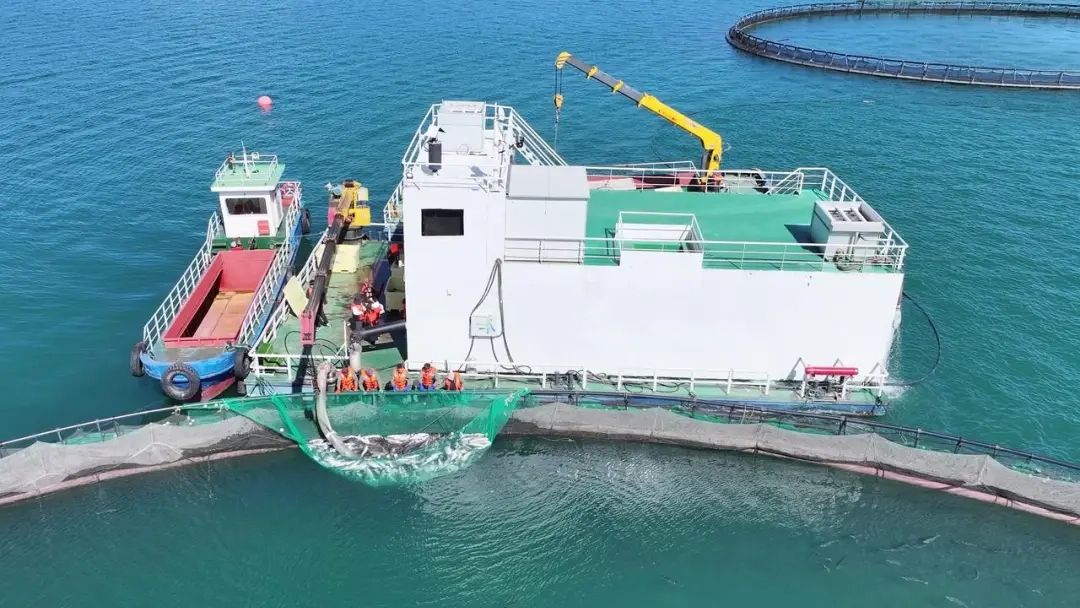
Despite the accomplishment of building roughly 250 farms in and around the desert, authorities in Beijing have yet to crack what might be the single greatest challenge to its aquaculture: feeding the fish themselves.
The only commercially viable option at scale remains fishmeal: a pulverized, protein-rich powder made from wild-caught fish. Globally, more than a fifth of all fish harvested ends up as fishmeal or animal feed.
While China’s farms historically relied on forage fish pulled from its own coastal waters, the pressure proved unsustainable.
Of fifteen fish species assessed in a 2019 Frontiers in Marine Science study, eleven were overfished, depleted or outside safe biological limits—five of them forage fish. To ease the strain, China cut its near-shore fleet by roughly 40,000 vessels in 2020 and has increasingly turned to imported fishmeal, especially from Peru. Today, China imports more than 40 percent of the world’s fishmeal, a share projected to rise to 55 percent by 2032.
“China wants food autonomy,” said Philip Chou, a China specialist with the environmental group Oceana. “But to get there, it’s also going to need feed autonomy.” Right now, Chou said, China has neither.
China’s efforts to sell the world on its Xinjiang farmed fish has gone well beyond touting certifications by supposedly independent monitors.
Since 2022, China has carefully controlled media tours for foreign reporters and actively recruited foreign food buffs—called vloggers or “frontier influencers”—to record and post videos and other testimonials about the wonders of growing fish in “The Sea of Death.”
A video from an American vlogger showcased his tour of a fish farm located on the edge of the Taklamakan: “It’s incredible how they have developed such a barren land to this extent.”
But it’s the government itself that frames the industry in the grandest terms.
In a 2025 article published by state media, establishing farms in the forbidding western frontier was declared “a testament to human ingenuity and resilience.”
“Xinjiang’s aquaculture is not merely about producing fish,” the article went on, “it is about reimagining how inland regions can contribute to the nation’s protein security, how technology can redefine agriculture, and how harmony between people and nature can be sustained in the most challenging of environments. From snow-fed rivers to desert oases, Xinjiang has shown that blue dreams can indeed flourish on dry land.”
Beijing presents Xinjiang’s aquaculture boom as proof that technology can conquer geography. For foreign consumers, though, the story of fish raised in one of the most arid places on Earth is about how modern food systems displace their burdens: drawing feed from distant seas, labor from vulnerable populations and trust from consumers asked to believe their meals aren’t harming anyone.
About This Story
Perhaps you noticed: This story, like all the news we publish, is free to read. That’s because Inside Climate News is a 501c3 nonprofit organization. We do not charge a subscription fee, lock our news behind a paywall, or clutter our website with ads. We make our news on climate and the environment freely available to you and anyone who wants it.
That’s not all. We also share our news for free with scores of other media organizations around the country. Many of them can’t afford to do environmental journalism of their own. We’ve built bureaus from coast to coast to report local stories, collaborate with local newsrooms and co-publish articles so that this vital work is shared as widely as possible.
Two of us launched ICN in 2007. Six years later we earned a Pulitzer Prize for National Reporting, and now we run the oldest and largest dedicated climate newsroom in the nation. We tell the story in all its complexity. We hold polluters accountable. We expose environmental injustice. We debunk misinformation. We scrutinize solutions and inspire action.
Donations from readers like you fund every aspect of what we do. If you don’t already, will you support our ongoing work, our reporting on the biggest crisis facing our planet, and help us reach even more readers in more places?
Please take a moment to make a tax-deductible donation. Every one of them makes a difference.
Thank you,
