


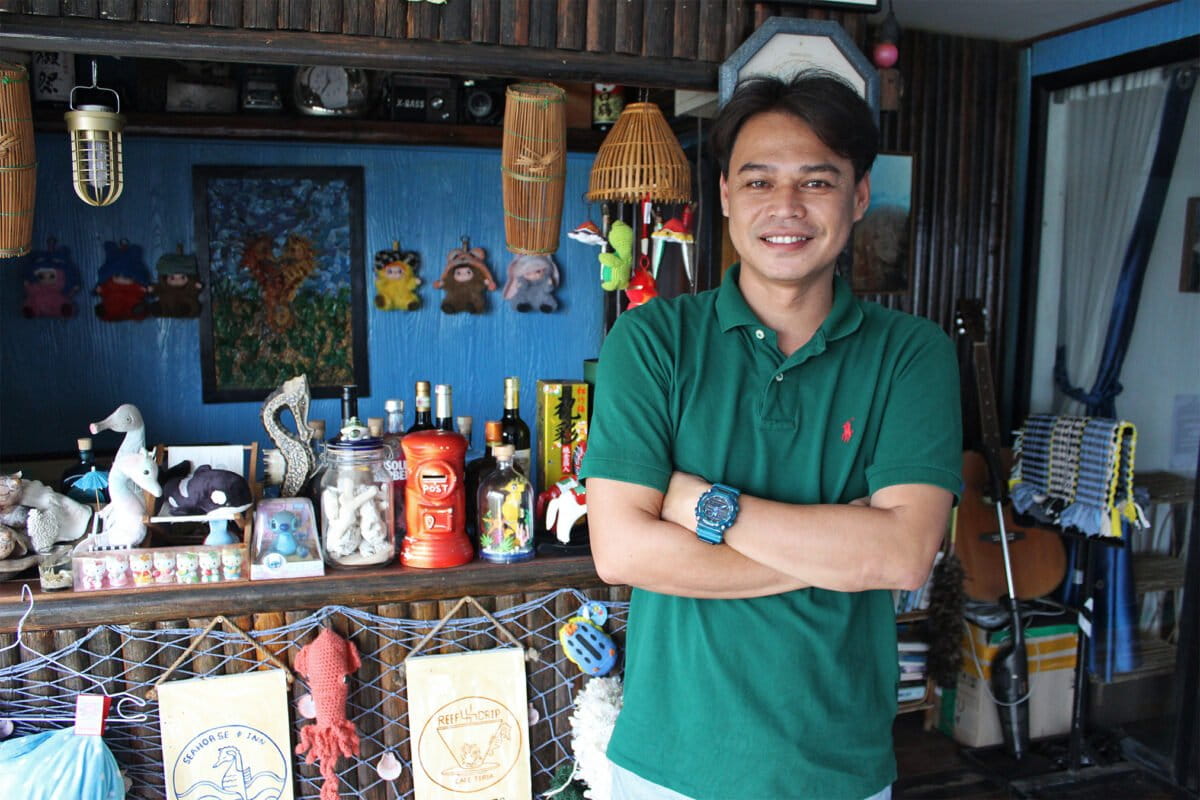
- Sorn Srenh is a local commune leader in Cambodia’s Koh Sdach archipelago, where he also serves as a marine advocate, working with fishing communities to protect ocean ecosystems and livelihoods.
- He describes how community patrols, stronger fisheries enforcement, plastic-waste initiatives and women’s participation are helping address illegal fishing and other threats to Koh Sdach’s waters.
- Srenh also discusses the challenges of balancing conservation with community livelihoods, gaps in law enforcement, and the need for stronger collaboration and long-term support from government and conservation groups.
- In a recent interview with Mongabay, Srenh discussed his path into marine conservation, the challenges facing Koh Sdach’s waters, and his vision for community-led protection of Cambodia’s seas.
PHNOM PENH — In Cambodia’s Koh Sdach archipelago, where turquoise waters hide mounting environmental pressures from overfishing and plastic waste to climate change, one local leader has turned grassroots action into a model for marine conservation.
Koh Sdach commune deputy chief Sorn Srenh, a marine advocate who studied fishery science at the Royal University of Agriculture in Phnom Penh, stands at the intersection of science, policy, and community advocacy.
For years, the 38-year-old has worked relentlessly with the fishing community to protect their livelihoods while pushing for sustainable practices that safeguard marine biodiversity. His efforts, ranging from organizing community capacity to lobbying for stronger local enforcement of fishing regulations, have made him a trusted voice among villagers and a rare example of commune-level leadership driving tangible environmental change.
For years, Srenh has also been working with the Cambodian government’s Fisheries Administration and the UK-based NGO Fauna & Flora to help establish Koh Sdach’s community fisheries management area, known as a Marine Fisheries Management Area (MFMA).
In a phone interview with Mongabay, Srenh shared his vision for community-led conservation, the challenges of balancing economic survival with ecological stewardship, and why protecting Cambodia’s seas matters far beyond its shores.
Mongabay: Can you describe your journey from studying fishery science to becoming a grassroots conservation leader in Koh Sdach? What encourages you to protect marine ecosystems?
Sorn Srenh: I love fisheries management because of a formative experience in the Koh Sdach archipelago. When an NGO launched a marine conservation initiative and invited me to work with them, watching their activities — scuba diving, underwater photography, and community capacity building to encourage local participation in biodiversity conservation — captivated me and sparked my curiosity about marine ecosystems. That experience motivated me to explore the sea’s ecosystem more deeply and follow my curiosity to learn more.
Mongabay: Why are marine resources so important for families in Koh Sdach? Are there specific practices or agreements you’ve established that helped reduce overfishing or habitat damage?
Sorn Srenh: Community livelihoods in this archipelago highly depend on fishery resources, as fishing is their main source of income, on top of the tourism sector. For long-term sustainability, we have community fishing areas [designated zones where local fishers are allowed to manage and harvest sea resources] to be protected across this archipelago.
Marine species such as sea turtles, coral reefs, and seagrass meadows are highly vulnerable to overfishing, yet they play a critical role in maintaining healthy marine ecosystems. To safeguard these species, I have been working relentlessly with community members, local partners, and the government’s fisheries department to strengthen community-based conservation efforts.
Community members very often patrol their community fishing areas. The group is called the Community Fishery (CFi) group, with women also joining us. The goal is to strengthen fisheries law enforcement to combat illegal fishing and protect our marine resources.

Mongabay: What are the biggest environmental threats facing Koh Sdach’s waters today, and how are local communities responding?
Sorn Srenh: The biggest threats to our marine biodiversity are illegal fishing, such as electrofishing and illegal trawling — illegal fishers tend to encroach into community-protected areas.
Plastic pollution in the ocean also presents several hazards for marine wildlife and ecosystems: Plastics can … continue trapping marine life and become entangled in coral reefs. But this year, we have worked very hard to combat the plastic crisis in Koh Sdach: We are working with a private waste-collection company to remove plastic waste from the island.
Climate change also threatens fisheries resources, especially by damaging coral reefs. When sea temperatures are high, [coral reef] survival rates can decline. So if this trend continues for a long period of time, coral reefs can die.

Mongabay: You’ve worked closely with both fishers and local authorities. Where do you see the biggest gaps in policy or enforcement that hinder effective marine conservation, and what is your response?
Sorn Srenh: I think law enforcement is not 100% effective. We still lack participation from all community members, especially among fishers. To strengthen conservation efforts, we need closer collaboration with all stakeholders to raise awareness of fisheries laws and the importance of conservation. When fishers understand the regulations and why conservation matters, they are more likely to comply and to know what is permitted and what is prohibited. Working with the community, relevant ministries, and NGOs can make conservation practical and enforceable.
Mongabay: Can you share a specific success story that demonstrates the power of local stewardship?
Sorn Srenh: Most of the campaigns we have launched with relevant partners have focused on eradicating illegal fishing, conserving marine management areas, and combating plastic pollution. We have worked with a women’s group in our community with skills and technical support from Fauna & Flora, turning discarded fishing nets into saleable products to benefit and support the community. And we regard it as a success story.

Mongabay: What role do women play in Koh Sdach’s marine conservation efforts, and how have you ensured their voices are included in decision-making about coastal resources?
Sorn Srenh: Of course, women play a crucial role in marine conservation. Their voices are included in our planning, initiatives, or any conservation goals aimed at safeguarding our ocean. We have to ensure they are not left behind. They are encouraged to contribute to policy change, decision-making, and other activities meant to protect our ocean and improve community livelihoods. Working with dynamic women who are willing to make an impact as a whole inspires me to love conservation even more.


Mongabay: Looking ahead, what is your vision for Koh Sdach’s marine environment in the next decade, and what support is needed to achieve it?
Sorn Srenh: I think we need more support not only from the government but also from NGOs working in ocean protection to mobilize resources. For me, more important is direct support from our community. It means we work with people in our community from all fronts, and yes, the success of the conservation work depends on them as well. But without doubt, we still need support from partners in skill development and technical support in the long term.
Banner image: Sorn Srenh, deputy chief of Koh Sdach commune, has turned grassroots action into a model for marine conservation. Image by Eung Sea for Mongabay.
Cambodian fishers-turned-citizen scientists monitor marine mammal deaths
Women on storm-hit Philippine island lead Indigenous effort to restore mangroves
Cite this article
Eung Sea (2026). Community action to protect Cambodia’s seas: Interview with commune leader Sorn Srenh. Mongabay Conservation news. DOI: https://doi.org/10.66709/news-332097

