


The U.S. military is considering what units to cut and what to keep in Europe as part of the Trump administration’s rethink of force posture on the continent. But competing priorities could stymie the Defense Department’s ability to make the major drawdowns that some officials are pushing for.
On July 27, Pentagon policy chief Elbridge Colby announced the start of a six-month review of U.S. forces in Europe, meant to move “fast and irreversibly toward Europe taking primary responsibility for its conventional defense.”
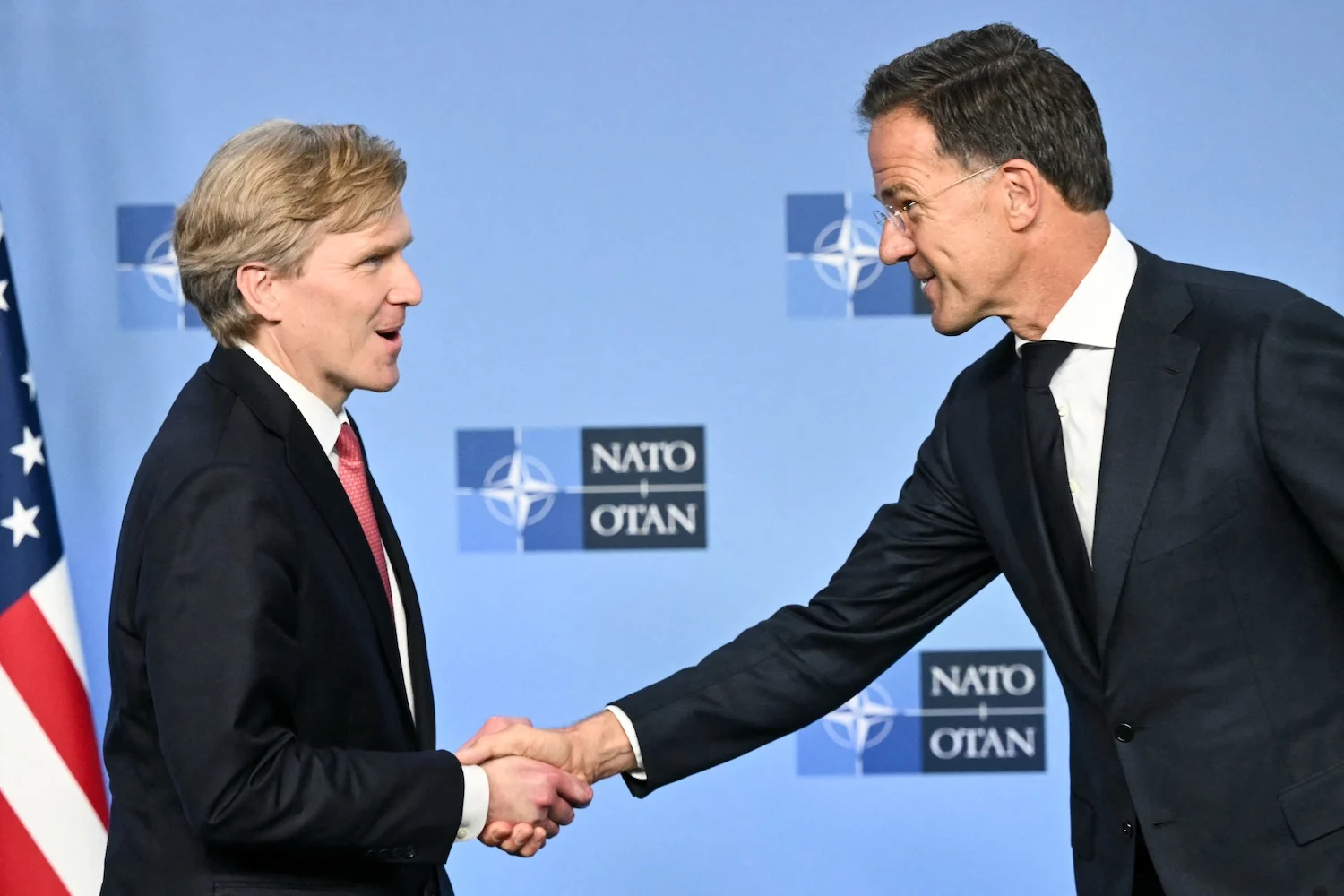
And this week, he traveled to Europe for meetings with NATO leaders and U.S. military personnel to discuss the plan, which he has dubbed “NATO 3.0.”
The United States keeps around 80,000 military personnel in Europe, nearly half of whom are stationed in Germany. Other countries hosting U.S. military personnel include the United Kingdom, Spain, Italy, Poland, Romania, Greece, and Estonia, among others.
That military presence is there to help protect the host countries, but it has also long served as a means for Washington to project power into Africa and the Middle East, via airfields, naval bases, or medical facilities that take care of wounded military personnel. The United Kingdom and Germany are particularly important for U.S. airpower, while Spain, where multiple U.S. naval destroyers are based, is important for sea power.
However, Colby has long urged the U.S. military to focus on Asia over Europe and the Middle East in order to confront what he views as the rising threat of China. And with U.S. President Donald Trump’s perennial distaste for NATO now exacerbated by his anger over European allies’ refusal to join the war in Iran, Colby may see his chance.
Some early indications suggest that Colby’s team could propose substantial cuts to U.S. forces in Europe. In October 2025, the Defense Department withdrew a rotational unit of around 3,000 troops that had been based primarily in Romania. In December, the United States reportedly told European nations that they should be ready to take over most of their conventional defense as soon as 2027. In May of this year, the Pentagon abruptly canceled a planned deployment of troops to Poland, though Trump appeared to reverse course just days later, announcing instead that Washington would be sending 5,000 troops to the country; however, so far, no troops have been sent. And in June, the United States announced significant reductions in the number of forces, aircraft, and warships that it would provide to Europe if NATO were attacked.
Colby’s team is likely under the gun to move quickly, said Katherine Thompson, who formerly worked for Colby at the Pentagon and is now a senior fellow at the Cato Institute think tank. “You may have a different political party assuming the presidency in 2028, so you want to cement as many gains as you can to make it very difficult to undo,” she said.
Colby’s team is preparing four possible options, Reuters reported Thursday. Those options will be ready for Defense Secretary Pete Hegseth’s review by Nov. 6.
As for which countries could potentially see a U.S. troop drawdown, that may be driven more by professions of loyalty to the Trump administration than pure military considerations. The United States recently sent a questionnaire to NATO member nations asking if the country has been “publicly supportive” of U.S. foreign policy, if the country is buying U.S. weapons, and what “restrictions,” countries have placed on U.S. bases. The document also asked countries if they’d be willing to speak out against efforts to buy European weapons.
Under this logic, Spain and Italy are perhaps the most at risk for some form of politically motivated punishment, given their respective leaders’ declining relations with Trump over the Iran war. Spain is important to NATO defense due to its hosting of U.S. destroyers at Rota, while key U.S. forces in Italy include spy aircraft and an Army brigade.
Germany has already suffered from this type of policymaking, when Trump announced that the United States would withdraw 5,000 troops from the country after German Chancellor Friedrich Merz criticized the Iran war. The United States has said this process will take “years,” though, suggesting that the withdrawal could be countermanded by future administrations.
The Department of Defense did not respond to a request for comment.
But Colby’s ambitions may be complicated by politics outside the Pentagon’s control.
For one, the Trump administration’s ongoing war on Iran depends in part on access to U.S. air and naval bases in Europe, meaning that those assets are less likely to be moved out of Europe.
“I think in the naval domain, you’re unlikely to see any major changes,” said Jennifer Kavanagh, the director of military analysis at Defense Priorities, a Washington think tank. She cited the high demand for naval forces based in the Mediterranean for projecting U.S. power regionally. Even when it comes to other types of forces, “I think the scope of things that are likely to change in the near term, realistically, is probably pretty small,” said Kavanagh, who has advocated for reducing the U.S. military presence in Europe.
Past efforts led by the Pentagon to reduce forces stationed in Europe have also not gone down smoothly with Congress.
The October withdrawal of troops from Romania prompted a rebuke from the U.S. Sen. Roger Wicker and Rep. Mike Rogers, respectively the top voices on the U.S. military in the Senate and House of Representatives. The move “undermines deterrence and risks inviting further Russian aggression,” the two wrote.
Congress subsequently inserted language in the bill authorizing 2026 defense funding that would set a floor of 76,000 military personnel in Europe. The number of military personnel can decline, but only following the Pentagon proving to Congress that it has consulted with European allies, among other measures.
Other points of tension between Congress and Colby have included a pause on aid to Ukraine and a move to cut security funding for the Baltic states.
Since then, Congress has appeared to signal its displeasure with the Pentagon’s troop moves in Europe by not yet confirming two key Colby aides: Alexander Velez-Green, for deputy undersecretary of defense; and Austin Dahmer, for assistant secretary of defense. The two had confirmation hearings in November of last year.
European nations, too, have their traditional means to lobby—through Congress—as well as by talking up their support for Trump, such as through the questionnaire sent out by the Pentagon.
That means that countries that buy a significant share of U.S. weapons, such as Poland, or that have provided support for the war in Iran, such as Romania, may be able to preserve a U.S. presence, even if Pentagon policy planners don’t see the need. Some Eastern European nations are also reportedly offering to cut the cost of basing troops in their countries.
Meanwhile, Secretary of State Marco Rubio has indicated that he wants the United States to remain a stronger force in Europe and was reportedly involved in a decision to slow roll removing U.S. troops.
That’s not to say that Colby doesn’t have cards to play.
In accordance with the new provisions requiring the Pentagon to consult with allies before cutting troop numbers below 76,000, Colby has made a point of publicly showing that he has held meetings with key European allies.
Colby’s job may also be made easier by the forced retirement of Gen. Christopher Donahue, the commander of U.S. Army forces in Europe. Meanwhile, the Army, the service with the largest footprint on the continent, is without a confirmed chief of staff and is reportedly set to lose its top civilian leader, Dan Driscoll. Two generals most aware of the threat from Russia have also left in recent months: the top coordinator of allied support efforts for Ukraine, Gen. Curtis Buzzard, and Lt. Gen. Charles Costanza, head of the Poland-based V Corps.
But no matter what the Pentagon plans, it will still have to face the greatest wild card of all: Trump’s mercurial tendencies.
Trump’s reversal of the Pentagon’s decision to withdraw troops from Poland came after outreach from Poland’s president, Karol Nawrocki, with whom Trump is close. Other European leaders—notably NATO chief Mark Rutte—have proved to be similarly adept at wooing Trump.
“These reviews are always a lot of hype, and then the changes are always less than what we expect,” Kavanagh said.
