

Close Menu
NCIJ Network NCIJ Network
    What's Hot

    Whales return to Patagonia, but face new threats in Argentina

    November 28, 2026

    Spanish PM and rivals rally supporters in final pitch for votes

    November 27, 2026

    ‘Vote for trees’: Taiwan community pins hope on ‘Forest Grandma’ to save beloved woods

    November 27, 2026
    Facebook X (Twitter) Instagram
    Trending
    • Whales return to Patagonia, but face new threats in Argentina
    • Spanish PM and rivals rally supporters in final pitch for votes
    • ‘Vote for trees’: Taiwan community pins hope on ‘Forest Grandma’ to save beloved woods
    • No, King Charles hasn’t welcomed a ‘new global order’ and a ‘single global government’ based in Tel Aviv – Full Fact
    • ‘An advocate for Russia’: Kushner’s Putin comments spark outrage in Europe – POLITICO
    • Capsized tanker carrying 7,000 tonnes of diesel to be towed away from Ibiza
    • Wisconsin prisoner looks toward freedom after historic commutation
    • Aerial photos show recovery of Florida Bay, US, as restoration sends Everglades water
    • About
      • Our Team
      • Editorial Policy
      • Editorial Independence
      • International Support
    • Trust & Standards
      • AI Usage Policy
      • Conflict of Interest Policy
      • Corrections Policy
      • Ethics Policy
      • Fact-Checking Policy
      • Source Protection
    • Get Involved
      • Guide for Sources
      • Support Independent Journalism
    • Legal
      • Cookie Policy
      • Privacy Policy
      • Terms of Use
    Facebook X (Twitter) Instagram
    NCIJ Network NCIJ Network
    Saturday, November 28
    • Home
    • World
    • Ai
    • Business
    • Politics
    • Health
    • Crypto
    • Science
    • Technology
    • Cybersecurity
    • Defense & Security
    • Economy
    • Energy
    • Europe
    • More
      • Fact Check
      • Investigations
      • Opinion & Analysis
      • Environment
    NCIJ Network NCIJ Network
    Home»Opinion & Analysis

    Can the AI Mineral Rush Advance a Just Green Transition? by Suneeta Kaimal

    NCIJ NETWNCIJ NETWORKBy NCIJ NETWNCIJ NETWORKNovember 27, 2026 Opinion & Analysis No Comments7 Mins Read
    Share
    Facebook Twitter LinkedIn Pinterest Email

    NEW YORK—In recent years, Global South countries with abundant endowments of the minerals that power renewable energy systems have sought to leverage the demand generated by the green transition to define a new mining paradigm rooted in justice and equity. Leaders at the United Nations, the African Union, the Latin American and Caribbean Energy Organization, and the Association of Southeast Asian Nations have called for concerted action to ensure that such mining generates more inclusive growth.


    1. Andrew Harnik/Getty Images


      Who Controls America’s AI Chokepoint?

      Carla Norrlöf

      The saga of Jensen Huang’s ouster and sudden return as Nvidia’s chief executive has exposed a paradox at the heart of American technological hegemony. While Nvidia’s AI chips give the United States leverage over China, the geopolitical power that Nvidia makes possible gives it leverage over the US.

      thinks the Nvidia saga has revealed a paradox at the heart of US technological hegemony.


    2. People walking by the COP31 sign in Antalya.


      Beyza Comert/Anadolu via Getty Images


      Effective Climate Action Requires Capable States

      Mariana Mazzucato

      For too long, discussions about the green transition have focused on mobilizing private finance, setting regulatory targets, and correcting market failures after the fact. But as important as these functions are, they have clearly proved to be insufficient.

      identifies state capacity as a key missing ingredient in the world’s response to global warming.


    3. Traders work on the floor of the New York Stock Exchange in New York City on November 17, 2026.


      Spencer Platt/Getty Images


      If the AI Bubble Is Bursting, the Fallout Will Be Severe

      Desmond Lachman

      With the S&P 500 following the tech-heavy NASDAQ into correction territory, even as Anthropic set a record with its initial public offering, this is a good moment to compare AI stock valuations with earlier asset-price bubbles. A look back at the dot-com boom and bust of the late 1990s offers ample cause for concern.

      sees three reasons to fear the macroeconomic effects of a sharp return to normal valuations in the sector.


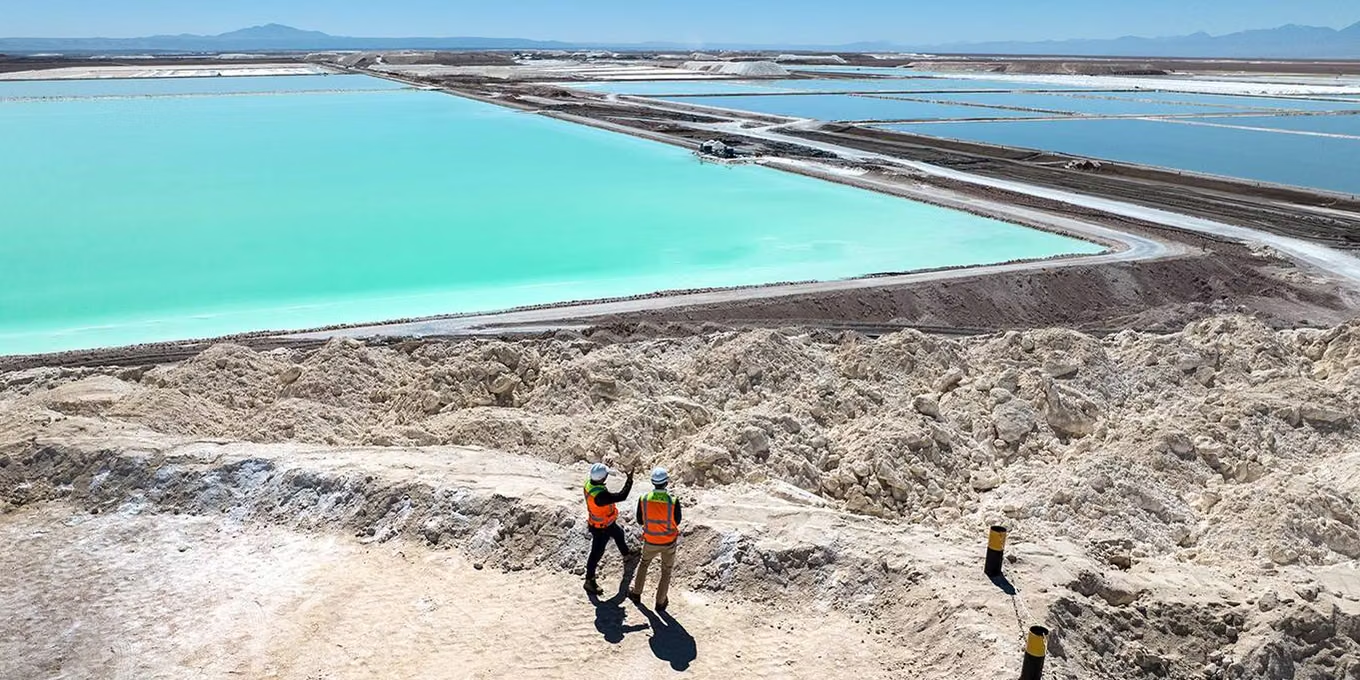
    But just as a consensus on how to support a just green transition was starting to form, the AI race went into overdrive. The technology shares a common starting point: minerals. Huge amounts of copper, aluminum, lithium, cobalt, and other minerals are now also needed for AI infrastructure, particularly data centers. In the first half of 2026 alone, G7 members announced 195 critical-mineral projects worth €64 billion ($70 billion), and the World Bank has plans to increase its financing for metals and minerals to $19 billion between 2026 and 2030. UN Secretary-General António Guterres has predicted that AI will push mineral demand even higher than expected and risks introducing competing demand.

    So far, however, debates over AI’s environmental and safety risks have neglected to recognize that mining is the first step in the technology’s value chain or to consider the associated risks and opportunities. While Americans are protesting how much water data centers might use, copper and lithium extraction in some of Chile’s mining regions already consumes two-thirds of the water supply. Warnings that AI-driven unemployment will create a permanent underclass have overshadowed rising human-rights abuses in mines. And amid growing fears about weaponized AI applications causing mass death, conflicts over coltan and other AI minerals are killing scores of people in the Democratic Republic of the Congo.

    As AI drives up demand for minerals, shaping markets and deals, the question is how to tip the scales away from exploitation and toward justice and equity for people in mineral-producing countries.

    Part of the answer lies in ensuring that politicians and negotiators at key global forums—whether focused on AI or the energy transition—commit to equitable mining policies. On this front, the decision on the Just Transition Work Programme recently adopted at the UN Climate Change Conference (COP31) in Antalya is a welcome development, as it explicitly links critical minerals to just energy transitions and recognizes the importance of equitable value chains that promote local value addition.

    Expanding refining and processing capacity would help developing countries capture greater benefits from their minerals. According to the International Energy Agency, local refining could raise the value of Latin America and the Caribbean’s mineral output by about 45%. But despite Global South countries’big ambitions for value addition, they still lack the necessary funds and technical know-how. Forthcoming research from the Natural Resource Governance Institute finds that only one in three value-addition projects in Africa has secured the financing it needs. Multilateral development banks and mineral-consuming governments can close that gap by financing sound project design and new infrastructure.

    As host of next year’s COP, Ethiopia can shape a just-transition mechanism that helps ensure that mining advances development. Securing human-rights safeguards for frontline communities, which could involve building on developing countries’ efforts, will be critical to this process. The chair of the African Group of Negotiators on Climate Change has proposed developing a new minerals compact at next year’s COP in partnership with the G20. That would allow the United Kingdom, which has made AI and debt reform the top priorities for its G20 presidency in 2027, to connect the energy transition and the AI agenda. It would also enable the UK to advance the investment strategies and targets in the 2025 G20 Critical Minerals Framework, which could shift more wealth and opportunity to mineral-producing countries.

    While international agreements matter, mineral deals ultimately determine whether developing countries will secure greater equity in this new boom. Unfortunately, of the more than 200 mining projects announced this year alone, most are shrouded in opacity. Governments should fully disclose any bilateral or multilateral mineral trade deals they sign, as well as any related contracts with mining companies. Disclosure should extend to end use, too, so that it is clear “whether a mineral ends up in a battery, a missile, or a data center,” as UN Special Rapporteur on Climate Change and Human Rights Elisa Morgera recently argued.

    Greater transparency is an important step toward more agency and inclusion in decision-making, which is key to creating more equitable outcomes. With this information, citizens can assess whether agreements are aligned with current and future development priorities and hold companies and governments accountable for delivering on their promises.

    Such transparency is especially important as opportunistic mining companies and their government allies seek to accelerate extraction. But gutting environmental standards, sidelining local communities, and fast-tracking mining permits can sow conflict, delay production, and even cause projects to be suspended or abandoned. Governments and firms jockeying for AI minerals should heed calls from investors and the G7 for stronger mining standards, because protecting people and the planet is essential for keeping critical supplies flowing.

    The intense focus on AI offers a chance to advance the equitable, inclusive mining deals, rules, and practices that a just green transition requires. Centering the needs and ambitions of mineral-rich developing countries in the AI debate will help ensure that local people and communities are protected from the risks of this booming demand and share equitably in the value it helps create.

    Advance green Kaimal mineral rush Suneeta transition
    NCIJ NETWNCIJ NETWORK
    • Website

    Keep Reading

    Reimagining Food Innovation by Andrea Borghini, Johanna Mendelson Forman and Elisabeth King

    The Future of the Global Disability Agenda by Alberto Vásquez Encalada

    Right-Wing Leaders in Latin America Are Unlikely to Spurn China

    2026 Holiday Book Guide: International Reads on History, Foreign Policy, Fiction

    Big Tech Has Undermined Democracy. Here’s How to Reverse the Trend.

    The Chaos Theory of International Relations

    Add A Comment
    Leave A Reply Cancel Reply

    Editors Picks

    Whales return to Patagonia, but face new threats in Argentina

    November 28, 2026

    Spanish PM and rivals rally supporters in final pitch for votes

    November 27, 2026

    ‘Vote for trees’: Taiwan community pins hope on ‘Forest Grandma’ to save beloved woods

    November 27, 2026

    No, King Charles hasn’t welcomed a ‘new global order’ and a ‘single global government’ based in Tel Aviv – Full Fact

    November 27, 2026
    Latest Posts

    Bitcoin Core weighs CJDNS removal after seven good nodes

    August 24, 2026

    Is it legal to train AI models on copyrighted books? It’s complicated

    August 24, 2026

    Britain told EU citizens to trust its settled status system. Then it mixed up identical twins. – POLITICO

    August 24, 2026

    Subscribe to News

    Get the latest sports news from NewsSite about world, sports and politics.

    NCIJ Network is an independent digital news platform delivering trusted investigative journalism, European and global news, in-depth analysis, and fact-based reporting with accuracy, transparency, and integrity.

    Facebook X (Twitter) Instagram Pinterest YouTube

    Whales return to Patagonia, but face new threats in Argentina

    November 28, 2026

    Spanish PM and rivals rally supporters in final pitch for votes

    November 27, 2026

    ‘Vote for trees’: Taiwan community pins hope on ‘Forest Grandma’ to save beloved woods

    November 27, 2026

    Subscribe to Updates

    Get the latest creative news from FooBar about art, design and business.

    Type above and press Enter to search. Press Esc to cancel.