


African countries continue to push back against Western institutions that they believe fail to meet their needs. In a move that follows other efforts to gain greater self-sufficiency on the global stage, the African Union (AU) launched its new credit rating agency (CRA) on Oct. 7.
The Africa Credit Rating Agency (AfCRA) hopes to rectify an issue about which many Africans have long complained—that the current credit rating landscape overemphasizes risk across the continent, leading to excessively expensive borrowing costs for African states and institutions. Although experts have widely differing views on the likely efficacy of the AfCRA, the AU is pushing full steam ahead with this new agency.
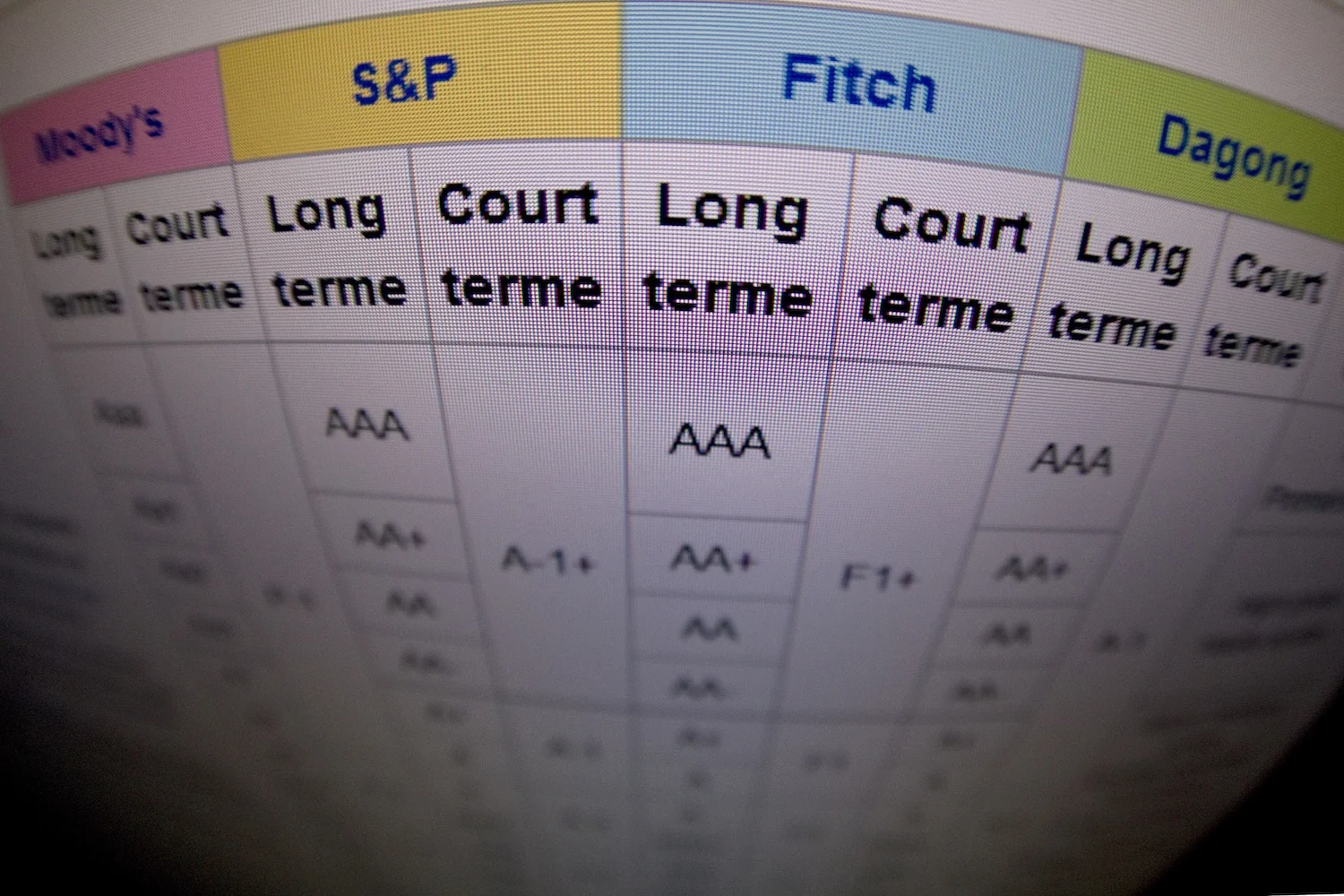
The vast majority of credit ratings are determined by the Western-based “big three” CRAs—Moody’s, Standard & Poor’s (S&P), and Fitch. Together, these companies’ ratings shape borrowing costs for more than 95 percent of the world’s rated debt, encompassing sovereign actors, multilateral institutions, and private corporations.
The big three CRAs began providing credit ratings to African sovereigns in 1994, when South Africa received the continent’s first credit rating. In 2003, the role of CRAs in Africa expanded substantially when the United Nations Development Program (UNDP) partnered with S&P to offer credit ratings to 13 African countries. At the time, many experts believed that the introduction of the Western big three CRAs in Africa would help improve the continent’s financial credibility for major global financial players, which would help attract capital, even though there was also concern that poor ratings and weak governance would increase the continent’s debt burden.
The introduction of CRAs has unquestionably improved Africa’s capacity to access global financing, including by opening the door to the Eurobond market. Now, 34 of the continent’s 54 countries have a credit rating from one of the big three agencies, and 21 countries have issued Eurobonds since 1997, amounting to more than $150 billion in financing.
But the vast majority of African countries and corporations have consistently received poor ratings, which has made financing exceedingly expensive. Of all the African countries that have received credit ratings, only Botswana, Mauritius, and Morocco are currently listed as “investment grade” by one or more of the big three. All others are categorized as “junk grade,” which significantly increases the interest that these governments must pay to secure financing in the sovereign bond market.
The impact of poor ratings has indeed proved to be costly for the continent. According to a UNDP report, external credit ratings have led to a loss of $75 billion annually for Africa through inaccessible lending policies and disproportionate interest payments. What’s more, the report reads, “In 2024, Africa accounted for nearly half of all global sovereign credit downgrades.” These were particularly pronounced during the height of the COVID-19 pandemic, during which time 56 percent of rated African nations were downgraded. In contrast, the global average for downgrades during COVID-19 was only 31.8 percent.
Of course, not all of the continent’s debt is due to the high borrowing costs that stem from receiving poor credit ratings. Much of the debt is the result of money borrowed from major multilateral institutions, such as the International Monetary Fund, which are charged with providing financial support—including loans—to countries in economic distress. These institutions often don’t rely on CRAs for their credit assessments, as they have their own internal assessments, and have at times called out low ratings from CRAs for exacerbating financial distress in developing countries.
In this context, African policymakers have long argued that these big three agencies (which have very little on-the-ground presence in Africa) fail to understand the continent’s economic, political, and institutional realities, and consequently misidentify the risks facing investors. This, they argue, forces Africans to pay higher interest on debt than do those with similar profiles outside the continent—a concept derogatorily referred to as the “Africa premium.”
An International Monetary Fund working paper from 2023 confirmed that such a premium exists for sub-Saharan Africa, finding that when controlling for actual risk, financiers hold a higher risk perception of sub-Saharan countries than an objective assessment would suggest.
Several African entities that have been unhappy with their rating downgrades in recent years have decided to end their contract with one or more of the big three. In January, the African Export-Import Bank terminated its contract with Fisch following a continuous stream of downgrades from the New York-based agency. Dangote — the continent’s largest industrial conglomerate—also ended its contract with Fisch following a downgrade in 2024.
The big three agencies dispute the idea that they incorrectly evaluate African risk, saying they base their analysis of economic and other relevant risk in Africa on the same factors that they use to identify risk elsewhere in the world. The low ratings, they argue, are simply indicative of poor economic, political, and institutional health, which increases the risk that investors face when lending to Africans.
For the AfCRA to generate financing for the continent and break through in an industry with notoriously high barriers to entry, it will need to significantly differentiate itself from the traditional big three and find ways to get investors to believe in its analysis—or, alternatively, find new investors that refuse to lend in the current credit landscape.
This will be difficult. Research shows that CRAs are often biased in favor of the countries in which they are based. The AfCRA, whose work is backed by institutions, such as the AU, that are working intensely to generate better financing options for the continent, will inevitably face accusations of home bias.
One way in which the AfCRA could combat this is through high levels of transparency. Although the big three publicize their general ratings methodologies, they rely on subjective analyses to determine a country’s likelihood of paying down its debt. The AfCRA can differentiate itself by relying on published methodological formulas to empirically determine the credit ratings of entities under its purview.
Indeed, the AfCRA plans to rely more heavily on local data and local financial indicators in its ratings analysis than non-African CRAs do. The AfCRA will do this in part by having a much stronger African-based network of analysts. By contrast, Fisch has no offices on the continent, while S&P and Moody’s have both historically only had a single continental office, located in South Africa.
Read More
-
An equal-area world map projection showing global landmasses and oceans against a black background. Land features are rendered in natural shades of green, brown, and tan to indicate terrain topography, while light blue denotes ocean depths and white covers the polar ice regions. The southern continents appear larger than they often do in the Mercator projection often used in school textbooks. An equal-area world map projection showing global landmasses and oceans against a black background. Land features are rendered in natural shades of green, brown, and tan to indicate terrain topography, while light blue denotes ocean depths and white covers the polar ice regions. The southern continents appear larger than they often do in the Mercator projection often used in school textbooks. Discarding an Old Map and Seeing Africa With Fresh Eyes
The continent offers solutions to some of the West’s most vexing problems.

-

An illustration of steps made from stacked U.S. hundred-dollar bills, topped with a colorful map of Africa, with a small stack of extra cash sitting nearby on a green surface. An illustration of steps made from stacked U.S. hundred-dollar bills, topped with a colorful map of Africa, with a small stack of extra cash sitting nearby on a green surface. A New Engine of Development
The era of easy growth is over, but rich and poor countries can still join forces.
These latter two agencies are making some effort to expand their continental presence in the face of competition from the AfCRA. S&P recently opened an office in Abuja, Nigeria, and acquired the sub-Saharan regional ratings agency Agusto & Co. This will allow S&P to deepen its presence on the parts of the continent where Augusto has operations (namely, Nigeria, Kenya, Rwanda, and Ghana). In 2024, Moody’s also acquired a local ratings agency—GCR Ratings—which similarly allows it to tap into its subsidiaries’ local base of expertise. But despite these efforts, none of the big three will be able to match the depth of local knowledge accessible to the AfCRA.
Another point of differentiation between the AfCRA and the big three is that the former plans to concentrate more on rating local-currency debt rather than purely dollar-denominated debt. This, Africans hope, will unlock more cross-African and regional funding from creditors unable or unwilling to lend in dollars while at the same time avoiding one of the continent’s biggest risk factors—foreign exchange risk.
Among the challenges facing the big three’s ability to operate effectively across Africa is their “issuer-pays model.” Although the big three provide some credit ratings to governments and other entities for free (typically large countries that the CRAs feel obligated to rate in order to maintain their own credibility), many smaller countries and institutions across the global south sign an issuer-pays agreement with the CRA, setting the fee for which the CRA will provide them with a rating.
Desperate for access to global credit, many smaller institutions and governments feel forced to accept this model. As part of these deals, the entity seeking a rating often agrees to provide the CRA with detailed financial information under the expectation that this transparency will improve its rating. But this model means that countries and institutions that aren’t paying don’t get rated.
By rejecting the issuer-pays model, the AfCRA will be positioned to rate all of the country’s sovereign entities as well as a wide plethora of private and multilateral actors. This is a level of comprehensiveness that the traditional big three fail to match.
Will all this enable the AfCRA to unlock more financing for Africa? One widespread concern among economists and financial experts is that since the credit market is global, with major lenders based outside the continent, the AfCRA’s impact is likely to be limited at best. Financial institutions, the argument goes, need an apples-to-apples comparison of potential borrowers across different regions.
From this perspective, the fact that the AfCRA only evaluates African entities diminishes its usefulness. After all, the vast majority of lenders are not just comparing the risk profile of Africans; rather, they’re simultaneously looking across the world in deciding where to invest.
Skepticism is also rampant over the objectivity of the new AfCRA. Beyond the issue of home country bias, this institution is built with the expressed goal of making the continent appear more investable. Inevitably, this creates an incentive for the AfCRA to artificially lower the risk profile of African borrowers.
Ultimately, of course, the success of the AfCRA is in the hands of investors. The continent will benefit to the extent that they come to see the agency’s ratings as reliable.
